


No refined sugar cereal is quickly becoming one of the most searched breakfast terms among parents who want nostalgic flavors without ingredients they no longer trust. Many families grew up on sweet, crunchy cereal, but today's labels look nothing like the ones from a generation ago. In particular, refined cane sugar and corn syrup have quietly replaced simple, recognizable grains in much of the cereal aisle. Fortunately, a new category of organic, minimally processed cereals is proving that lower sugar and real taste can coexist. This guide explains what no refined sugar cereal actually means, why it matters, and how to choose one that kids genuinely enjoy.
In short, no refined sugar cereal replaces refined cane sugar and corn syrup with natural sweeteners like organic honey or monk fruit, while using whole or ancient grains instead of heavily engineered ingredients. As a result, sugar content stays lower while the sweet, familiar taste kids expect from breakfast stays intact.
What Is No Refined Sugar Cereal?
No refined sugar cereal is breakfast cereal sweetened without refined cane sugar or corn syrup, typically relying on whole grains and natural sweeteners such as honey or monk fruit instead. Unlike conventional cereal, it avoids highly processed sweeteners that spike blood sugar quickly and add little nutritional value. In practice, this means scanning the ingredient list for words like "organic honey" or "monk fruit," rather than "sucrose," "high fructose corn syrup," or "invert sugar."
Consequently, this distinction matters more than most shoppers realize. According to the American Heart Association, children should consume no more than 6 teaspoons of added sugar per day, yet a single bowl of conventional sugary cereal can account for a third of that limit. Therefore, choosing a cereal built around unrefined sweeteners can meaningfully reduce daily sugar intake without eliminating breakfast cereal altogether.
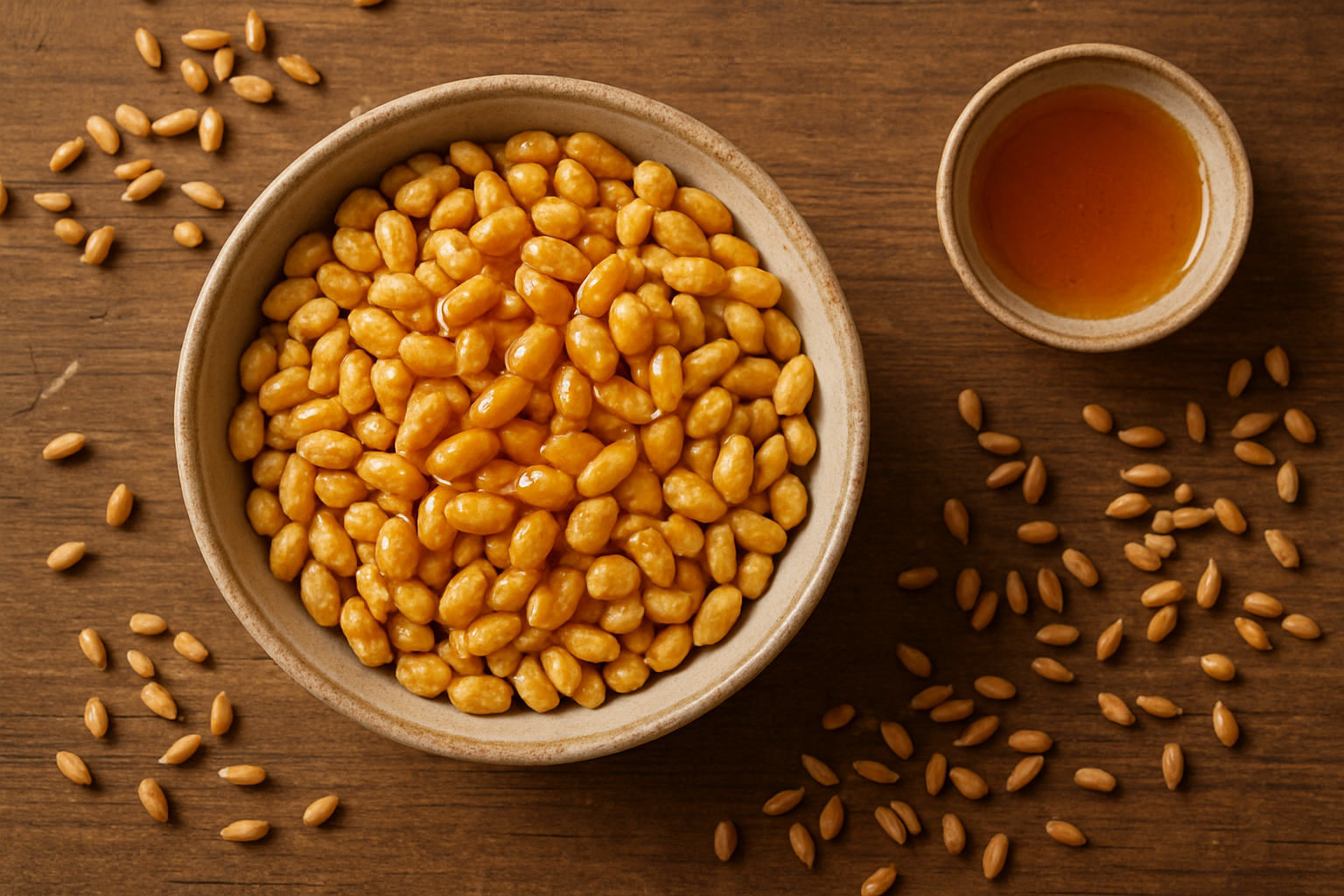
A bowl of no refined sugar cereal sweetened naturally with organic honey instead of refined cane sugar.
Why Refined Sugar Still Hides in Traditional Sugary Cereal
Even cereals marketed toward kids often rely heavily on refined sweeteners because they are cheap, shelf-stable, and easy to formulate around. Similarly, many "healthier" alternatives simply swap one refined sweetener for another, such as replacing cane sugar with refined coconut sugar or rice syrup solids. As a result, the ingredient still behaves like refined sugar inside the body, even if the marketing sounds cleaner.
In addition, refined sugars are frequently combined with artificial flavors and colors to compensate for flavor lost during heavy processing. This combination is a hallmark of what researchers classify as ultra-processed food, a category defined in detail by Wikipedia's overview of ultra-processed food. For families trying to reduce processed ingredients, understanding this pattern is the first step toward reading labels more critically.
How Good Grains Makes Cereal Without Refined Sugar
Good Grains approaches this differently by starting with organic whole grains and finishing with minimal, purposeful sweetening. Specifically, the process looks like this:
- Organic Khorasan wheat and organic corn are sourced and tested for glyphosate residue before entering production.
- Grains are gently puffed using heat and pressure, rather than extruded through machinery that reshapes them into engineered pellets.
- Sweetened varieties are finished with organic honey and organic monk fruit instead of refined cane sugar or corn syrup.
- Finished cereal is verified through third-party programs, including WISEcode's Non-UPF Verified certification.
No Refined Sugar Cereal vs. Traditional Cereal: What Really Changes
On the surface, a bowl of no refined sugar cereal and a bowl of traditional cereal can look similar. Underneath, however, the differences are significant. Traditional cereal often relies on extrusion, refined sweeteners, and artificial flavoring to mimic taste and texture. Puffed, minimally processed cereal instead preserves more of the grain's natural character while using whole-food sweeteners.
For families researching this shift in more depth, this complete guide to low sugar cereal for families breaks down label-reading strategies further. Likewise, parents specifically comparing honey-sweetened options may find this breakdown of low sugar cereal with honey useful before buying.
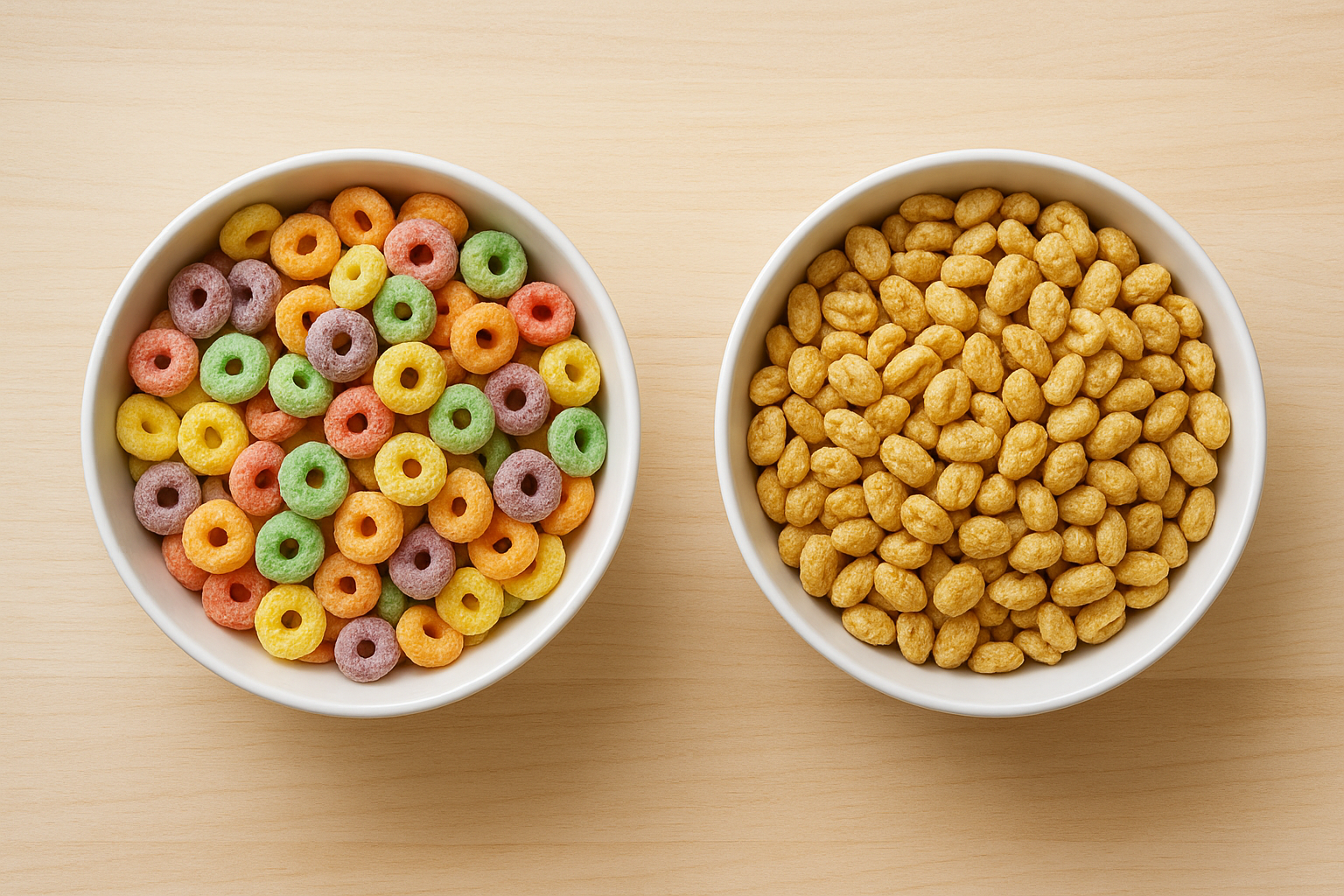
Traditional processed cereal next to a minimally processed, whole grain alternative.
Why Ancient Grains and Minimal Processing Matter
Ancient grains, or grains largely unchanged by modern industrial breeding, tend to retain more of their original structure and fiber content. Khorasan wheat, for example, is a large-kernel ancient grain often associated with a naturally rich, nutty flavor. Because it undergoes gentler processing, more of its fiber and character survive into the final cereal.
Furthermore, minimal processing intersects directly with certifications families increasingly look for. According to the USDA, organic certification requires strict standards around farming practices and prohibited substances. Pairing organic certification with independent glyphosate residue testing gives families two separate layers of verification, rather than relying on a single label claim. Readers wanting a fiber-focused deep dive can also explore this guide to high fiber breakfast cereal for kids.
How to Choose the Best No Refined Sugar Cereal for Your Family
Choosing well starts with a simple, repeatable process rather than guesswork at the grocery store. Below is a practical sequence parents can follow every time they shop.
- Read the sugar source, not just the grams. Check whether sweetness comes from refined cane sugar or corn syrup versus honey, monk fruit, or fruit-based sweeteners, since the source matters as much as the total amount listed on the label.
- Look for whole or ancient grains listed first. Choose cereals that list organic whole grains such as corn or Khorasan wheat first, rather than refined flours or engineered grain blends buried lower on the ingredient list.
- Verify third-party certifications. Confirm claims with recognizable certifications like USDA Organic, Non-UPF Verified, or Glyphosate Residue Free instead of relying solely on marketing language.
- Taste-test with the whole family. Buy a single box before committing to a full pantry switch, and let kids try it alongside breakfast staples they already know before repurchasing.
Parents who want a broader organic-focused checklist may also appreciate this complete guide to organic cereal for kids, as well as this practical clean cereal guide for parents. Visiting Good Grains directly also allows families to compare current product formulations side by side.
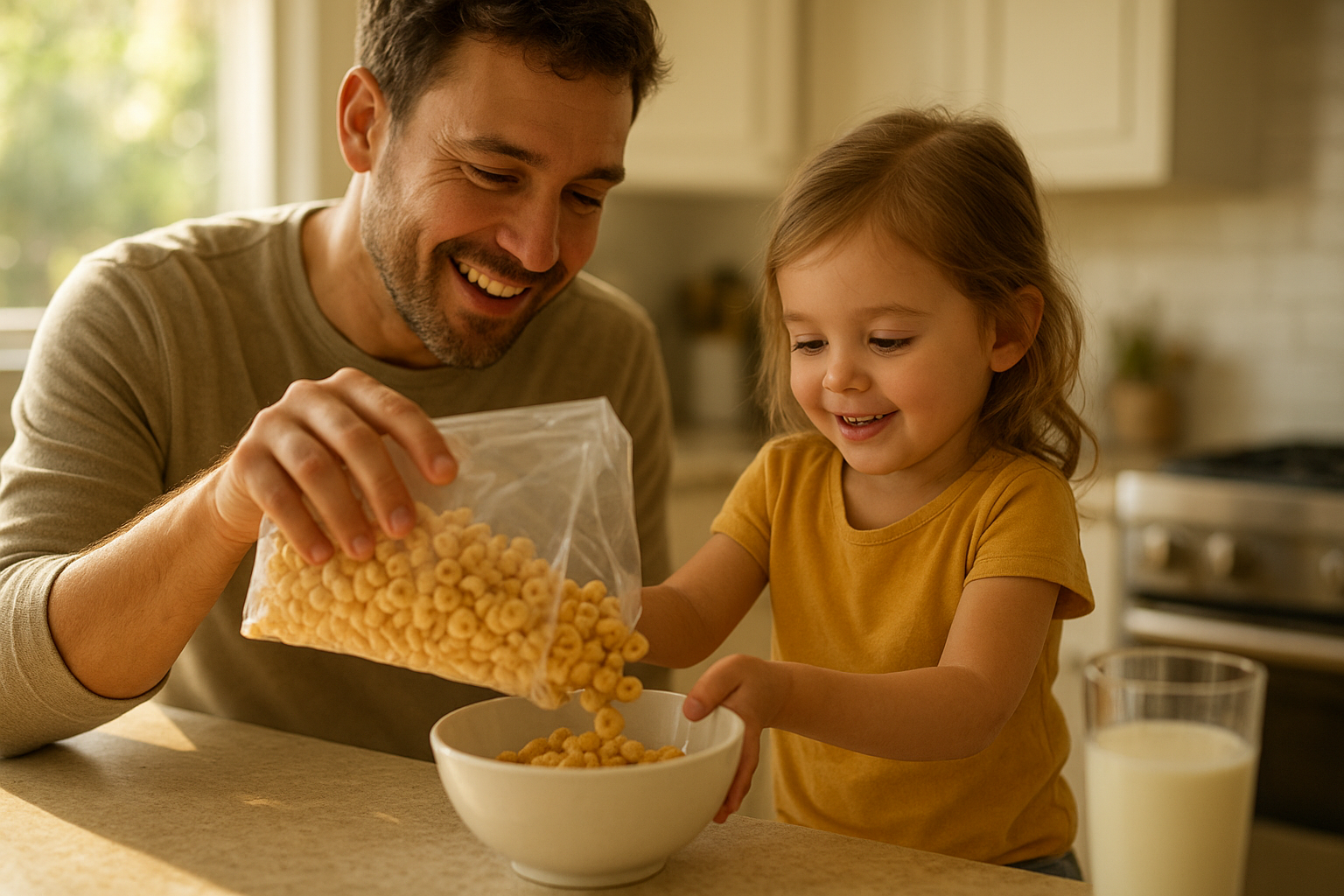
Choosing no refined sugar cereal that the whole family can enjoy at breakfast.
Frequently Asked Questions About No Refined Sugar Cereal
What does "no refined sugar" mean on a cereal label?
It means the cereal is sweetened without refined cane sugar, corn syrup, or invert sugar. Instead, sweetness usually comes from whole ingredients like organic honey or monk fruit extract.
Is no refined sugar cereal actually healthier than regular cereal?
Generally, yes, because no refined sugar cereal avoids the rapid blood sugar spikes linked to refined sweeteners and often contains more fiber from whole grains. However, it is not automatically sugar-free, so checking total grams per serving still matters.
How much sugar is typically in a serving of no refined sugar cereal?
Many options range from 3 to 7 grams of sugar per serving, compared to 10 to 15 grams in conventional children's cereals. The exact amount depends on whether honey, monk fruit, or a blend is used.
Why do some cereals use monk fruit instead of sugar?
Monk fruit provides sweetness without contributing significant calories or raising blood sugar the way refined sugar does. Brands often pair it with a small amount of honey to keep the flavor familiar.
Can kids taste the difference in no refined sugar cereal?
Most kids do not notice a major difference when honey and monk fruit are balanced well. Additionally, the gentle puffing process helps preserve a familiar crunch and cereal-like taste.
What ingredients should I avoid when choosing a low sugar cereal?
Watch for high fructose corn syrup, invert sugar, artificial flavors, and seed oils. These ingredients often signal a more processed product, even when the box says "low sugar."
How is puffed cereal different from extruded cereal?
Puffed cereal uses heat and pressure to expand whole grains close to their natural shape. In contrast, extruded cereal forces a wet grain slurry through machinery to form engineered shapes, generally preserving less of the grain's original structure.
Does no refined sugar mean no sugar at all?
No, it simply means the sugar source is unrefined, such as honey or monk fruit, rather than processed cane sugar. Total sugar content can still vary between brands.
How much does no refined sugar cereal typically cost compared to regular cereal?
Organic, minimally processed cereals usually cost 20 to 40 percent more than conventional cereal due to organic grain sourcing and smaller-batch production. Many parents consider this a worthwhile trade-off for cleaner ingredients.
How long does it take to notice a difference after switching to lower sugar cereal?
Some parents report steadier morning energy and fewer mid-morning hunger crashes within one to two weeks. Individual results vary based on overall diet and portion sizes.
What's the biggest mistake parents make when shopping for healthier cereal?
The most common mistake is trusting front-of-box claims like "natural" or "whole grain" without checking the ingredient list. Ultimately, these terms are not strictly regulated the way certifications like USDA Organic are.
Is organic cereal automatically free of refined sugar?
Not necessarily, since organic cane sugar is still a refined sweetener even though it is grown organically. Therefore, it is best to look for both organic certification and a specific unrefined sweetener like honey.
What certifications should I look for on a no refined sugar cereal box?
USDA Organic confirms farming standards, while third-party marks like Non-UPF Verified and Glyphosate Residue Free confirm minimal processing and pesticide screening. Together, these certifications offer stronger assurance than marketing language alone.
Final Thoughts on No Refined Sugar Cereal
Choosing no refined sugar cereal does not mean giving up the nostalgic breakfast families grew up loving. Instead, it means looking past marketing claims and checking for real whole grains, unrefined sweeteners, and independent certifications. As shown throughout this guide, small label-reading habits make a meaningful difference over time. Above all, the goal is simple: cereal that still tastes like cereal, minus the ingredients families no longer want in their pantry.
0 comments