


Is puffed cereal healthy? The honest answer is: it depends on the grain, the processing method, and what gets added to it along the way. Some puffed cereals are built mostly on refined starch, added sugars, and long ingredient lists, while others start with organic whole or ancient grains and very little else. Therefore, the healthfulness of puffed cereal has less to do with the "puffed" part and more to do with what's underneath it.
Quick Answer: Puffed cereal can be a genuinely healthy choice when it's made from organic whole or ancient grains, has minimal added sugar, and skips artificial additives and seed oils. Highly processed puffed cereals made mostly from refined starch offer little fiber or nutrition despite their light, airy texture.
What Is Puffed Cereal, and How Is It Made?
Puffed cereal is a lightweight breakfast food made by applying heat and pressure, or steam, to whole grain kernels until they rapidly expand into airy pieces. Unlike many popular cereals, true puffed grains are not forced through an extruder to create uniform loops or flakes. Instead, the grain's natural shape and structure stay largely intact, which is part of why puffed cereal has a different texture and chew than engineered shapes.
This puffing technique dates back more than a century and is explained in more depth on Wikipedia's overview of puffed grain. In addition, because the grain isn't heavily extruded, more of the bran and germ, the fiber and nutrient-rich outer layers, can remain in the finished cereal. For a deeper look at this process and how it shapes nutrition, see this breakdown of how puffed cereal is made and what to look for. Good Grains, for example, uses a gentle puffing process specifically designed to preserve more of the natural character of organic Khorasan wheat and organic corn.
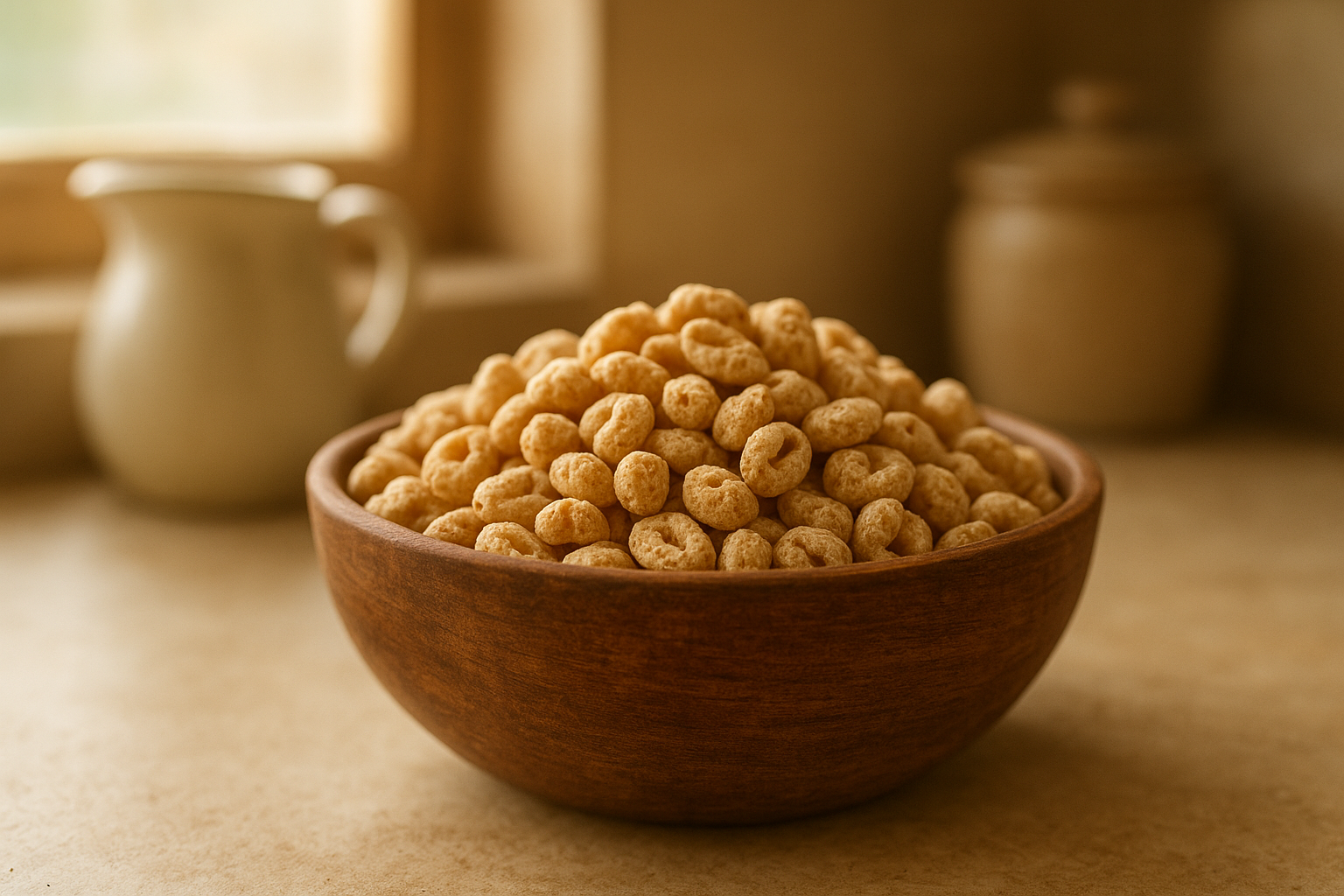
Whole grain puffed cereal keeps much of its natural structure instead of being heavily engineered.
Is Puffed Cereal Healthy? What the Nutrition Facts Show
So, is puffed cereal healthy from a nutrition standpoint? It largely comes down to three factors: the grain source, the amount of added sugar, and how heavily processed the final product is. A puffed cereal made from organic ancient grains with little added sugar can be a solid source of fiber and complex carbohydrates. In contrast, a puffed cereal made from refined starch and finished with syrups or artificial flavoring behaves much more like a dessert than a whole-grain breakfast.
Fiber and Whole Grains
Fiber is one of the clearest markers of a nutritious puffed cereal. According to the Harvard T.H. Chan School of Public Health, most Americans fall short of recommended fiber intake, which supports digestion and helps maintain steady energy levels. Puffed cereals made from ancient grains like Khorasan wheat typically provide more fiber than puffed rice, since rice has been milled and refined more heavily. As a result, checking the fiber line on the nutrition label is one of the simplest ways to compare puffed cereal options.
Added Sugar
Added sugar is where many traditional cereals lose their nutritional footing. The Dietary Guidelines for Americans recommend keeping added sugars under 10% of daily calories, yet many children's cereals pack several teaspoons of sugar into a single serving. Good Grains sweetened varieties instead rely on real organic honey paired with organic monk fruit, which keeps sugar significantly lower while still delivering a nostalgic, kid-approved taste.
Processing Level: Is It Ultra-Processed?
Processing level matters just as much as any single nutrient. Many conventional cereals qualify as ultra-processed foods because of preservatives, artificial flavors, and engineered textures. Specifically, Good Grains became the first cereal to receive Non-UPF Verified certification through WISEcode and is also certified Glyphosate Residue Free, which speaks directly to how minimally the grain is handled. You can explore the full product lineup and certifications at goodgrains.com.
Puffed Cereal vs. Extruded Cereal: Why It Matters
Not all airy, light cereals are made the same way, and that distinction matters for health. Extrusion forces grain dough through a shaping die under intense heat and pressure to create uniform loops, flakes, or shapes, a method described in detail by food science resources covering industrial food extrusion. This process often involves blending refined flours, starches, and additives before shaping, which can strip away much of the grain's original fiber and nutrient profile.
Traditional puffing, on the other hand, works with the grain closer to its whole form. In contrast to extrusion, the grain isn't melted into a dough or reshaped; it's simply expanded. For a side-by-side comparison of healthier grain puff options on the market, this complete buying guide to grain puffs breaks down brands and ingredient quality in more detail.
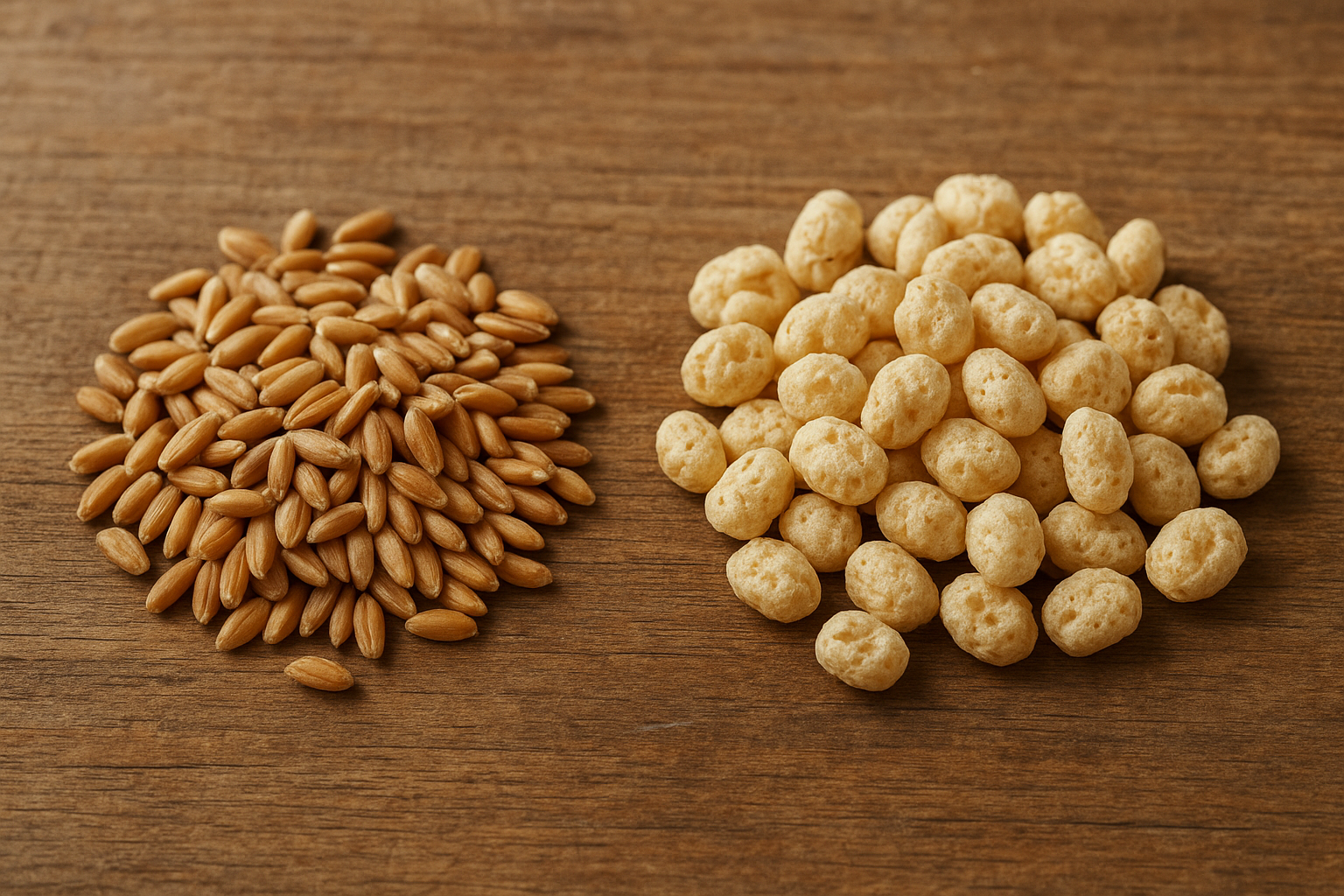
Comparing raw grain kernels to their puffed form shows how little the grain structure changes during gentle puffing.
How to Choose a Healthier Puffed Cereal
Reading a cereal box can feel confusing, especially with marketing claims competing for attention. The following steps offer a simple, repeatable way to evaluate any puffed cereal on the shelf.
- Check the ingredient list first. Look for a whole or ancient grain, such as organic corn or Khorasan wheat, listed as the first ingredient.
- Review the added sugar content. Favor cereals sweetened with small amounts of honey or monk fruit rather than refined cane sugar or corn syrup.
- Look for fiber per serving. Aim for at least 3 to 5 grams of fiber, since whole grains generally outperform refined puffed rice here.
- Confirm organic and processing certifications. USDA Organic, Non-UPF Verified, and glyphosate residue free labels signal stricter sourcing standards.
- Taste test with the whole family. A flavor like organic cinnamon puffed cereal can satisfy nostalgic cravings while still checking every ingredient box.
Are Puffed Cereals Good for Kids?
Puffed cereals can absolutely be good for kids, provided the grain source and sugar content hold up to scrutiny. Many children's cereals lean on bright packaging and cartoon mascots while hiding refined sugar near the top of the ingredient list. A better-for-you puffed cereal flips that script by leading with whole and ancient grains instead.
Above all, taste still matters for getting kids to actually eat breakfast. This guide to grain puffs as a healthier cereal choice for kids walks through how families can transition away from traditional sugary cereal without a fight at the breakfast table. Similarly, many parents simply want something that tastes like the cereal they grew up with, just made with cleaner ingredients and less sugar.
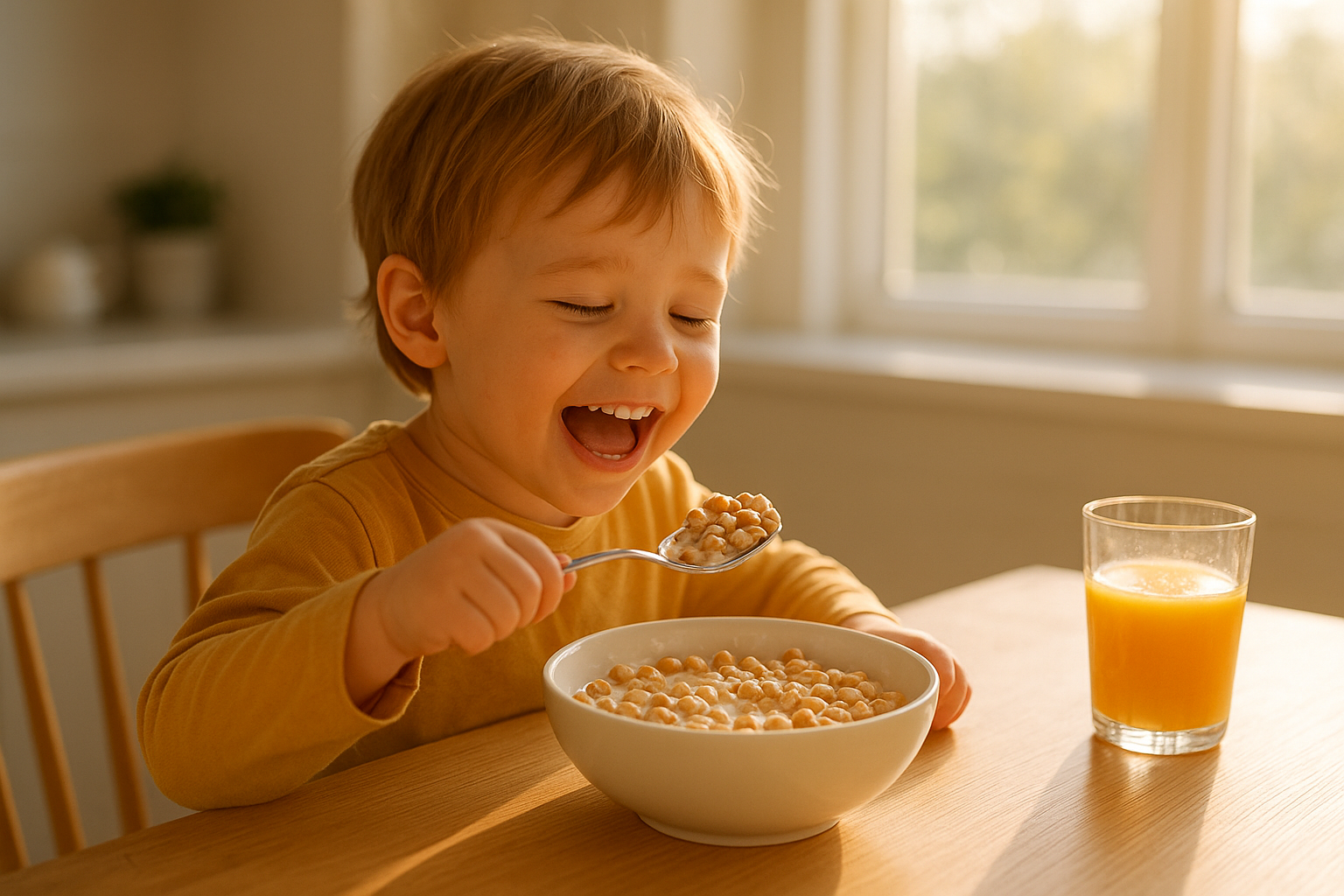
A low-sugar, whole grain puffed cereal can fit easily into a kid-friendly breakfast routine.
Frequently Asked Questions About Puffed Cereal
Is puffed cereal healthy?
Puffed cereal can be healthy when it's made from organic whole or ancient grains with little to no added sugar and minimal processing. However, puffed cereals built mostly on refined starch with added sugars and artificial ingredients offer far less nutritional value.
How is puffed cereal made?
Puffed cereal is made by heating whole grain kernels under pressure or steam until they rapidly expand into light, airy pieces. This traditional method is gentler than extrusion and keeps more of the grain's natural structure intact.
What's the difference between puffed and extruded cereal?
Puffed cereal expands whole or lightly milled grain kernels with heat and pressure, while extruded cereal forces grain dough through a shaping die to form uniform loops, flakes, or shapes. Extrusion typically involves more mechanical processing and ingredient blending than traditional puffing.
Does puffed cereal contain enough fiber?
Fiber content depends entirely on the grain used; puffed cereals made from ancient grains like Khorasan wheat tend to offer meaningfully more fiber than puffed rice. Checking the nutrition label for grams of fiber per serving is the most reliable way to compare options.
How much sugar is typically in puffed cereal?
Plain puffed cereals can have 0 to 1 grams of sugar per serving, while sweetened versions vary widely depending on the sweetener used. Federal guidelines recommend keeping added sugars under 10% of daily calories, which makes low-sugar puffed options a practical choice.
Are puffed cereals considered ultra-processed foods?
It depends on the ingredients and manufacturing method; many mass-market puffed cereals qualify as ultra-processed due to additives, preservatives, and engineered flavors. Minimally processed options made from whole grains with no artificial ingredients generally fall outside that category.
Is puffed rice healthier than puffed wheat or corn?
Not necessarily; puffed rice is often lower in fiber than puffed whole wheat or ancient grains like Khorasan. In contrast, whole-grain puffed wheat and corn tend to retain more bran and nutrients than refined puffed rice.
Is organic puffed cereal worth paying more for?
Organic puffed cereal avoids synthetic pesticides and certain chemical residues during growing, which many families consider worth the added cost. It can also signal stricter ingredient standards, since USDA Organic certification restricts artificial additives and preservatives.
Can children eat puffed cereal every day?
Yes, puffed cereal can be part of a daily breakfast rotation when it's low in added sugar and provides fiber from whole grains. As with any packaged food, pairing it with fruit, milk, or protein helps round out the meal nutritionally.
What's the biggest mistake people make when choosing puffed cereal?
The most common mistake is assuming "puffed" automatically means healthy, without checking the ingredient list or sugar content. A cereal can be puffed and still contain refined starch, added sugars, and artificial flavors.
How does Good Grains puffed cereal compare to traditional kids' cereal?
Good Grains uses organic whole and ancient grains, real honey, and monk fruit instead of refined cane sugar, resulting in meaningfully lower sugar than many traditional children's cereals. It is also the first cereal to receive Non-UPF Verified certification and is certified Glyphosate Residue Free.
The Bottom Line: Is Puffed Cereal Healthy for Your Family?
So, is puffed cereal healthy? In the end, the puffing process itself is simply a gentle way to expand a grain, and it says nothing on its own about nutrition. What actually determines healthfulness is the grain behind the puff, how much sugar gets added, and how far the cereal strays from its whole-food roots. Consequently, families who check the ingredient list, compare fiber and sugar per serving, and look for organic or non-UPF certifications can confidently choose a puffed cereal that fits a healthier breakfast routine without giving up the nostalgic taste everyone actually wants to eat.
0 comments