


Puffed cereal is a whole grain that has been heated under pressure until it bursts into a light, crunchy piece — and it happens to be one of the most misunderstood foods in the breakfast aisle. Some brands turn it into an ultra-processed sugar delivery system, while others keep it close to its original, whole-grain form. In addition to breakfast bowls, puffed cereal shows up in trail mix, yogurt parfaits, and homemade snack bars, which is exactly why understanding what you're actually buying matters. This guide covers every grain used to make puffed cereal, the real difference between puffed and extruded cereal, exact nutrition comparisons, and how to spot a genuinely healthy box versus a marketing trick.
Quick answer: Puffed cereal is whole grain expanded with heat and pressure rather than ground into dough and extruded through machinery. Because it retains more of the grain's original structure, it can offer a simpler, less processed alternative to boxed cereal — but only when it's made from organic grains without added seed oils or refined sugar.
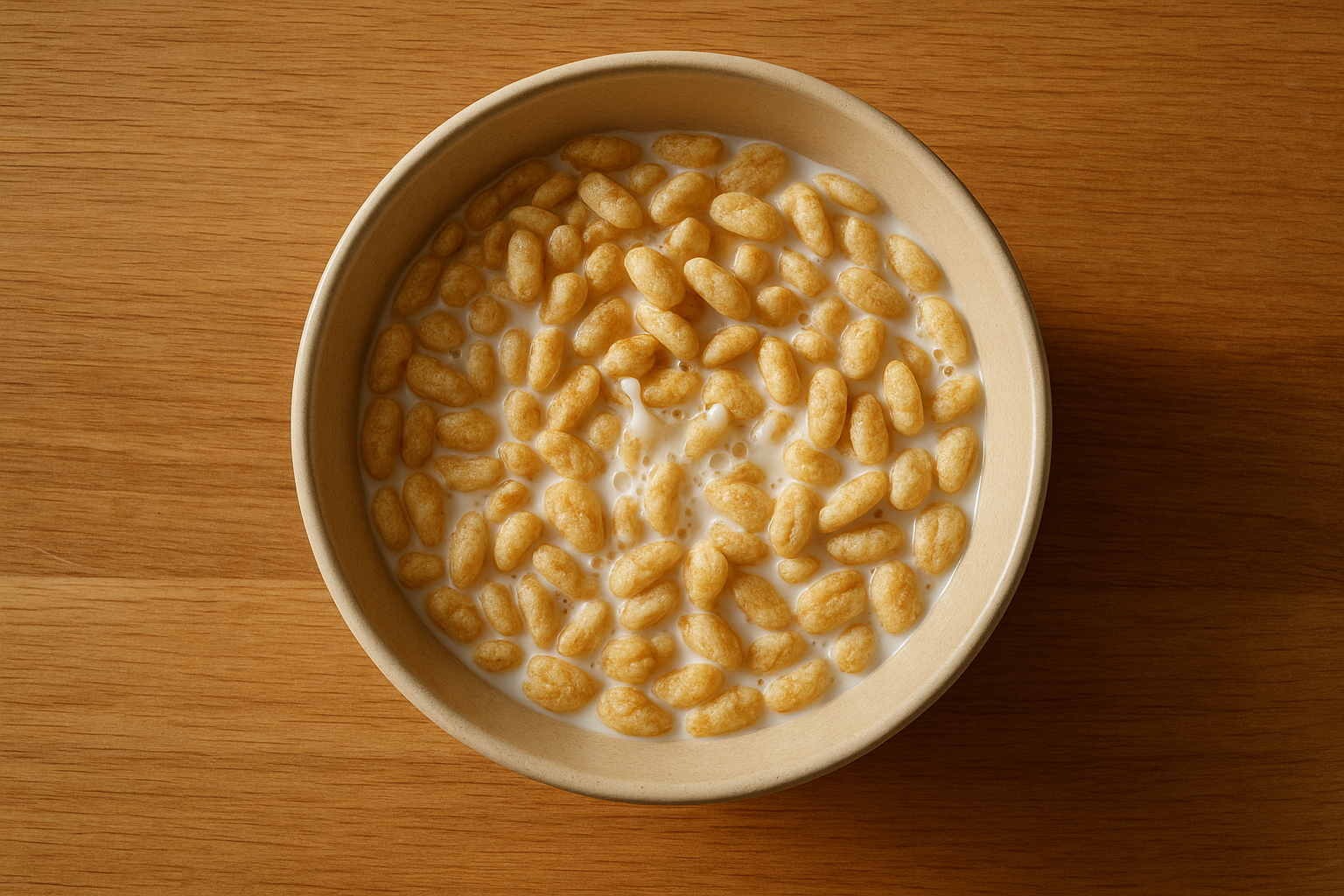
A bowl of puffed cereal made from whole grains, ready for breakfast.
What Is Puffed Cereal?
Puffed cereal is a grain-based breakfast food created by exposing whole grain kernels to high heat and pressure until they expand, or "puff," into a light, crunchy piece. Unlike many cereals shaped by machinery, puffed cereal keeps more of the grain's original form. As a result, it often looks closer to the grain it came from, whether that's a kernel of corn, a grain of rice, or a berry of Khorasan wheat.
Historically, puffing grain was a simple technique used long before modern food processing existed. Today, however, the term "puffed cereal" appears on everything from ultra-processed novelty cereals to organic, whole grain products, so the label alone doesn't guarantee quality. Consequently, ingredients and processing details matter just as much as the puffing method itself.
Which Grains Make the Best Puffed Cereal?
One area many guides overlook is just how many grains can be puffed, each with its own texture, flavor, and nutrition profile. Specifically, six grains dominate the puffed cereal category:
- Puffed rice: Extremely light and mild-flavored, but among the lowest in fiber and protein of the group.
- Puffed corn: Slightly sweet and naturally gluten-free, with a satisfying, crunchy bite.
- Puffed wheat: Nutty and hearty, with more fiber than rice, though it does contain gluten.
- Puffed Khorasan wheat (Kamut): An ancient grain with a rich, buttery flavor and notably higher protein than modern wheat varieties.
- Puffed quinoa: A complete protein source with a slightly earthy taste, though it puffs into smaller, denser pieces.
- Puffed amaranth and millet: Tiny, ancient grains that puff into a fine, crisp texture, often used as toppings rather than standalone cereal.
For readers curious specifically about wheat-based options, our breakdown of the healthiest puffed wheat cereal without seed oils digs deeper into that grain alone.
How Is Puffed Cereal Made? The Puffing Process
Manufacturing puffed cereal generally follows a few consistent steps, whether it's done at industrial scale or by smaller organic producers. In particular, the goal is to use heat and internal moisture to expand the grain without grinding it into a dough first. Below is a simplified look at the typical process.
- Select and clean the grain: Producers choose whole or ancient grains, such as corn or Khorasan wheat, and clean them thoroughly before processing begins.
- Hydrate the kernels: Moisture is added so steam can build inside each kernel once heat is applied later in the process.
- Apply heat and pressure: Rapid heating causes trapped steam to expand until the kernel bursts open into a puffed, airy shape.
- Cool and finish: The puffed pieces cool, then may be lightly coated with ingredients like honey, cinnamon, or cocoa before packaging.
Because this method relies on steam pressure rather than mechanical extrusion, well-made puffed cereal can retain more of the grain's natural fiber and character. For a closer look at how this technique developed, the history of puffed grain shows just how long it's been used.
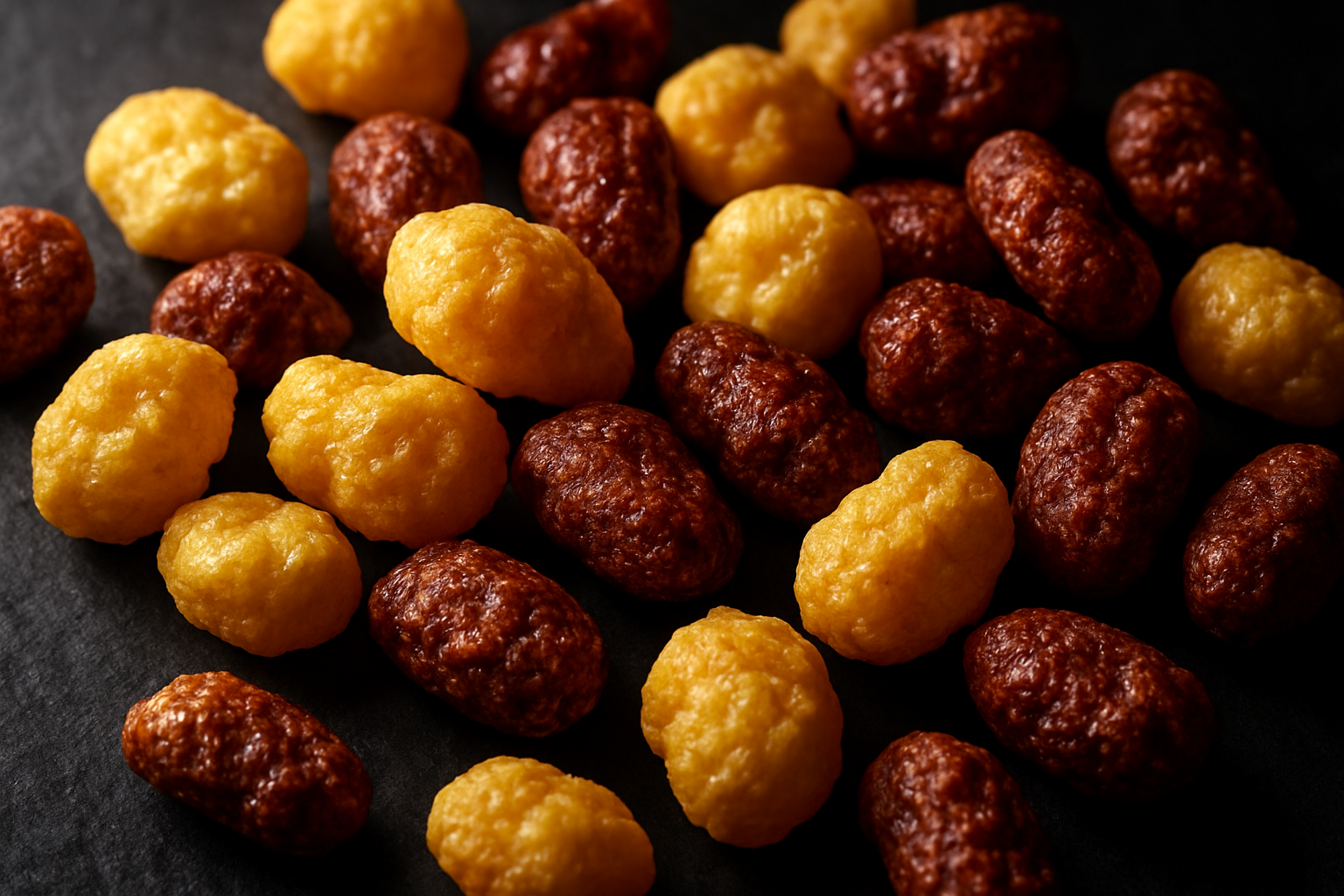
Close-up texture of puffed corn and puffed ancient grain pieces.
Puffed Cereal vs. Extruded Cereal: What's the Difference?
Many shoppers assume all cereal shapes are made the same way, but puffed cereal and extruded cereal are quite different. Extrusion grinds grains into a slurry, cooks it under extreme heat, then forces the mixture through a machine die to create uniform shapes like loops, stars, or flakes. This method allows for elaborate shapes, but it also breaks down the grain's structure significantly.
Puffed cereal, on the other hand, works with the grain closer to its whole form. Instead of grinding first, the kernel is hydrated and then puffed using heat and pressure alone. As a result, puffed whole grain cereal often has a more rustic, recognizable texture compared to the smooth, engineered look of heavily extruded products.
In short, if a cereal box shows a shape that couldn't occur naturally, such as a perfect star or hollow loop, it was almost certainly extruded rather than puffed.
Puffed Cereal Nutrition Facts: A Grain-by-Grain Comparison
Nutrition varies more between puffed cereal grains than most people realize. The figures below are approximate values per one-ounce (28g) serving, plain and unsweetened, so always check the specific label on your box for exact numbers.
- Puffed rice: ~110 calories, 2g protein, 0.5g fiber
- Puffed corn: ~108 calories, 2g protein, 1g fiber
- Puffed wheat: ~100 calories, 4g protein, 3g fiber
- Puffed Khorasan wheat: ~104 calories, 4.5g protein, 3g fiber
- Puffed quinoa: ~110 calories, 4g protein, 2.5g fiber
- Puffed amaranth or millet: ~105 calories, 3.5g protein, 2.5g fiber
Notably, ancient grains like Khorasan wheat and quinoa consistently edge out puffed rice on both protein and fiber, which is exactly why they're worth seeking out if nutrition density is your priority. Similarly, the Harvard T.H. Chan School of Public Health notes that whole grains retain fiber, B vitamins, and minerals that refined grains largely lose during milling.
Top Health Benefits of Puffed Cereal, For Breakfast and Beyond
When made from whole or ancient grains, puffed cereal offers several genuine benefits beyond just convenience. First, its fiber content supports steady digestion and can help you feel fuller longer than refined, sugary alternatives. Second, because it's naturally low in fat, puffed cereal can fit easily into a balanced eating pattern without adding excess calories.
In addition, plain puffed cereal is typically low in sodium, which makes it a flexible base for both sweet and savory recipes. Furthermore, grains like Khorasan wheat and quinoa contribute plant-based protein, an advantage many boxed cereals simply can't match. Above all, choosing organic, minimally processed puffed cereal avoids the seed oils, preservatives, and refined sugar that undercut the benefits of the grain itself.
Meanwhile, according to the Dietary Guidelines for Americans, limiting added sugar to less than 10% of daily calories is a key recommendation — and a well-formulated puffed cereal makes that goal far easier to hit at breakfast.
Creative Ways to Enjoy Puffed Cereal Beyond the Breakfast Bowl
Puffed cereal doesn't have to stay confined to a milk bowl. In fact, its light, crunchy texture makes it remarkably versatile in the kitchen. Consider these ideas:
- Homemade trail mix: Combine puffed corn or Khorasan puffs with nuts, seeds, and dried fruit for a portable snack.
- Yogurt or smoothie topping: Sprinkle puffed cereal over yogurt bowls for crunch without the added sugar of granola.
- No-bake snack bars: Bind puffed cereal with honey and nut butter for a quick, kid-friendly energy bar.
- Savory snack mix: Toss plain puffed cereal with olive oil, herbs, and a touch of sea salt for an on-the-go snack.
- Casserole or crumble topping: Use puffed cereal in place of breadcrumbs for a lighter, crunchier crust.
Consequently, keeping a box of plain, organic puffed cereal on hand gives you far more flexibility than treating it as a single-purpose breakfast food. For a deeper walkthrough, see our Organic Corn Puff Cereal: A Cleaner Breakfast Choice.
Is Puffed Whole Grain Cereal Healthy?
Puffed whole grain cereal can be a genuinely healthy breakfast option, but the specific formulation determines whether that holds true. Because puffed cereal made from whole or ancient grains keeps more of the original kernel intact, it can retain a meaningful amount of fiber compared to heavily refined alternatives.
However, not every puffed cereal qualifies as healthy. Many mainstream brands add seed oils, refined cane sugar, or preservatives after puffing, which undermines the simplicity of the base ingredient. For example, a typical children's cereal can contain well over 10 grams of sugar per serving, while a thoughtfully formulated puffed cereal can use honey or monk fruit to keep sugar significantly lower.
Therefore, checking the ingredient panel remains essential. A short list featuring organic grains, natural sweeteners, and little else is a strong signal of a less processed, better-for-you product.
Choosing the Best Puffed Corn and Ancient Grain Cereal
With so many options on the shelf, picking a quality puffed cereal comes down to a few practical checks. First, look at the grain source. Organic corn and ancient grains like Khorasan wheat tend to offer more character and nutrition than heavily refined bases. Second, scan for seed oils, artificial colors, and preservatives, since their presence usually signals more processing than the puffing method alone would require.
Good Grains, for instance, makes its Organic Corn Puffs and Organic Khorasan Puffs using a gentle puffing process rather than heavy extrusion, keeping the grain's natural structure intact. Families who prefer a touch of sweetness can choose the Organic Honey Puffs, sweetened with real honey and monk fruit instead of refined sugar, or the Organic Cinnamon cereal for a nostalgic flavor with a cleaner ingredient list.
Above all, taste still matters. A puffed cereal that kids refuse to eat doesn't help anyone, so balancing genuine nutrition with familiar flavor is the real goal. For a full walkthrough of what to look for, see our guide on why Good Grains is an organic, non-UPF breakfast pick.
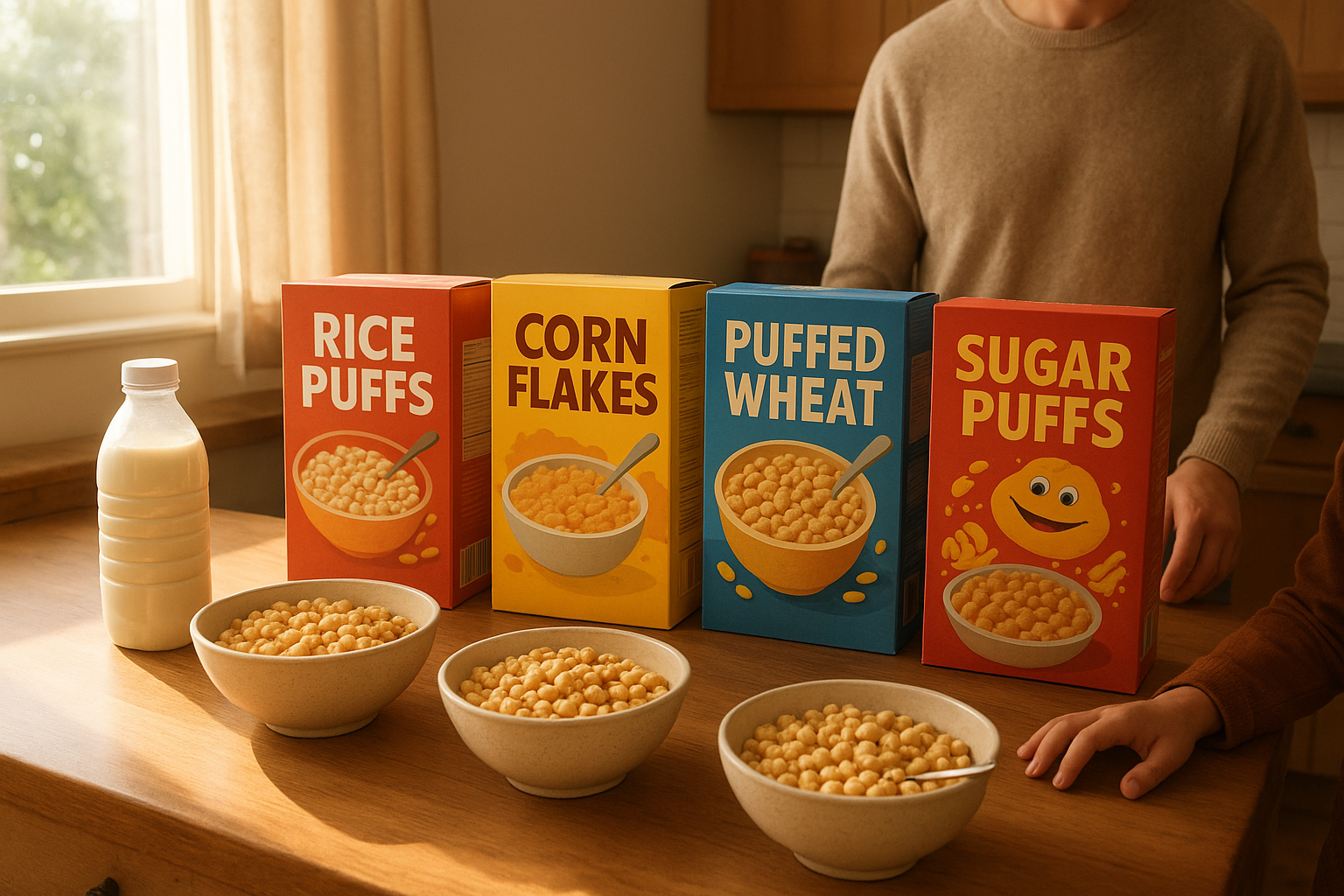
A family breakfast setup featuring organic puffed cereal options.
Why Good Grains Approaches Puffed Cereal Differently
Good Grains was built around the idea that healthier cereal should still taste like cereal. Its puffed cereal line uses organic, minimally processed whole and ancient grains, including Khorasan wheat and corn, without seed oils, refined cane sugar, or artificial flavors. Notably, Good Grains is the first cereal to receive Non-UPF Verified certification through WISEcode and is also certified glyphosate residue free, offering an added layer of independent verification beyond marketing claims.
Rather than chasing extreme diet trends, the brand focuses on a simple middle ground: familiar flavors families already love, made with real, recognizable ingredients. Readers can explore the full lineup at Good Grains to compare varieties side by side.
Common Mistakes to Avoid When Buying Puffed Cereal
Even health-conscious shoppers fall into a few predictable traps. In particular, watch for these mistakes:
- Assuming the word "puffed" alone guarantees a healthy product.
- Skipping the ingredient panel and relying only on front-of-box marketing claims.
- Overlooking added seed oils, which are common even in cereals marketed as "natural."
- Choosing based on grain type alone without checking for added sugar or preservatives.
Ultimately, a quick label check takes seconds and prevents most of these common missteps.
Frequently Asked Questions About Puffed Cereal
What is puffed cereal?
Puffed cereal is whole grain that has been heated under pressure until it expands into a light, airy piece. The rapid release of steam causes the grain to puff up while keeping much of its natural fiber and structure intact.
How is puffed cereal made?
Puffed cereal is made by hydrating whole grains, then exposing them to intense heat and pressure until they burst open into a puffed shape. This differs from extrusion, which forces dough through a machine to create engineered shapes.
Is puffed cereal healthy?
Puffed cereal can be a healthy choice when it's made from whole or ancient grains without added seed oils, refined sugar, or artificial ingredients. Look for organic certification and a short, recognizable ingredient list.
What is the difference between puffed cereal and extruded cereal?
Puffed cereal uses heat and pressure to expand a whole grain kernel with minimal alteration to its natural form. Extruded cereal grinds grains into a dough, then forces it through machinery at high heat to create uniform, engineered shapes.
How much does puffed cereal cost?
Organic puffed cereal typically costs more per box than conventional mass-market cereal because of higher-quality grains and gentler processing. Prices commonly range from about five to eight dollars depending on the brand and package size.
How long does puffed cereal stay fresh?
Unopened puffed cereal generally stays fresh for several months when stored in a cool, dry pantry. Once opened, it's best sealed tightly and eaten within a few weeks to preserve its crunch.
What common mistakes do people make when choosing puffed cereal?
A common mistake is assuming a cereal is healthy simply because it says "puffed" or "whole grain" on the box. Many puffed cereals still contain seed oils, refined sugar, or preservatives, so checking the ingredient list matters.
What grains are used to make puffed cereal?
Common grains used for puffed cereal include corn, rice, wheat, and ancient grains such as Khorasan wheat, quinoa, amaranth, and millet. Each grain puffs slightly differently, producing distinct textures and flavors. For a deeper walkthrough, see our Khorasan Wheat Puffs: The Ancient Grain Cereal Guide.
Is puffed cereal good for kids?
Puffed cereal can be a good option for kids when it delivers fiber and lower sugar without artificial additives. Choosing organic, minimally processed varieties helps parents offer a familiar breakfast without unnecessary ingredients. For more on this topic, see grain puffs explained as a healthier cereal choice for kids.
What does Non-UPF Verified mean on a puffed cereal box?
Non-UPF Verified is a third-party certification from WISEcode confirming a product is not classified as an ultra-processed food. It reflects formulation, ingredients, and processing methods rather than marketing claims alone.
Does puffed cereal contain gluten?
It depends on the grain used. Puffed cereal made from Khorasan wheat contains gluten, while puffed corn, puffed rice, quinoa, and amaranth cereal are naturally gluten-free, so checking the specific grain is important for those with sensitivities.
How is puffed cereal different from traditional sugary cereal?
Traditional sugary cereals often rely on refined sugar, artificial colors, and heavy extrusion to create shapes and flavors. Well-made puffed cereal keeps the grain closer to its natural form and can use honey or monk fruit instead of refined sugar.
Can puffed cereal be eaten as a snack, not just at breakfast?
Yes. Plain puffed cereal works well in trail mix, no-bake snack bars, yogurt toppings, and even savory snack mixes, which makes it useful well beyond the breakfast table.
Final Thoughts on Choosing Puffed Cereal
Ultimately, puffed cereal sits at an interesting crossroads in the cereal aisle. When made from organic whole or ancient grains without unnecessary additives, it can offer a genuinely simple, minimally processed breakfast — or snack — that still tastes nostalgic and familiar. However, not all puffed cereal is created equal, so reading the ingredient list, comparing grains, and understanding the puffing process helps separate marketing from real quality.
In the end, choosing a better puffed cereal doesn't require sacrificing taste for nutrition. According to independent certifications like Non-UPF Verified and glyphosate residue free testing, it's possible to find a puffed cereal that satisfies both the health-conscious parent and the picky eater at the table. For more background on organic standards behind whole grain products, the USDA's organic certification resources offer useful context for shoppers comparing labels.
0 comments