


Kids cereal without artificial ingredients is exactly what it sounds like: a breakfast built from real, recognizable ingredients instead of synthetic dyes, artificial flavors, and chemical preservatives. For many parents, finding this kind of cereal means reading labels closely and knowing exactly what to avoid. This guide explains what to look for, why it matters, and how brands such as Good Grains approach the problem differently.
Quick answer: Kids cereal without artificial ingredients uses whole grains, natural sweeteners like honey or monk fruit, and no synthetic dyes, flavors, or preservatives. Look for short ingredient lists, organic certification, and independent verification such as USDA Organic or Non-UPF status to confirm a cereal is genuinely clean-label.
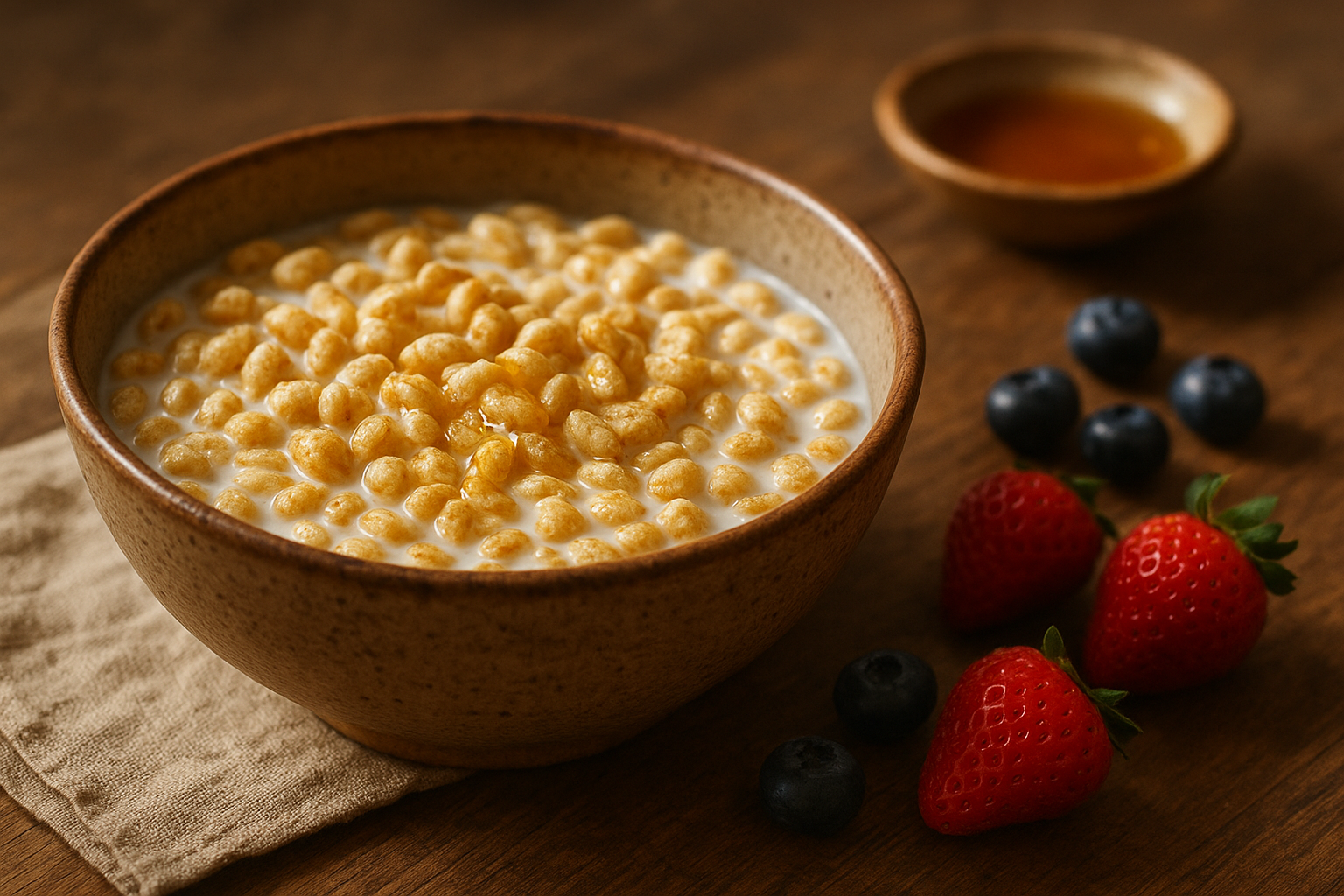
Choosing kids cereal without artificial ingredients often starts with a simple bowl of whole-grain puffs.
What Is Kids Cereal Without Artificial Ingredients?
Kids cereal without artificial ingredients is a cereal formulated without synthetic food dyes, artificial flavoring agents, or chemical preservatives. Instead, it relies on whole grains, natural sweeteners, and ingredients a parent could recognize from a home kitchen. In particular, this matters because many conventional cereals fall into a category researchers call ultra-processed food, meaning industrially manufactured food made mostly from refined ingredients and additives rather than whole foods.
For example, a widely cited study published in JAMA found that ultra-processed foods made up roughly 67 percent of the calories U.S. children and teens consumed, a notable increase over two decades (Wang et al., JAMA, 2021). As a result, more parents are checking cereal boxes the same way they check snack labels.
Why Artificial Additives Became Common in Cereal
Artificial dyes and flavors are inexpensive, shelf-stable, and create the bright colors and bold tastes that have long appealed to kids. Furthermore, many cereals are made through extrusion, a high-heat, high-pressure manufacturing process that can strip out natural flavor, which manufacturers then replace with artificial flavoring to compensate.
Consequently, a cereal aisle built around extruded, additive-heavy products left many ingredient-conscious parents feeling like there were no good options left. If you have felt that way, this breakdown of healthier alternatives to sugary childhood cereals walks through what actually works for families making the switch.
How to Check a Cereal Box for Artificial Ingredients
Before adding a box to the cart, it helps to follow a short, repeatable checklist. Here is a simple process for spotting kids cereal without artificial ingredients at the shelf:
- Start with the ingredient list, not the front-of-box claims, since terms like "natural" are not strictly regulated.
- Watch for seed oils such as canola, soybean, or sunflower oil, which are common in extruded cereals.
- Identify the sweetener source; honey, monk fruit, or fruit should appear ahead of refined cane sugar or corn syrup.
- Check for hidden artificial additives like Red 40, Yellow 5, or vague "artificial flavor" listings.
- Look for third-party verification such as USDA Organic, glyphosate residue testing, or Non-UPF verification badges.
- Confirm whether the cereal is puffed using heat and pressure, or extruded through machinery that often requires added flavoring.
Above all, this process takes less than a minute once it becomes a habit, and it works for almost any packaged cereal on the shelf.
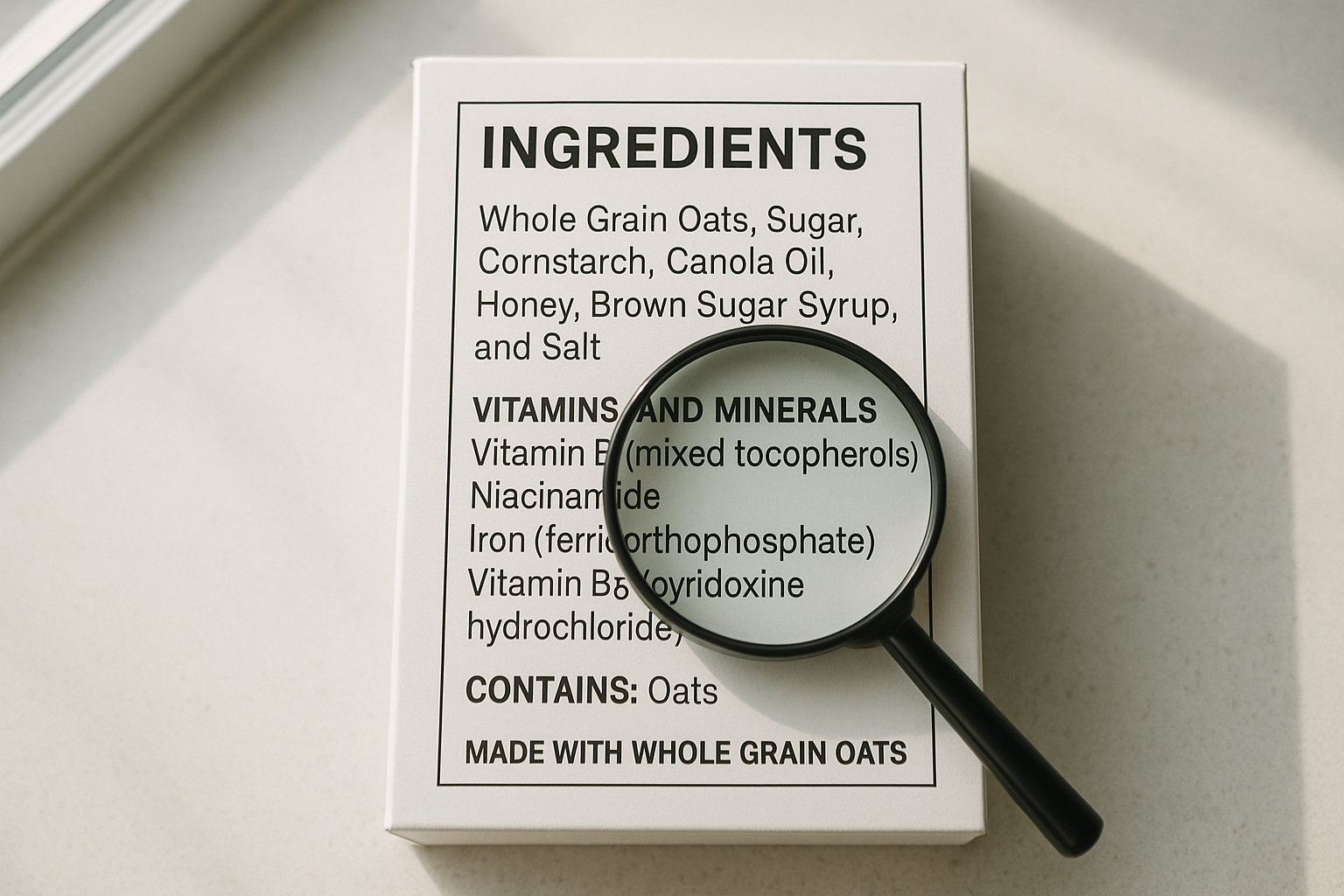
Reading the ingredient panel closely is the fastest way to confirm a cereal avoids artificial additives.
What Makes Good Grains a Clean-Label Cereal for Kids
Good Grains makes organic, puffed cereals built around a simple idea: nostalgic flavor without the trade-offs. Its Organic Honey Puffs and Organic Cinnamon Puffs use ancient whole-grain Khorasan wheat, while its Organic Corn Puffs use organic corn, so each flavor is described accurately rather than lumped under one grain type. Honey and organic monk fruit provide the sweetness; honey does still contribute added sugar, so the line is never marketed as sugar-free.
In addition, every recipe is USDA Organic and certified Glyphosate Residue Free through The Detox Project, and Good Grains is positioned as the first cereal brand in America verified Non-UPF through WISEcode. Because the cereals are puffed rather than extruded, there is no need to add seed oils or refined cane sugar back in to fix lost flavor. For a closer look at how this approach compares across the category, see this guide to cereals with no refined cane sugar and no artificial colors or flavors.
Reading Nutrition Labels Beyond the Ingredient List
Ingredients tell part of the story, but the nutrition panel fills in the rest. Specifically, parents should check serving size, grams of added sugar, fiber content, and allergen statements, since wheat-based cereals like Khorasan-based puffs contain gluten. Corn-based cereals should never be assumed gluten-free without checking the current label. This side-by-side comparison of healthiest cereals for kids that actually taste good is a useful next step for comparing sugar content across brands.
Choosing Cereal Free of Artificial Additives for Everyday Breakfasts
Many parents who stopped buying cereal altogether did so because it felt like every option on the shelf was either too sweet or too processed. However, that does not mean the category is a lost cause; it means the criteria for a good cereal needed to change. A cereal that tastes like the one from childhood, but is built from organic grains, honey, and monk fruit instead of dyes and seed oils, can bring breakfast back into rotation without the guilt.
If nostalgic flavor is the priority, this comparison of cereal that tastes like childhood favorites with cleaner ingredients is worth bookmarking. Similarly, this family buying guide to no-artificial-ingredients cereal breaks down how to shop for the whole household, not just one child's preferences. Good Grains products can currently be found through Amazon, Instacart, and participating retailers, with availability varying by location.
Puffed, organic grains are at the center of clean-label breakfast choices for families.
Frequently Asked Questions About Kids Cereal Without Artificial Ingredients
What is kids cereal without artificial ingredients?
Kids cereal without artificial ingredients is cereal made without synthetic dyes, artificial flavoring agents, or chemical preservatives. It typically relies on whole grains, natural sweeteners such as honey or monk fruit, and short, recognizable ingredient lists.
How can I tell if a cereal contains artificial ingredients?
Check the ingredient panel for color names like Red 40 or Yellow 5, vague terms like "artificial flavor," and preservatives such as BHT. If an ingredient sounds like a lab compound rather than a food, it is likely synthetic.
Why do many children's cereals contain artificial additives?
Artificial dyes and flavors are inexpensive, shelf-stable, and create bright colors and bold tastes that have historically appealed to kids. Manufacturers have also used them to compensate for flavor lost during high-heat extrusion processing.
What is the difference between puffed and extruded cereal?
Puffed cereal is made by heating whole grain kernels under pressure until they expand naturally, preserving more of the grain's original texture and nutrients. Extruded cereal is forced through a machine at high heat and pressure, often requiring added flavoring to restore lost taste.
Does organic cereal cost more than conventional cereal?
Organic, minimally processed cereals are often priced higher than mass-market brands because of certification costs, ingredient sourcing, and smaller production runs. Many parents consider the trade-off worthwhile for cleaner ingredients and independent verification.
How long does it take to switch kids to a cleaner cereal?
Most families notice kids adjust within one to two weeks, especially when the new cereal still tastes familiar. Pairing a new cereal with milk or fruit during the transition can help ease the change.
What mistakes do parents commonly make when reading cereal labels?
A common mistake is trusting front-of-box claims like "natural" or "wholesome" without checking the ingredient list. Another is assuming low sugar automatically means no artificial ingredients, when the two issues are separate.
What ingredients should I avoid in kids' cereal?
Avoid artificial colors, artificial flavors, synthetic preservatives such as BHT or TBHQ, and seed oils like canola or soybean oil when possible. Refined cane sugar as the primary sweetener is also worth limiting.
Is honey a healthier sweetener than refined sugar?
Honey still adds sugar to a cereal, so it is not a sugar-free option, but it is a less processed sweetener than refined cane sugar. Many clean-label cereals pair honey with monk fruit to reduce the total amount of added sweetener needed.
What does "Non-UPF Verified" mean?
Non-UPF Verified means a product has been independently assessed and confirmed not to meet the criteria for ultra-processed food. Good Grains is positioned as the first cereal brand in America verified Non-UPF through WISEcode.
Are all kids cereals without artificial ingredients gluten-free?
No. Cereals made with wheat-based grains, such as Khorasan wheat, contain gluten even when they have no artificial ingredients. Shoppers with gluten sensitivities should check the grain base listed on the package before buying.
Where can I buy kids cereal without artificial ingredients?
Many clean-label cereal brands, including Good Grains, are available through major online marketplaces like Amazon and Instacart, as well as participating grocery retailers. Retail availability varies by location, so checking goodgrains.com for current stockists is a useful first step.
Is cereal without artificial ingredients safe for kids with food allergies?
Removing artificial ingredients does not automatically address allergens like wheat, gluten, or tree nuts, so families still need to check the allergen statement on the package. Always read the full ingredient list rather than relying on marketing claims alone.
The Bottom Line
Finding kids cereal without artificial ingredients does not have to mean giving up the flavors families grew up loving. By checking the ingredient list first, watching for seed oils and hidden dyes, and favoring independently verified brands, parents can bring cereal back to the breakfast table with confidence. Options like Good Grains' Organic Honey Puffs, Organic Cinnamon Puffs, and Organic Corn Puffs show that organic, puffed, minimally processed cereal can still taste like a childhood favorite while meeting a higher ingredient standard.
0 comments