


A no artificial ingredients cereal is a cereal built from whole grains, real sweeteners, and ingredients you could actually picture growing on a farm — not ones created in a lab. Specifically, it skips synthetic dyes, manufactured flavor compounds, and chemical preservatives that still show up in dozens of boxes lining grocery store shelves today. For parents comparing healthy cereal options for kids, this single distinction often matters more than the cartoon mascot on the front of the box. In fact, several popular children's cereals still list synthetic dyes or preservatives among their first five ingredients, even as more families actively search for a no artificial ingredients cereal their kids will genuinely eat. Consequently, this guide breaks down exactly what to check on the label, which additives to avoid, and how brands like Good Grains are rebuilding the cereal aisle around real food.
What Is a No Artificial Ingredients Cereal?
In short, a no artificial ingredients cereal skips synthetic additives such as artificial dyes, lab-made flavoring compounds, and chemical preservatives like BHT (short for butylated hydroxytoluene, a petroleum-derived compound used to stop fats from turning rancid). Instead, it relies on whole grains, natural sweeteners, and simple flavorings that most people can identify without a chemistry background. Specifically, this means an ingredient list that might read "organic corn, organic honey, sea salt" rather than a string of unfamiliar codes and compounds.
Above all, the goal is transparency. As a result, shoppers can quickly evaluate what they are feeding their families without researching every additive beforehand. This is also why the phrase clean label cereal has become shorthand for products built this way — short, honest ingredient lists that families can trust at a glance.
Why a No Artificial Ingredients Cereal Matters for Kids' Health
Children eat more cereal, pound for pound, than almost any other packaged food category, which means small ingredient choices compound quickly over a school year. Therefore, parents searching for healthy cereal for kids are really asking a narrower question underneath it all: does this box contain anything synthetic that my child doesn't actually need? For instance, several widely consumed cereals still include Red 40, Yellow 5, or Yellow 6 — dyes that serve no nutritional purpose beyond making the product look brighter on a shelf.
In addition, regulators themselves have started to respond. In 2023, California passed the California Food Safety Act, which bans several synthetic additives — including titanium dioxide, potassium bromate, and brominated vegetable oil — from food sold statewide beginning in 2027. Similarly, a separate 2024 law targets specific synthetic dyes in foods served in California public schools. While these laws don't apply nationwide yet, they signal a broader shift in how seriously synthetic additives are being scrutinized. As a result, choosing a no artificial ingredients cereal today is less about chasing a trend and more about staying ahead of where food safety standards are clearly heading.
Common Artificial Ingredients Found in Kids' Cereal
Before you can avoid artificial ingredients, it helps to know exactly what they look like printed on a box. Below are the three categories that show up most often in children's cereal.
Artificial Dyes to Watch For
Synthetic dyes — derived largely from petroleum rather than food — are used almost exclusively for visual appeal. Common examples include Red 40, Yellow 5, Yellow 6, Blue 1, and Blue 2. In contrast, naturally colored cereals get their hue from beet juice, turmeric, or spirulina — ingredients that also appear in home kitchens.
Preservatives and Stabilizers
Preservatives like BHT, BHA, and TBHQ (tert-butylhydroquinone, a petroleum-derived antioxidant) extend shelf life by slowing fat oxidation. However, whole grain cereals that use minimal processing and proper packaging often don't need these additives at all, since they're formulated to be eaten within a reasonable window rather than sitting on a shelf indefinitely.
Artificial Flavors and Syrups
Generic "artificial flavor" on a label typically means a lab-engineered flavor compound designed to mimic a specific taste, such as berry or vanilla. For a closer look at how these flavor compounds are built and what to look for instead, see this breakdown of cereal without artificial flavors and what to look for.
Why Artificial Ingredients Became Common in Cereal
Historically, artificial ingredients entered cereal production for practical reasons: they extend shelf life, brighten color, and keep flavor consistent across mass production runs. Consequently, many classic cereals still lean on synthetic dyes and preservatives decades later, simply because the manufacturing systems were built around them.
However, consumer expectations have shifted. According to the U.S. Food and Drug Administration, color additives must be approved and regulated, but approval does not mean a compound occurs naturally or offers nutritional value. In addition, research on ultra-processed food has linked heavily engineered products to a range of long-term health concerns, which is one reason a widely cited 2019 study estimated ultra-processed foods make up more than half of average daily caloric intake in the United States. Therefore, more families are looking upstream at the ingredient list itself, not just the nutrition facts panel.
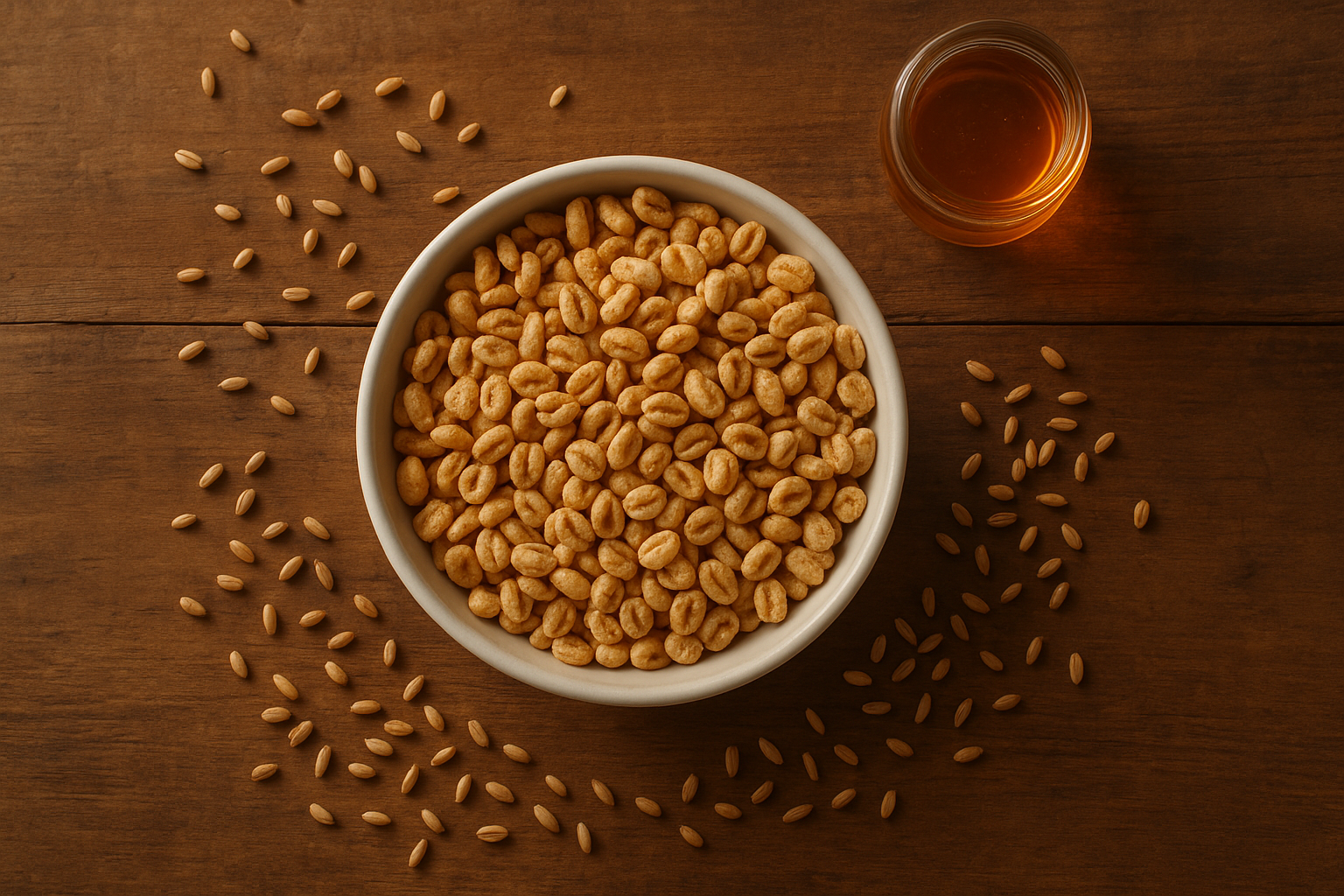
A no artificial ingredients cereal relies on whole grains and honey instead of synthetic additives.
How to Identify Cereal Without Artificial Ingredients
Finding a genuinely clean box takes a little more effort than reading the front of the package. Fortunately, the process is straightforward once you know what to check. Below is a simple, repeatable method.
- Read the full ingredient list. Turn the box over and scan every ingredient for chemical-sounding names, numbered dyes, or unfamiliar preservatives rather than relying on front-of-package marketing claims.
- Look for third-party certifications. Search for verifications such as USDA Organic, Non-GMO Project Verified, or Non-UPF Verified, since these labels require independent confirmation rather than self-reported claims.
- Compare sugar sources and amounts. Identify whether sugar comes from refined cane sugar or from whole-food sweeteners like organic honey and monk fruit, then compare total grams per serving across brands.
- Research how the grains are processed. Investigate whether the brand uses gentle puffing methods that retain grain structure or heavy industrial extrusion, since processing method affects both nutrition and ingredient needs.
Once you get used to this checklist, comparing boxes at the grocery store takes less than a minute. For a deeper breakdown of what to look for, the healthy family cereal guide covers additional label details worth reviewing.
What Counts as an Artificial Ingredient?
Generally, an artificial ingredient is a compound synthesized in a lab to imitate a flavor, color, or preservative effect rather than being derived directly from a plant, animal, or mineral source. For example, artificial vanilla flavoring is chemically produced, while real vanilla extract comes from the vanilla bean itself. Similarly, synthetic dyes like Red 40 differ from color derived from beet juice or turmeric.
No Artificial Ingredients Cereal vs. Non-UPF Verified Cereal
It is worth noting that "no artificial ingredients" and "non-ultra-processed" are related but not identical claims. A cereal without artificial ingredients might still undergo heavy industrial extrusion, which is one reason Good Grains pursued independent verification. In particular, Good Grains became the first cereal brand to earn Non-UPF Verified certification through WISEcode, confirming the product avoids both synthetic additives and the broader hallmarks of ultra-processing.
In contrast, some newer "health" cereals focus narrowly on one metric, such as high protein or low carbs, while still relying on heavily engineered ingredients elsewhere in the formula. As a result, checking for multiple forms of verification gives a more complete picture than trusting a single buzzword on the box.
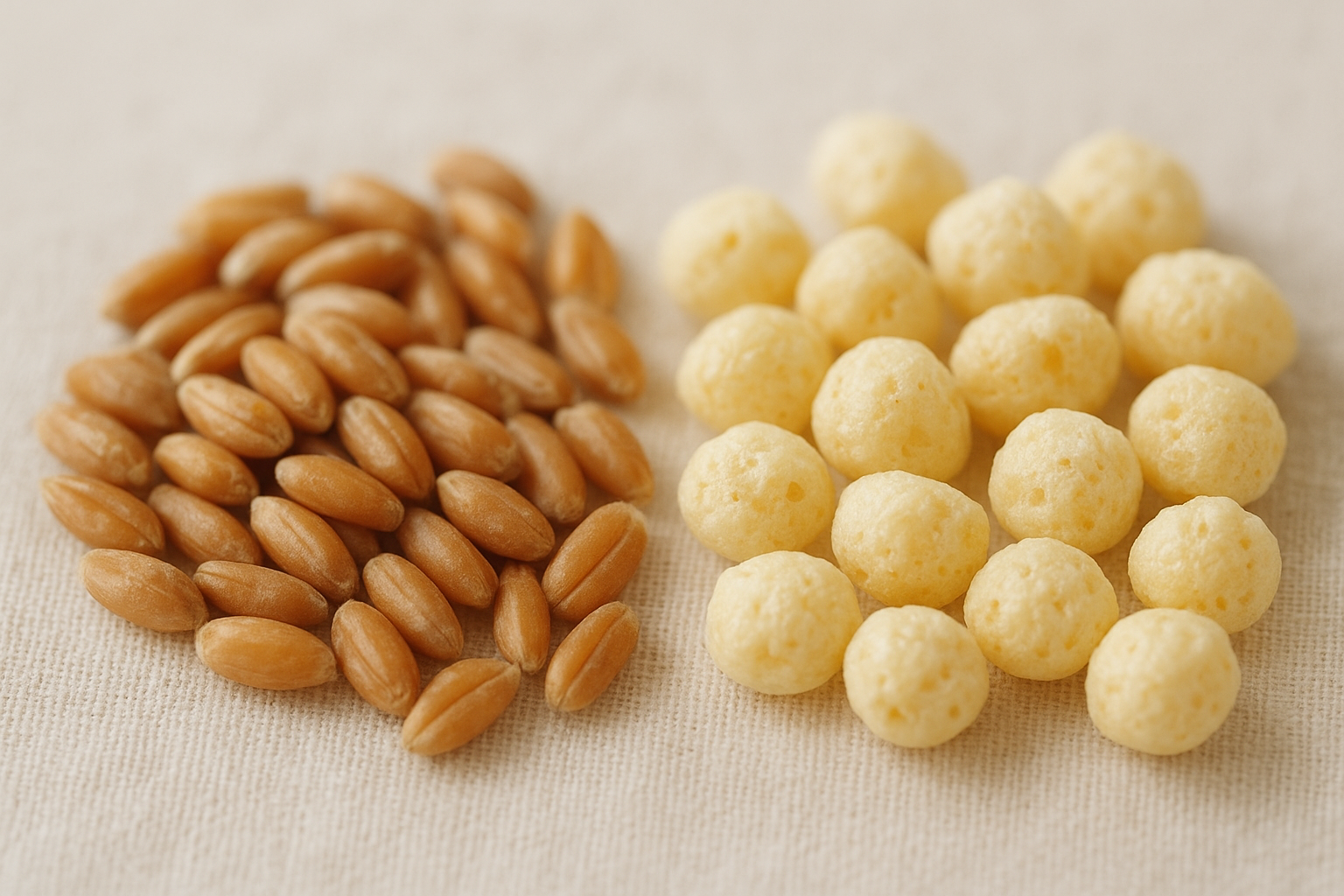
Gently puffed grains like organic Khorasan wheat retain more of their natural structure than heavily extruded cereal.
Puffed vs. Extruded: Why Processing Method Matters Too
Beyond the ingredient list, how a grain is processed changes the final product significantly. Extrusion forces grain slurry through high heat and pressure into engineered shapes, which can strip away much of the grain's original character. Puffing, on the other hand, uses gentler pressure and heat to expand the grain kernel while keeping more of its natural form intact.
Consequently, a cereal can technically contain no artificial ingredients yet still be considered heavily processed if it relies on extrusion. That is one reason the conversation around real food cereal increasingly includes both ingredient sourcing and manufacturing method. For readers who want a deeper explanation of this distinction, the article on what real food cereal actually means is a useful next read.
Nutritional Benchmarks: What a Truly Healthy Cereal for Kids Looks Like
An ingredient list free of synthetic additives is the starting point, but it isn't the whole picture. Specifically, a few numbers on the nutrition panel tell you just as much about whether a box belongs in the cart.
- Added sugar: aim for under 8 grams per serving, and ideally closer to 4–6 grams for younger children.
- Fiber: look for at least 3 grams per serving; whole and ancient grains like Khorasan wheat tend to deliver more than refined flour blends.
- Protein: 3 grams or more per serving helps cereal hold kids over until lunch rather than spiking and crashing blood sugar.
- First ingredient: it should be a whole grain, not sugar, corn syrup, or a refined flour.
Furthermore, certifications like USDA Organic add an independent layer of accountability on top of these numbers, since organic standards prohibit most synthetic additives outright rather than relying on a brand's self-reporting.
Best No Artificial Ingredients Cereal Picks for Families
Good Grains sits squarely in this category, with a lineup formulated around organic whole grains and real sweeteners rather than synthetic shortcuts.
- Organic Honey Puffs — gently puffed organic corn and Khorasan wheat sweetened with organic honey.
- Organic Cinnamon Cereal — real cinnamon instead of artificial flavoring, with no refined cane sugar.
- Organic Chocolate Cereal — real cocoa in place of synthetic chocolate flavoring compounds.
For a broader list of comparable picks, the roundup of cereals with no refined cane sugar and no artificial colors or flavors is a helpful next stop, as is the guide to the best organic cereals made with simple, real ingredients.
Choosing a Clean Ingredient Cereal for Your Family
When narrowing down options, it helps to weigh a few factors together rather than any single label. Sugar content matters, especially for children's cereal, since many traditional brands pack in refined cane sugar early in the ingredient list. Fiber also matters, since whole and ancient grains naturally provide more of it than refined flour blends.
Good Grains sits at this intersection intentionally. Its lineup is formulated without seed oils, refined cane sugar, artificial flavors, or artificial colors, while sweetened varieties use organic honey and organic monk fruit to keep added sugar meaningfully lower than many traditional kids' cereals. Furthermore, the brand is certified Glyphosate Residue Free and USDA Organic, adding independent verification on top of the ingredient list itself. You can review the full lineup directly at goodgrains.com. For a broader comparison of low-sugar options across the category, the guide on choosing the best low-sugar cereal for families is a helpful companion resource, as is the primer on how to pick the right healthy grains brand.
Tips for Transitioning Kids to a No Artificial Ingredients Cereal
Switching cereals cold turkey can backfire with picky eaters. Instead, a gradual approach tends to stick far better.
- Mix old and new. Blend a small portion of the new cereal into the old favorite for the first few bowls, then gradually shift the ratio over a week or two.
- Let kids pick the flavor. Giving children a say between cinnamon, honey, or chocolate increases buy-in far more than handing them a box unannounced.
- Keep favorite toppings consistent. Familiar fruit, milk, or yogurt pairings make an unfamiliar cereal feel instantly more comfortable.
- Read the label together. Turning the switch into a short, age-appropriate lesson about ingredients builds lasting habits beyond a single box.
Notably, many parents worry that cleaner ingredients mean a blander bowl. In reality, the article on what cereal tastes like the cereal I grew up with but has much cleaner ingredients walks through why nostalgic flavor and a no artificial ingredients cereal aren't mutually exclusive.
Frequently Asked Questions About No Artificial Ingredients Cereal
What is a no artificial ingredients cereal?
A no artificial ingredients cereal is a cereal made without synthetic dyes, artificial flavors, or manufactured preservatives. Instead, it relies on real grains, natural sweeteners like honey, and recognizable ingredients you could find in a home kitchen.
Why do some cereals contain artificial ingredients?
Manufacturers often add artificial colors, flavors, and preservatives to extend shelf life, brighten appearance, and standardize taste at a lower cost. These additives became common as cereal production scaled into highly automated, shelf-stable manufacturing.
How can I tell if a cereal has artificial ingredients?
Check the ingredient panel for chemical-sounding names such as Red 40, BHT, or artificial flavor. If ingredients are listed in plain language, like organic honey or organic corn, the product is more likely to be free of synthetic additives.
Is no artificial ingredients cereal the same as organic cereal?
Not always. A cereal can be free of artificial ingredients without being certified organic, and vice versa. However, USDA Organic certification does prohibit most synthetic additives, so the two labels frequently overlap.
What ingredients replace artificial flavors and colors in clean cereal?
Brands typically use real spices, cocoa, organic honey, and fruit or vegetable-based colorants instead of synthetic versions. These swaps aim to preserve familiar taste and appearance using ingredients found in everyday cooking.
Are no artificial ingredients cereals more expensive?
They can carry a slightly higher price due to organic sourcing and gentler processing methods. That said, the gap has narrowed as more better-for-you cereal brands enter the mainstream grocery aisle.
Does removing artificial ingredients change the taste of cereal?
It can, but well-formulated clean cereals are designed to preserve nostalgic taste. Using real honey, cinnamon, and cocoa alongside gentle puffing techniques helps maintain familiar flavor without synthetic shortcuts.
What's the difference between artificial ingredients and ultra-processed ingredients?
Artificial ingredients are specific synthetic additives, while ultra-processed refers to a broader classification of heavily engineered foods, even if their ingredients are technically natural. A cereal can avoid artificial ingredients yet still be considered ultra-processed if it undergoes extensive industrial extrusion.
How much sugar should a healthy cereal contain?
Many nutrition experts suggest keeping added sugar in cereal well under 8 grams per serving for children. Comparing sugar per serving across brands is one of the fastest ways to spot a genuinely lower-sugar option.
Are natural flavors the same as artificial flavors?
No. Natural flavors are derived from plant or animal sources, while artificial flavors are synthesized in a lab to mimic taste. Some clean-label brands avoid both categories in favor of whole-food ingredients like real cinnamon or cocoa.
What is Non-UPF Verified certification?
Non-UPF Verified is a third-party certification from WISEcode confirming a product does not meet the criteria for ultra-processed food. Good Grains became the first cereal brand to receive this certification.
What's a common mistake parents make when choosing cereal?
A common mistake is assuming front-of-box claims like natural or wholesome guarantee a clean ingredient list. Flipping the box over and reading the actual ingredient panel is a more reliable step.
Are puffed cereals healthier than extruded cereals?
Puffed cereals made through gentler processing tend to retain more of the grain's natural structure compared to heavily extruded shapes. This does not automatically make every puffed cereal healthy, so ingredient quality still matters most.
How many grams of fiber should a kids' cereal have per serving?
Look for at least 3 grams of fiber per serving, though cereals made with whole and ancient grains often provide more. Higher fiber helps slow sugar absorption and keeps kids fuller between meals.
Which artificial dyes are most common in kids' cereal?
Red 40, Yellow 5, Yellow 6, Blue 1, and Blue 2 appear most frequently in brightly colored children's cereals. All five are synthesized from petroleum rather than derived from food sources.
What's the best way to introduce picky eaters to a no artificial ingredients cereal?
Blend the new cereal with the old favorite in small amounts, let kids choose the flavor, and keep familiar toppings in place. Gradual exposure almost always works better than an abrupt swap.
Final Thoughts
Ultimately, choosing a no artificial ingredients cereal comes down to reading past the front of the box and checking both the ingredient list and how the grains were processed. In addition, third-party certifications like USDA Organic and Non-UPF Verified add a layer of accountability that self-reported marketing language cannot match. Above all, families should not have to choose between nostalgic taste and a cleaner ingredient panel. Brands built around organic whole and ancient grains, real sweeteners, and gentle puffing show that a no artificial ingredients cereal can still deliver the familiar bowl kids ask for every morning.
0 comments