


A healthy family cereal is a breakfast that fills up hungry kids in the morning without loading the bowl with refined sugar, artificial dyes, or heavily engineered grains. Parents want something fast and genuinely tasty, but they also want to feel good about what lands in the bowl before school. However, the cereal aisle makes that balance surprisingly hard to find, especially when "healthy" claims on the front of the box rarely match what the ingredient panel actually says. This guide goes further than a simple ranking list — it explains exactly what makes a healthy family cereal, how popular cereal categories compare nutritionally, how to read a label in under two minutes, and where a brand like Good Grains fits into a smarter, still-delicious breakfast routine.
Quick answer: A healthy family cereal combines whole or ancient grains, limited added sugar (ideally 6 grams or less per serving), and minimal processing, so it satisfies kids' taste expectations while still supporting long-term nutrition for the whole household. Look for third-party certifications — not just front-of-box marketing — to confirm those claims.
What Is a Healthy Family Cereal, Really?
A healthy family cereal is built from whole or ancient grains, sweetened lightly if at all, and processed as little as possible. Specifically, it avoids seed oils, refined cane sugar, preservatives, and artificial flavors or colors. In addition, it typically delivers a meaningful amount of fiber, a nutrient that helps keep both kids and adults fuller for longer between meals.
Unlike "diet" cereals built around keto or extreme protein claims, a genuinely family-friendly option still has to taste familiar enough that kids will actually eat it. Therefore, the best examples lean on real ingredients — honey, cinnamon, cocoa — rather than artificial flavoring to recreate the nostalgic flavors families already love. In other words, a healthy family cereal is defined as much by what it leaves out as by what it includes.
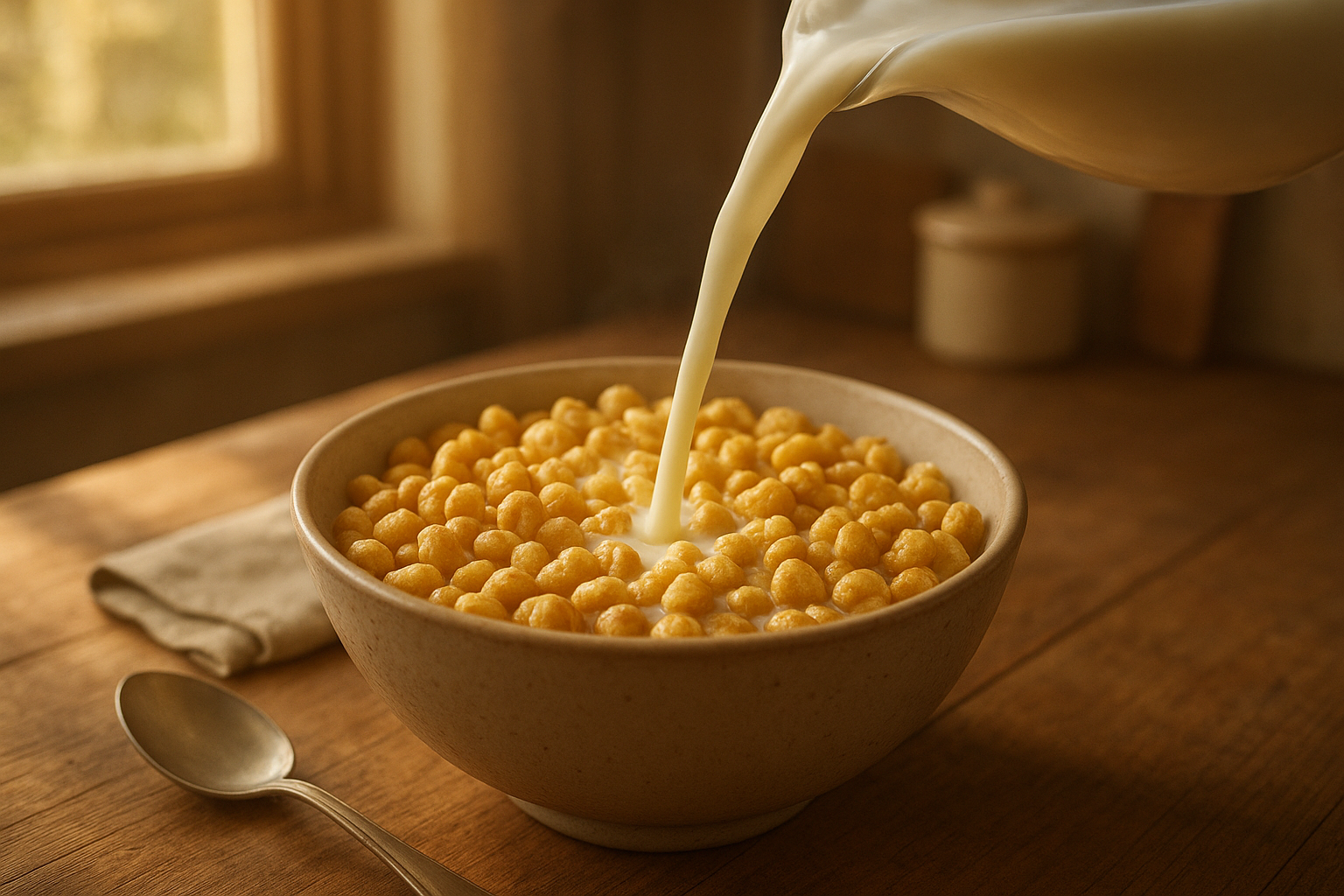
A bowl of healthy family cereal made from whole grains, photographed in natural morning light.
Why So Many "Healthy" Cereal Claims Don't Hold Up
Despite colorful marketing, most conventional cereals rely on heavily extruded grains, refined sugar, and long lists of stabilizers. In fact, research on ultra-processed food suggests these products can make up more than half of daily caloric intake in many households, which raises real concerns about long-term diet quality. Consequently, parents searching for a healthy family cereal often feel stuck between nostalgic-but-sugary boxes and newer "health" cereals built around grain-free or extreme diet trends.
Neither extreme actually solves the everyday problem. On one hand, traditional cereals taste great but can undermine nutrition goals. On the other hand, many trend-driven alternatives sacrifice the familiar cereal experience kids expect every morning. As a result, families end up compromising on either taste or health, when neither should be necessary — which is exactly the gap this guide addresses.
Puffed vs. Extruded Cereal: Which Process Protects Nutrition Better?
Extrusion forces grains through high heat, high pressure, and mechanical shaping to create uniform pieces, which can strip away much of the grain's original structure. In contrast, gentle puffing works with the grain's natural form, so it retains more of its texture, flavor, and nutritional integrity. If you want to understand this distinction in more depth, our deep dive on whether puffed cereal is healthy for kids breaks down the science further.
| Factor | Puffed Grains | Extruded Grains |
|---|---|---|
| Processing intensity | Lower heat, gentler process | High heat and pressure |
| Grain structure | Largely retained | Broken down and reshaped |
| Typical shapes | Natural, familiar cereal shapes | Engineered rings, stars, shapes |
For example, Good Grains applies gentle puffing to organic Khorasan wheat, an ancient grain, along with organic corn used in its Organic Corn Puffs. Because this method avoids heavy extrusion, the finished cereal keeps more of the grain's natural bite and nutty flavor — something a listicle ranking alone can't show you.
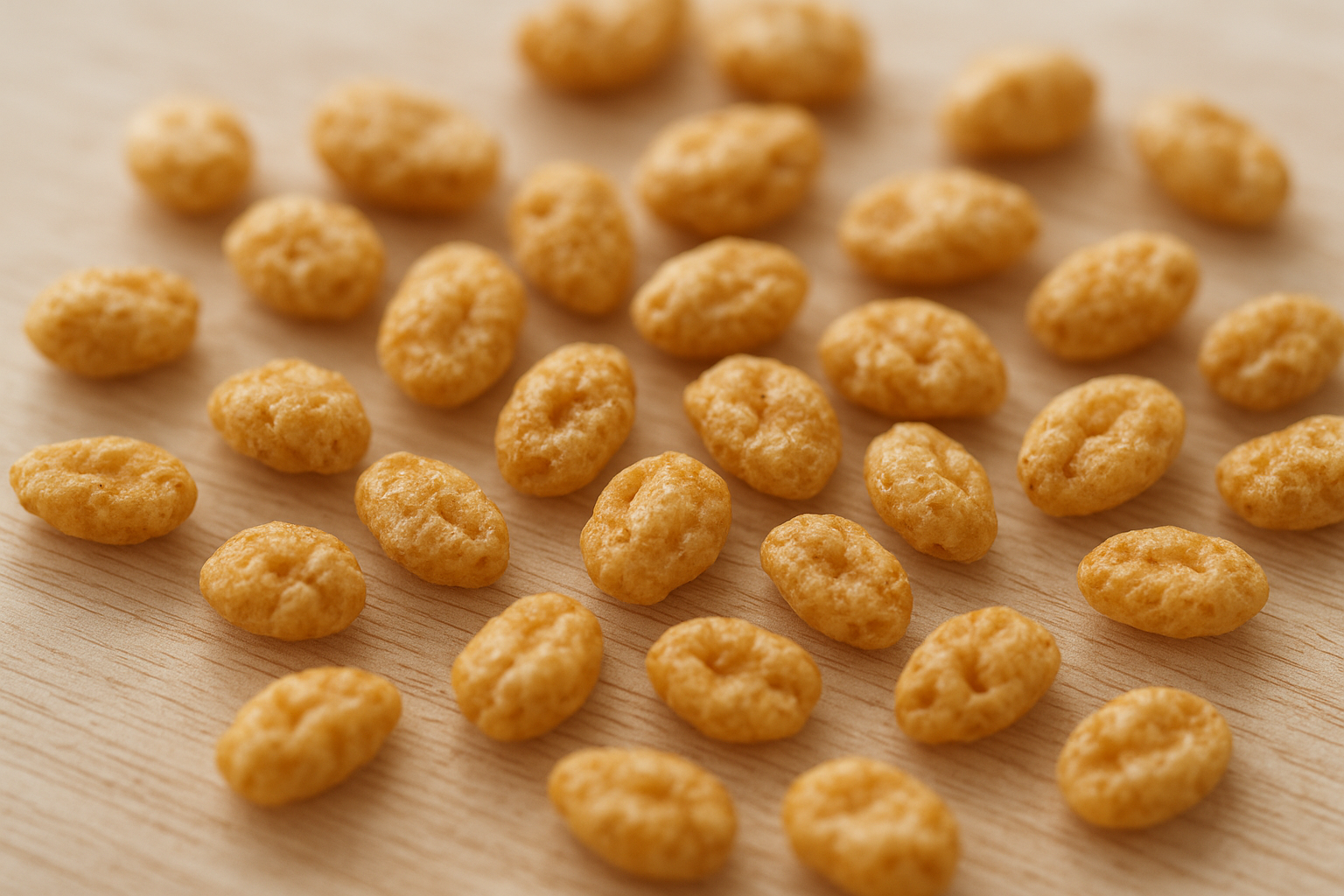
Gently puffed whole grains retain more natural texture than heavily extruded cereal shapes.
Where Popular Cereal Categories Land on the Health Spectrum
Rather than ranking individual brands one by one, it's more useful for families to understand the broad categories cereals fall into, since most boxes in the aisle fit a predictable pattern. Below is a general breakdown of where common cereal types typically land, based on standard nutrition-label benchmarks for sugar and fiber.
| Category | Typical Added Sugar | Typical Fiber | General Verdict |
|---|---|---|---|
| Marshmallow/candy-piece cereals | 10–12g per serving | Under 1g | Least healthy — occasional treat only |
| Frosted flake-style cereals | 9–11g per serving | 1–2g | Low nutrition value for the sugar load |
| Mainstream O-shaped oat cereals | 0–1g per serving | 2–3g | Decent baseline, but highly extruded |
| Bran and raisin cereals | 10–13g per serving | 5–7g | High fiber, but sugar often overlooked |
| Granola and clusters | 6–14g per serving | 3–5g | Varies widely — check labels closely |
| Gently puffed whole/ancient grain cereals | 0–5g per serving | 3–6g | Strongest overall profile for families |
Notice the pattern: categories that sound nutritious, such as bran and raisin blends, can still carry a heavy sugar load. Meanwhile, gently puffed whole and ancient grain cereals tend to balance low sugar with solid fiber more consistently than any other category. This is precisely why category-level understanding beats a simple brand-by-brand ranking — it teaches you to evaluate any box, not just the ones already reviewed.
How to Choose a Healthy Family Cereal: 5 Label Checks That Matter
Choosing a healthy family cereal starts with flipping the box over before looking at the front graphics. Specifically, check the ingredient list, added sugar per serving, and fiber content before anything else. Furthermore, look for certifications that back up marketing claims rather than taking them at face value.
Green flags to look for
- Whole grains, ancient grains, honey, or monk fruit listed near the top of the ingredient panel
- 6 grams or less of added sugar per serving
- 3 grams or more of fiber per serving from the grain itself
- Independent certifications such as USDA Organic or Non-UPF Verified
- A short, pronounceable ingredient list you could read aloud to a child
Red flags to avoid
- Corn syrup, high-fructose corn syrup, or cane sugar within the first three ingredients
- Artificial colors (listed as "Red 40," "Yellow 5," etc.) or artificial flavoring
- Seed oils such as soybean or canola oil used as a coating
- Vague front-of-box language like "natural" or "made with whole grain" without a supporting certification
- Preservatives such as BHT, which are banned in several other countries
The USDA organic standard is one useful checkpoint, since it confirms grains were grown without synthetic pesticides. Similarly, independent glyphosate residue testing adds another layer of confidence beyond an organic label alone. Above all, a cereal should deliver on taste; otherwise, even the healthiest formulation won't survive a real breakfast table. For a closer look at how to decode a cereal label, see our guide on what makes a clean-ingredient cereal.
Added Sugar Guidelines: How Much Is Too Much for Kids and Adults?
According to the American Heart Association, children ages two to eighteen should consume less than 25 grams of added sugar per day, while adults should generally cap added sugar at around 25 to 36 grams daily depending on sex and calorie needs. Because a single bowl of cereal can easily supply 40% or more of that entire daily budget, sugar content deserves far more attention than most front-of-box marketing gives it.
Why this matters more at breakfast
Breakfast sets the tone for blood sugar stability throughout the morning. Specifically, a high-sugar cereal tends to cause a rapid glucose spike followed by a crash, which can leave kids irritable or unfocused well before lunch. In contrast, a lower-sugar, higher-fiber bowl releases energy more gradually, helping both kids and adults stay steady until their next meal.
Fiber Needs by Age: What a Healthy Breakfast Cereal Should Deliver
Most American children and adults fall well short of recommended daily fiber intake, making breakfast one of the easiest places to close the gap. A good source of fiber typically means at least 3 grams per serving, while an excellent source provides 5 grams or more.
- Children ages 4–8: around 25 grams of fiber per day
- Children ages 9–13: around 26–31 grams per day
- Teens and adults: around 25–38 grams per day, depending on sex and age
Whole and ancient grain cereals often reach meaningful fiber levels naturally, without relying on added fiber isolates like chicory root or inulin, which can cause digestive discomfort in some children when consumed in large amounts.
Gluten-Free and Allergy-Friendly Considerations for Family Cereal
For families managing celiac disease, gluten sensitivity, or other food allergies, "healthy" also has to mean safe. Corn, rice, and certified gluten-free oats are common gluten-free bases, while wheat-based ancient grains such as Khorasan wheat still contain gluten and are not suitable for a gluten-free diet, despite sometimes being marketed as a "gentler" wheat option.
In addition, cross-contamination is a real concern in shared manufacturing facilities. Therefore, families with severe allergies should look specifically for a "gluten-free" certification mark rather than assuming a grain-free or wheat-free label is automatically safe. Reading the allergen statement at the bottom of the ingredient panel takes only a few seconds and can prevent a serious reaction.
The Serving-Size Trick That Hides Added Sugar
One tactic that trips up even careful shoppers involves serving size manipulation. Specifically, some brands list an unrealistically small serving size — sometimes less than a cup — so the sugar and calorie numbers on the front panel look lower than what a person would actually eat. The FDA's Nutrition Facts label guidance explains how standardized serving sizes are meant to prevent this, but comparing cereals gram-for-gram, not cup-for-cup, remains the most reliable way to spot the trick.
To compare fairly, divide the grams of sugar by the serving size in grams, then multiply by a consistent reference amount, such as 30 grams. This quick calculation levels the playing field between a cereal with a 27-gram serving and one with a 55-gram serving, revealing which one is truly lower in sugar per actual bowl eaten.
How Good Grains Brings Nostalgic Taste to a Healthier Family Cereal
Good Grains was built specifically to fill the gap between sugary nostalgia cereals and overly engineered health food. Its cereals are made from organic whole and ancient grains, including Khorasan wheat and organic corn, and are sweetened with real honey and organic monk fruit instead of refined cane sugar.
Notably, Good Grains became the first cereal brand to earn Non-UPF Verified certification through WISEcode, in addition to being certified Glyphosate Residue Free and USDA Organic. For families craving a cinnamon cereal with nostalgic flavor, the Organic Cinnamon Khorasan cereal demonstrates how classic taste and cleaner ingredients can coexist in the same bowl. You can also compare flavor-specific options in our breakdown of the healthiest cinnamon cereal that still tastes like a real treat.
A family breakfast built around a healthy family cereal can still feel completely familiar.
Step-by-Step: How to Evaluate Any Cereal Box in Under Two Minutes
Because cereal marketing can be misleading, it helps to follow a consistent checklist every time you shop. Below is a simple five-step process families can use before adding any box to the cart.
- Check the ingredient list first. Read the ingredient panel before anything else, and look for whole grains, honey, or monk fruit near the top instead of refined sugar, corn syrup, or unpronounceable additives.
- Compare added sugar per serving. Compare grams of added sugar per serving across a few boxes, since many children's cereals pack in ten grams or more, while lower-sugar options rely on fruit or natural sweeteners instead.
- Look at fiber content. Check the fiber line on the nutrition panel, aiming for cereals that deliver several grams per serving from whole and ancient grains rather than added fiber isolates.
- Verify third-party certifications. Look for independent verification such as USDA Organic, Non-UPF Verified, or Glyphosate Residue Free, since these labels confirm claims instead of relying on marketing language alone.
- Taste-test with the whole family. Serve a small bowl to every family member before committing to a full pantry switch, because a healthy family cereal only works long-term if kids actually want to eat it.
Best Healthy Family Cereal Picks for Every Need
Not every family has the same priorities at breakfast. Therefore, here's how to match a healthy family cereal to the need that matters most in your household.
Best for toddlers and picky eaters
Gently puffed cereals tend to have a lighter, easier-to-chew texture that works well for small mouths and cautious palates. Our guide on puffed cereal for parents explains what to check before handing a bowl to a toddler.
Best for a complete starting point
If you're overhauling the whole pantry at once, our full parent's buying guide to healthy kids' breakfast cereal walks through every category, from hot cereals to ready-to-eat boxes.
Best low-sugar, high-fiber pick
Look for a cereal built on ancient grains like Khorasan wheat, which naturally carries more fiber and protein than modern refined wheat varieties, without needing added sugar to taste satisfying on its own.
Best nostalgic flavor pick
For a cinnamon cereal that tastes like a treat without the usual sugar load, the Organic Cinnamon Khorasan cereal mentioned above is a strong starting point for a family transition.
Frequently Asked Questions About Healthy Family Cereal
What is a healthy family cereal?
A healthy family cereal is a breakfast cereal made from whole or ancient grains with limited added sugar, minimal processing, and no artificial additives, so it works for both kids and adults. It should list recognizable ingredients and provide meaningful fiber rather than relying on refined starches alone.
How can I tell if a cereal is minimally processed?
Minimally processed cereals typically use gentle puffing rather than heavy extrusion, and their ingredient lists are short and recognizable. If a box lists engineered starches, syrups, and dozens of additives, it likely went through more industrial processing.
Why is puffed cereal considered healthier than extruded cereal?
Puffing tends to preserve more of the grain's natural structure, while extrusion forces grains through high heat and pressure to create uniform shapes. As a result, puffed cereals often retain more of the original grain's fiber and character.
Is organic cereal actually healthier than conventional cereal?
Organic certification means the grains were grown without synthetic pesticides and the product meets USDA standards, which reduces exposure to residues like glyphosate. It does not automatically guarantee low sugar, so shoppers should still check the nutrition label.
How much sugar should a healthy family cereal contain?
Look for cereals with around 6 grams of added sugar or less per serving, especially for children's cereal, since many traditional boxes contain far more. Cereals sweetened with small amounts of honey or monk fruit can hit this target while still tasting sweet.
What does Non-UPF Verified mean?
Non-UPF Verified is a third-party certification, created by WISEcode, that confirms a food product does not meet the criteria for ultra-processed food. It gives shoppers an independent way to check processing claims instead of relying on marketing alone.
Are ancient grains like Khorasan wheat better than regular wheat?
Ancient grains such as Khorasan wheat have been bred less intensively over time than modern wheat varieties and often carry a naturally nutty flavor and solid fiber content. However, the benefits still depend on how the grain is processed after harvest.
How much fiber should a healthy cereal provide?
A good source of fiber typically means at least 3 grams per serving, while an excellent source provides 5 grams or more. Whole and ancient grain cereals often reach these levels naturally, without needing added fiber isolates.
What common mistakes do parents make when choosing cereal?
Many parents assume a cereal is healthy simply because the box says natural, multigrain, or made with whole grain, without checking the actual sugar and ingredient list. Marketing claims are not regulated the same way as certified labels like USDA Organic.
Is gluten-free cereal automatically a healthier choice?
Not necessarily. Gluten-free cereals can still contain high added sugar or heavily refined starches, so the gluten-free label addresses safety for sensitive families rather than overall nutrition quality on its own.
How can I spot a misleading serving size on a cereal box?
Compare the serving size in grams, not cups, across different boxes, since brands sometimes shrink the listed serving to make sugar and calorie numbers appear lower than what people actually eat in one bowl.
How long does it take to switch a family to healthier cereal?
Most families notice a difference within one to two weeks, as taste buds adjust to less intense sweetness. Introducing a new cereal alongside a familiar one for the first few breakfasts can ease the transition.
Does healthy family cereal cost more than regular cereal?
Organic, minimally processed cereals often cost more per box than mass-market cereals, largely due to higher-quality grain sourcing and smaller-scale production. Many families find the trade-off worthwhile given lower sugar and fewer additives.
Can healthy family cereal still taste like classic cereal?
Yes, healthy family cereal can taste nostalgic and familiar while using better ingredients, since flavor comes from real honey, cinnamon, or cocoa rather than artificial flavoring alone. Brands built around whole grains and gentle puffing aim to preserve that classic cereal experience.
Final Thoughts: Building a Better Breakfast for the Whole Family
Ultimately, a healthy family cereal doesn't need to sacrifice taste for nutrition, nor does it require chasing every new diet trend on the shelf. Instead, it comes down to whole grains, gentle processing, honest labels, and flavors the whole household actually enjoys. By checking ingredients, sugar, fiber, serving size, and third-party certifications — not just a front-of-box ranking — parents can confidently choose a healthy family cereal that fits real mornings, not just marketing claims. For families ready to make the switch, exploring options like Good Grains is a practical place to start.
0 comments