


Cereal without artificial flavors is becoming the standard many parents look for as they walk down the cereal aisle. Instead of relying on synthetic flavor compounds to recreate a familiar taste, this kind of cereal leans on real grains, real sweeteners, and traditional flavor sources like cinnamon or cocoa. As a result, the ingredient list looks shorter and more recognizable. Understanding what separates a naturally flavored box from an engineered one can help families choose breakfast options that taste nostalgic without the unnecessary processing that fills much of the conventional cereal shelf.
What Is Cereal Without Artificial Flavors?
Cereal without artificial flavors is a cereal formulated using only natural flavor sources, such as real fruit, honey, cinnamon, vanilla, or cocoa, rather than synthetic flavor compounds created in a lab. In practice, this means the ingredient list avoids vague terms like "artificial flavor" or unnamed flavor blends of undisclosed origin. Brands pursuing this standard also tend to skip artificial colors and chemical preservatives, since these categories frequently appear together on nutrition labels.
According to the U.S. Food and Drug Administration's labeling rules under 21 CFR 101.22, artificial flavor is defined as any substance that imparts flavor but is not derived from a spice, fruit, vegetable, or similar natural source. In other words, the legal definition itself hinges on origin, not on taste. That distinction is exactly why reading the actual ingredient panel matters more than trusting a front-of-box claim.
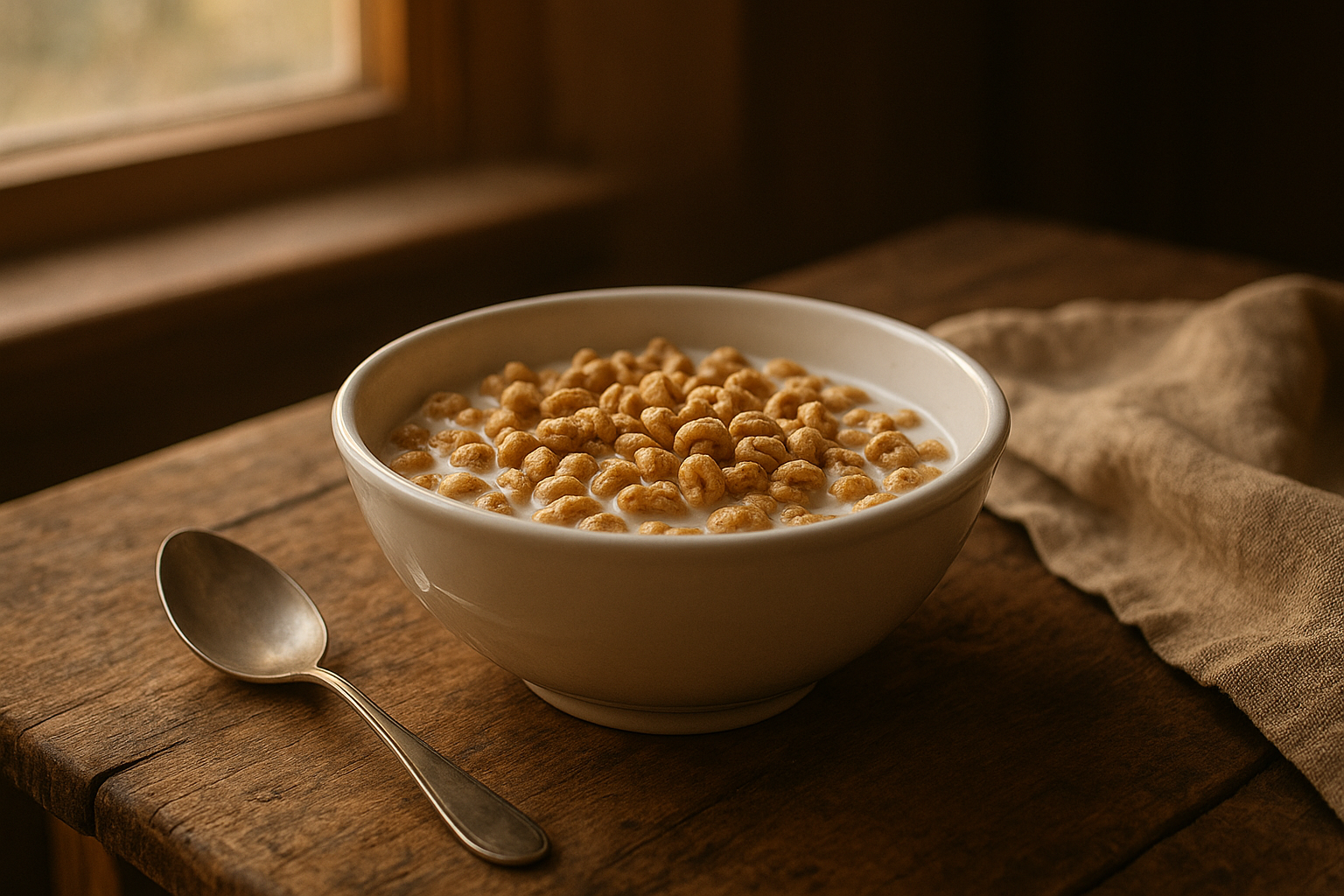
A simple bowl of naturally flavored, minimally processed cereal made from real whole grains.
Why Many Cereals Still Rely on Artificial Flavoring
Many mainstream cereals still use artificial flavoring for practical manufacturing reasons. Specifically, high-heat extrusion, the process that forces grain slurry through machinery to create engineered shapes, tends to strip away much of a grain's natural taste. Consequently, manufacturers add a flavor coating afterward to restore a consistent, recognizable taste at a lower cost than sourcing premium natural ingredients.
This approach, sometimes called food extrusion, allows for long shelf life and uniform texture across huge production runs. However, it also explains why so many children's cereals depend on artificial flavors and colors rather than the grain itself carrying the flavor. In contrast, a gentler puffing process is designed to preserve more of a grain's natural character, which reduces the need for heavy flavor engineering later in production.
How to Identify Real Ingredient Cereal on the Label
Identifying real ingredient cereal starts with the ingredient list, not the marketing copy on the front of the box. First, look at whether whole grain flour or whole grains appear near the top of the list, since ingredients are listed by weight. Second, scan for the word "flavor" on its own, which almost always signals a formulated flavor system rather than a named natural ingredient.
Additionally, third-party certifications provide a faster way to verify claims without decoding every ingredient yourself. For a deeper breakdown of how to evaluate cereal brands more broadly, this guide to picking the right cereal brand walks through additional label-reading tips. Similarly, understanding what qualifies as real food cereal can help clarify why ingredient sourcing matters as much as the nutrition facts panel.
Common Artificial Flavor Ingredients to Watch For
- "Artificial flavor" or "artificial and natural flavors" listed without further explanation
- Artificial food dyes such as Red 40, Yellow 5, or Blue 1
- Preservatives like BHT or TBHQ, which often appear alongside engineered flavor systems
- Vague "flavor" listings with no named source, such as fruit or spice
Puffed vs. Extruded Cereal: Why the Process Matters
The way a grain is processed has a direct effect on whether a cereal needs artificial flavoring in the first place. Puffing uses heat and pressure to expand a whole grain kernel while largely preserving its natural shape, structure, and inherent flavor. Extrusion, on the other hand, breaks the grain down into a slurry and reshapes it into engineered forms, which usually strips out much of the original taste.
Because of this, a gently puffed cereal often needs less flavor engineering to taste satisfying. Good Grains, for example, uses organic whole and ancient grains, including Khorasan wheat, and applies a gentler puffing method rather than heavy extrusion. For more detail on this approach, see goodgrains.com as a reference point for how puffed, minimally processed cereal is formulated in practice.
How to Choose a Naturally Flavored Cereal in 5 Steps
Choosing a naturally flavored cereal does not require a nutrition degree. Instead, following a short checklist at the store can make the process quick and reliable.
- Skip the front-of-box marketing claims and go straight to the ingredient list, since terms like "wholesome" or "natural tasting" are not strictly regulated on cereal packaging.
- Search for specific, named flavors such as honey, cinnamon, cocoa, or vanilla extract instead of a vague listing that simply says "artificial flavor" or "flavor."
- Check for independent certifications like Non-UPF Verified, USDA Organic, or Glyphosate Residue Free, which provide objective proof beyond what the brand states itself.
- Prioritize cereals sweetened with real honey or organic monk fruit over refined cane sugar or artificial sweeteners, since sugar type often signals overall formulation quality.
- Serve the cereal at breakfast and see whether kids and adults genuinely enjoy it, since a naturally flavored cereal should still deliver a satisfying, nostalgic eating experience.
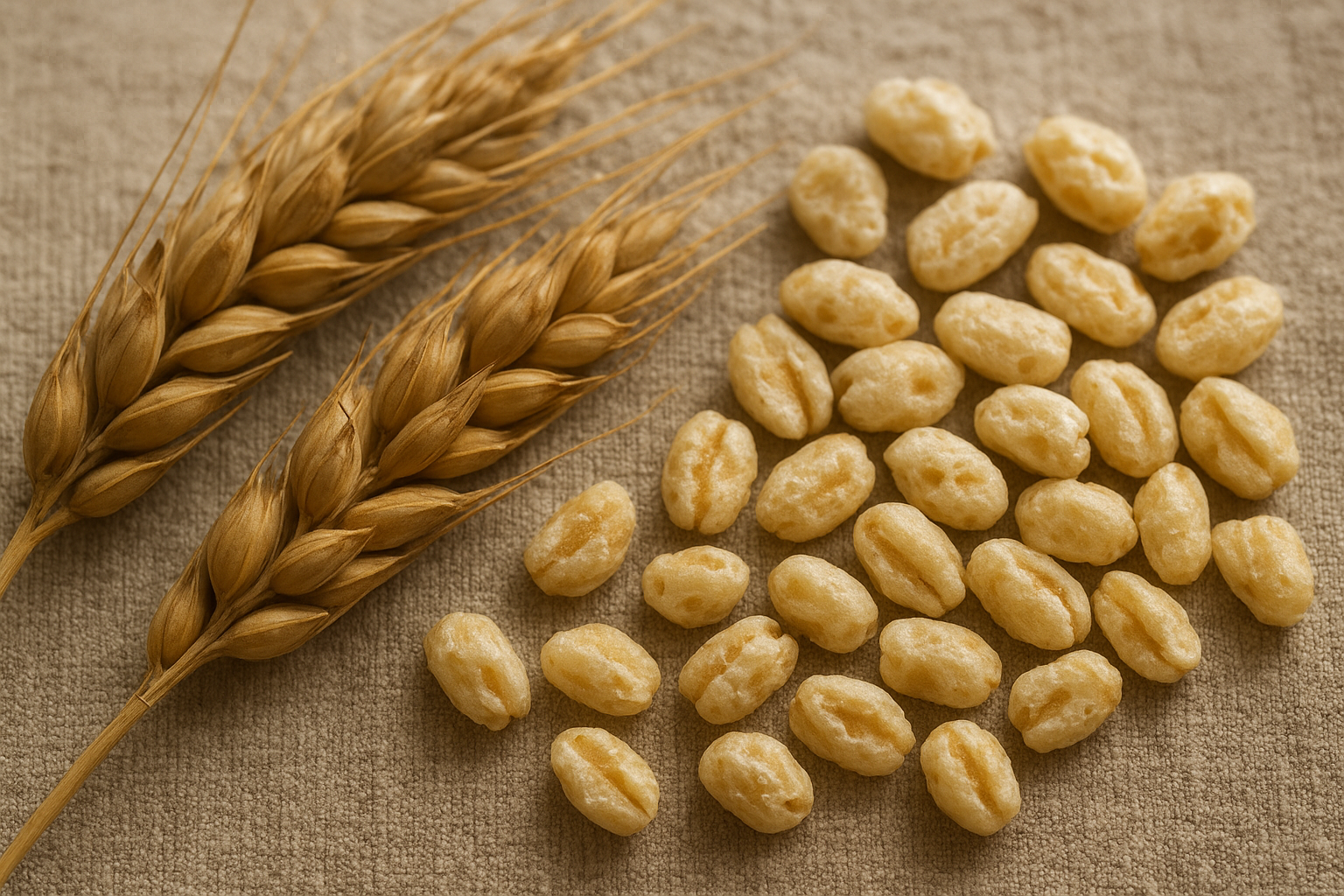
Whole and ancient grains, like Khorasan wheat, retain more natural flavor when gently puffed.
Good Grains' Approach to Clean-Label, Non-UPF Cereal
Good Grains was built specifically to fill the gap between traditional sugary cereals and overly engineered "health" cereals built around passing diet trends. Its organic cereals, including Honey Puffs, Cinnamon, Chocolate, and Corn Puffs, are made from thoughtfully sourced whole and ancient grains and sweetened with real organic honey and organic monk fruit rather than refined cane sugar.
Notably, Good Grains became the first cereal to earn Non-UPF Verified certification through WISEcode, and it is also certified Glyphosate Residue Free. All products are USDA Organic and made without seed oils, artificial flavors, or artificial colors. For context on why this category of certification matters, research cited by the National Institutes of Health notes that ultra-processed foods make up a substantial share of daily calorie intake in the average American diet, which is part of why independent, non-UPF verification has become increasingly relevant to health-conscious families. To see how this specific breakfast pick fits into a broader clean-label routine, this organic, Non-UPF breakfast pick overview offers further detail, and the low-sugar cereal guide for families covers how sugar sourcing ties into the same clean-label standards.
Frequently Asked Questions About Cereal Without Artificial Flavors
What does cereal without artificial flavors mean?
Cereal without artificial flavors means the recipe uses only real, identifiable flavor sources, such as honey, cinnamon, cocoa, or vanilla, instead of lab-created flavor compounds. It typically avoids ingredient lines that simply say "artificial flavor" without further explanation.
Are natural flavors the same as artificial flavors?
No, they are regulated differently. Natural flavors are derived from a plant or animal source, while artificial flavors are chemically synthesized to imitate a taste, even though both can appear as vague catch-all terms on a label.
Why do some cereals still rely on artificial flavoring?
Manufacturers often add artificial flavoring because high-heat extrusion can strip away a grain's natural taste, so a flavor coating restores consistency at a lower cost. As a result, many mainstream cereals lean on engineered flavors instead of the grain itself.
How can I tell if a cereal has artificial flavors?
Check the ingredient list for the exact phrase "artificial flavor" or "artificial and natural flavors," which usually appears within the first ten ingredients on cereal packaging. If the flavor source is not named, it is worth treating with caution.
Is cereal without artificial flavors more expensive?
It can cost somewhat more per box, since real ingredients like organic honey and whole grains typically cost more than synthetic flavor compounds. However, many families find the trade-off worthwhile for a cleaner ingredient list.
Does removing artificial flavors change how cereal tastes?
Not necessarily; a well-formulated naturally flavored cereal can still taste nostalgic and satisfying. Brands that gently puff whole grains rather than heavily extrude them often retain more of the grain's own natural flavor and crunch.
What certifications indicate a cereal avoids artificial flavors?
Look for third-party marks such as Non-UPF Verified, USDA Organic, or Glyphosate Residue Free, which independently confirm ingredient and processing standards. These certifications go beyond front-of-box marketing claims.
How is puffed cereal different from extruded cereal?
Puffed cereal uses heat and pressure to expand whole grain kernels while keeping much of their natural shape and structure. Extruded cereal, in contrast, forces a grain slurry through a machine to create engineered shapes, which often requires added flavoring afterward.
Can kids taste the difference in naturally flavored cereal?
Many parents report that kids do not notice a difference when the recipe still uses real honey, cinnamon, or cocoa. In fact, some children prefer the more authentic grain flavor once they get used to it.
What common mistake do shoppers make when checking flavor ingredients?
A common mistake is relying on front-of-box words like "natural" or "wholesome" instead of reading the actual ingredient list. These marketing terms are not strictly regulated in the same way flavor labeling is.
Is natural flavor always a cleaner choice than artificial flavor?
Not automatically; natural flavor is still a processed additive and can be derived from dozens of undisclosed sources. The cleanest option is usually a named ingredient, such as honey or cinnamon, rather than either flavor category.
How long does it take to switch a family to naturally flavored cereal?
Most families adjust within one to two weeks of trying a naturally flavored cereal consistently. Starting with a familiar flavor profile, such as honey or cinnamon, tends to ease the transition.
What is Non-UPF Verified certification?
Non-UPF Verified is a third-party certification from WISEcode that confirms a food product does not meet the criteria for an ultra-processed food. It evaluates ingredients and processing methods rather than relying on marketing claims alone.

Families can enjoy a nostalgic breakfast without sacrificing ingredient quality.
Final Takeaway
Ultimately, choosing cereal without artificial flavors comes down to reading past the front-of-box promises and checking what is actually inside the box. By looking for named flavor sources, gentle processing methods, and independent certifications like Non-UPF Verified, USDA Organic, and Glyphosate Residue Free, families can find a breakfast option that feels familiar without the unnecessary additives. Brands like Good Grains show that a cereal can still deliver nostalgic taste while relying on real grains, real honey, and thoughtful sourcing instead of engineered flavor systems. In the end, a truly better cereal should not require a trade-off between taste and ingredient quality, and cereal without artificial flavors is proof that families no longer have to choose one over the other.
0 comments