


Cereal without artificial colors is exactly what more parents are searching for as they stand in the cereal aisle, squinting at ingredient lists full of names they cannot pronounce. For decades, bright blue, red, and yellow cereal pieces came from synthetic dyes rather than real food. Today, however, families want breakfast staples that look appealing because of real ingredients, not petroleum-derived additives. This shift matters because what goes into a child's bowl every morning shapes lifelong eating habits. In this guide, we will explain what this kind of cereal actually means, why it matters, and how to choose it with confidence.
Quick answer: Cereal without artificial colors is cereal made using only natural ingredients, grains, fruits, spices, or plant-based pigments for color, with no synthetic dyes such as Red 40, Yellow 5, or Blue 1. Brands achieve this by relying on the grain's natural appearance or whole-food ingredients like cocoa, cinnamon, or honey instead of lab-made colorants.
What Is Cereal Without Artificial Colors?
Cereal without artificial colors is cereal formulated entirely without synthetic dyes, meaning its color comes from the grains themselves or from natural additions such as cocoa, cinnamon, turmeric, or fruit powders. Specifically, this excludes common synthetic dyes like Red 40, Yellow 5, Yellow 6, and Blue 1, all of which are derived from petroleum rather than food sources. As a result, this type of cereal typically looks more muted or earthy, reflecting the natural tones of wheat, corn, or oats rather than the neon brightness many shoppers associate with cereal marketed to kids.
In addition, many consumers now use this phrase interchangeably with "clean-label cereal" or "non-UPF cereal," since artificial colors are one of several markers of ultra-processed food, a term food scientists use for industrially formulated products with additives rarely used in home cooking. Therefore, avoiding artificial colors is often a signal that a cereal has also avoided other synthetic additives.
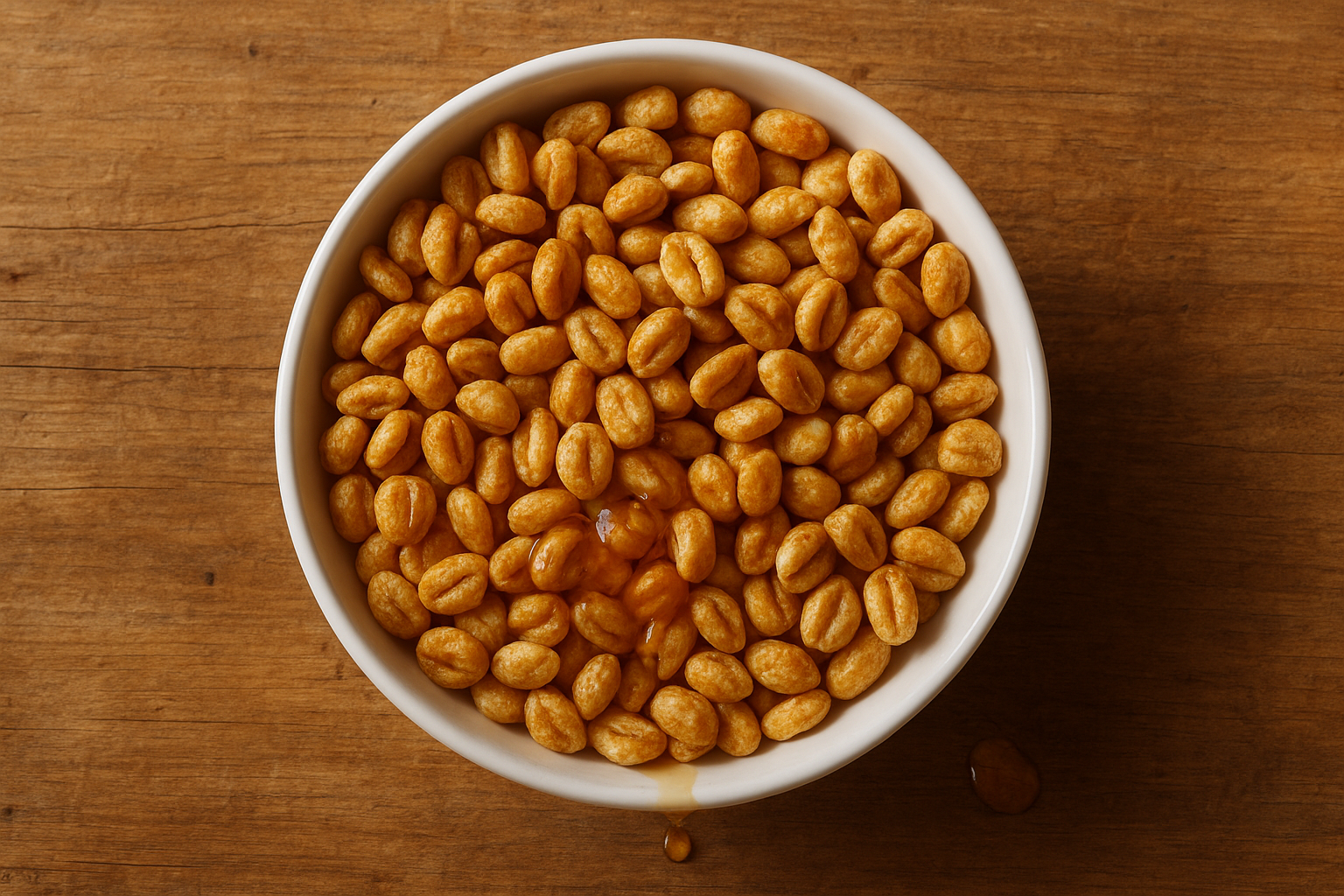
A bowl of cereal without artificial colors relies on the natural tones of whole grains rather than synthetic dyes.
Why Artificial Dyes Still Show Up in So Many Cereal Boxes
Despite growing demand for cleaner labels, artificial dyes remain common because they are cheap, stable, and visually consistent batch after batch. Manufacturers have relied on synthetic food coloring since the mid-20th century to make cereal look more vibrant on store shelves and in advertising aimed at children. However, regulatory attitudes are shifting. In January 2025, the U.S. Food and Drug Administration announced it was revoking authorization for Red No. 3 in food products nationwide, citing evidence from animal studies. Similarly, California's Food Safety Act and School Food Safety Act have pushed several dyes out of school meals and products sold statewide, prompting many national brands to reformulate.
Consequently, more families are reading labels closely rather than trusting box art alone. For example, a cereal piece colored "berry blue" does not necessarily contain any actual berries; instead, that color may come entirely from Blue 1. Understanding this distinction helps parents separate genuine fruit-based ingredients from cosmetic additives designed purely for visual appeal.
How to Identify Naturally Colored Cereal at the Store
Spotting dye-free cereal does not require a chemistry degree. Above all, it requires knowing where to look on the package and which claims actually mean something. The following steps make the process quick, even during a busy grocery run.
- Read the full ingredient list, not just the front label. Front-of-box claims like "naturally flavored" do not guarantee the absence of artificial colors, so scan every ingredient for names like Red 40, Yellow 5, Yellow 6, Blue 1, or Blue 2 before trusting marketing language.
- Look for specific named colorants instead of vague pigment language. Ingredients listed as turmeric, beet juice extract, annatto, or paprika extract indicate real plant-based coloring, while terms like "artificial color" or "FD&C" dyes signal synthetic additives.
- Check for third-party verification seals. Certifications such as USDA Organic or Non-UPF Verified require ingredient transparency and typically rule out synthetic dyes, giving shoppers a faster way to confirm quality without reading every line.
- Compare the cereal's actual color to its ingredient list. If a cereal is strikingly bright or uniform in color yet lists no corresponding natural ingredient, that mismatch is a reliable sign artificial dyes are involved.
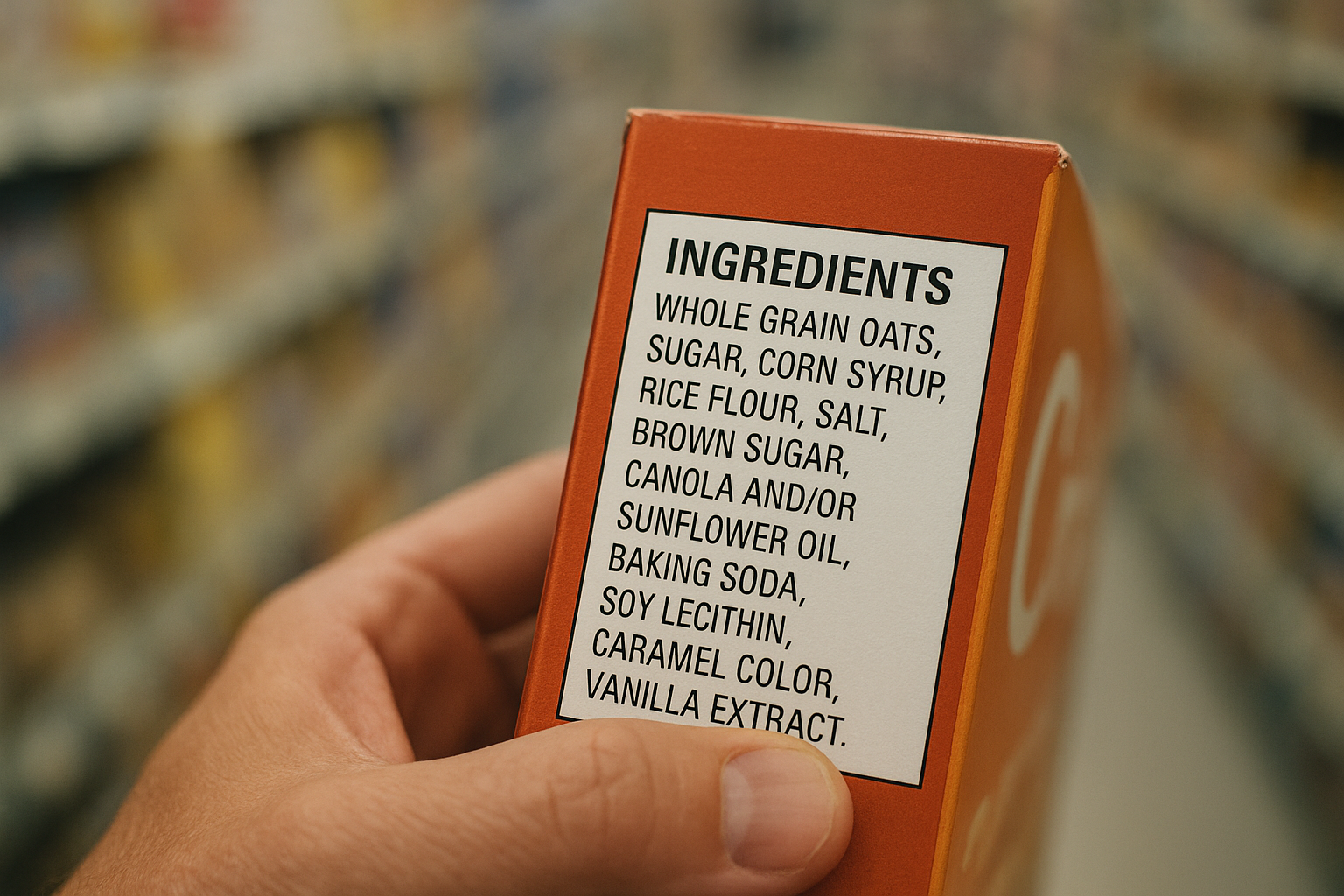
Checking the ingredient panel is the fastest way to confirm a cereal without artificial colors.
Cereal Without Artificial Colors vs. Traditional Cereal: What Actually Changes
Switching to cereal without artificial colors changes more than just the appearance in the bowl. Typically, brands that remove synthetic dyes also reconsider other aspects of the formula, including refined sugar, preservatives, and heavily engineered shapes. For instance, this family buying guide to cereal without artificial ingredients walks through how these changes often happen together rather than in isolation.
In contrast, many traditional children's cereals pair artificial colors with refined cane sugar and artificial flavors to create an intensely sweet, visually bright product. Some popular children's cereals contain more than 10 grams of added sugar per serving, while cereals built around whole grains and natural sweeteners like honey or monk fruit often land significantly lower. This article on cereals with no refined cane sugar and no artificial colors or flavors breaks down these differences in more detail.
Furthermore, texture and processing method tend to differ as well. Many conventional cereals use extrusion, a high-heat, high-pressure process that reshapes grain into dense, engineered pellets. Gentler puffing methods, by comparison, retain more of the grain's natural structure, which is one reason some minimally processed cereals look less uniform than their mass-market counterparts.
The Good Grains Approach to Naturally Colored, Minimally Processed Cereal
Good Grains was built specifically to fill the gap between nostalgic childhood cereal and today's overly engineered "health" cereals. Rather than relying on synthetic dyes, artificial flavors, or refined cane sugar, Good Grains uses organic whole and ancient grains, including organic Khorasan wheat and organic corn, puffed through a gentle process designed to preserve the grain's natural character. As a result, the finished cereal keeps its familiar, nostalgic look and texture without needing cosmetic additives.
Notably, Good Grains became the first cereal to receive Non-UPF Verified certification through WISEcode, and it is also certified Glyphosate Residue Free and USDA Organic. Sweetened varieties, such as Organic Honey Puffs and Organic Cinnamon cereal, use real organic honey alongside organic monk fruit instead of refined sugar, while flavors like Organic Chocolate cereal and Organic Corn Puffs lean on whole-food ingredients for both taste and color. Readers can explore the full lineup directly at goodgrains.com to compare ingredient panels for themselves.

Choosing cereal without artificial colors can still feel nostalgic and familiar at the family breakfast table.
Choosing Dye-Free Cereal for Your Family
Ultimately, the right choice depends on what a family values most: taste, fiber content, sugar level, or certification standards. For parents specifically shopping for children, this guide to healthiest cereals for kids that actually taste good covers how to balance nutrition with flavor so breakfast does not become a daily negotiation.
Similarly, if artificial flavors are also a concern alongside color, the article on cereal without artificial flavors explains what to check beyond just the colorant list. For households gradually transitioning away from very sweet, brightly colored cereals, this piece on healthier alternatives to sugary childhood cereals offers a realistic, step-by-step approach rather than an abrupt switch.
Frequently Asked Questions About Cereal Without Artificial Colors
What does cereal without artificial colors mean?
Cereal without artificial colors is cereal made without synthetic dyes like Red 40, Yellow 5, or Blue 1, relying instead on the natural color of grains or whole-food ingredients. This typically also signals a shorter, more recognizable ingredient list overall.
Why do some cereal brands still use artificial colors?
Artificial dyes are inexpensive, shelf-stable, and produce a consistent, vibrant appearance that many brands have used for decades to appeal to children. However, consumer demand and new regulations are pushing more manufacturers toward natural alternatives.
Are artificial food dyes actually banned in the United States?
Not entirely, but regulations are tightening. For example, the FDA revoked authorization for Red No. 3 in food in January 2025, and several states have passed laws restricting specific dyes in school meals.
How can I tell if a cereal is colored naturally rather than artificially?
Check the ingredient list for specific plant-based names like turmeric, beet juice extract, or paprika extract rather than vague terms such as "artificial color." If the listed ingredients do not explain the cereal's bright, uniform color, synthetic dyes are likely involved.
Is cereal without artificial colors more expensive than regular cereal?
It can be somewhat higher priced, largely because organic, minimally processed grains and real ingredients like honey typically cost more than refined sugar and synthetic additives. Many families find the price difference reasonable given the reduction in processed ingredients.
Does removing artificial colors change how cereal tastes?
Not necessarily, since color and flavor are separate additives in most formulations. Brands that remove artificial colors can still achieve a sweet, familiar taste using natural sweeteners like honey or monk fruit.
What natural ingredients are commonly used to color cereal?
Common natural colorants include cocoa for brown tones, cinnamon for warm reddish-brown shades, turmeric for yellow, and beet or fruit extracts for red and pink hues. In many minimally processed cereals, the grain's own natural color is simply left unaltered.
Is cereal without artificial colors the same as organic cereal?
Not always. A cereal can avoid artificial colors without being certified organic, and organic certification does not automatically guarantee the absence of other processing concerns, though USDA Organic standards do prohibit many synthetic additives.
How long does it typically take to transition kids to dye-free cereal?
Most families see kids adjust within one to two weeks, especially when the new cereal still tastes sweet and familiar. Gradually mixing a dye-free cereal with a child's current favorite can ease the transition.
What is the difference between puffed and extruded cereal?
Puffing is a gentler process that expands grain using heat and pressure while preserving more of its natural shape and structure. Extrusion, by contrast, forces grain dough through a machine under high heat and pressure to create uniform, engineered shapes.
What common mistakes do shoppers make when choosing dye-free cereal?
The most common mistake is trusting front-of-box claims like "natural flavor" without checking the actual ingredient list for hidden dyes. Another frequent error is assuming all organic cereals are automatically low in sugar or minimally processed.
Is cereal without artificial colors actually healthier overall?
It is one meaningful piece of a healthier breakfast, especially when paired with lower added sugar, whole grains, and fewer preservatives. However, no single ingredient change guarantees a healthier product on its own, so it helps to look at the full ingredient list together.
Final Thoughts
Choosing cereal without artificial colors does not mean giving up the nostalgic flavors families grew up loving. Instead, it means paying closer attention to ingredient lists, understanding the difference between cosmetic dyes and real food, and recognizing certifications that confirm a cleaner formulation. As regulations continue to tighten and more parents demand transparency, brands focused on organic, minimally processed grains are proving that cereal can still taste great without synthetic additives. Ultimately, a bowl of cereal without artificial colors can deliver the same comforting breakfast experience while supporting better long-term habits for the whole family.
0 comments