


Natural grain puff cereal is a whole-grain breakfast food made by puffing grains such as wheat or corn with heat and pressure, rather than forcing them through an extruder. This distinction matters more than most shoppers realize, because the words "puffed" and "extruded" often get used interchangeably on packaging, even though the processes — and the resulting nutrition — are not the same. In addition, natural grain puff cereal typically skips artificial dyes, refined cane sugar, and seed oils in favor of whole grains and simple sweeteners like honey or monk fruit. For families scanning labels at 7 a.m. with a hungry kid in tow, understanding exactly how natural grain puff cereal is made, what it contains, and how to verify those claims can turn a confusing cereal aisle decision into a confident one.
Quick answer: Natural grain puff cereal is a whole-grain cereal made by puffing grains like wheat or corn with heat and pressure instead of extrusion, which preserves more of the grain's original shape and keeps ingredient lists short. The strongest versions are also certified organic, free of seed oils and refined sugar, glyphosate-tested, and independently verified against ultra-processed food standards — not just labeled "natural" with no proof behind the claim.
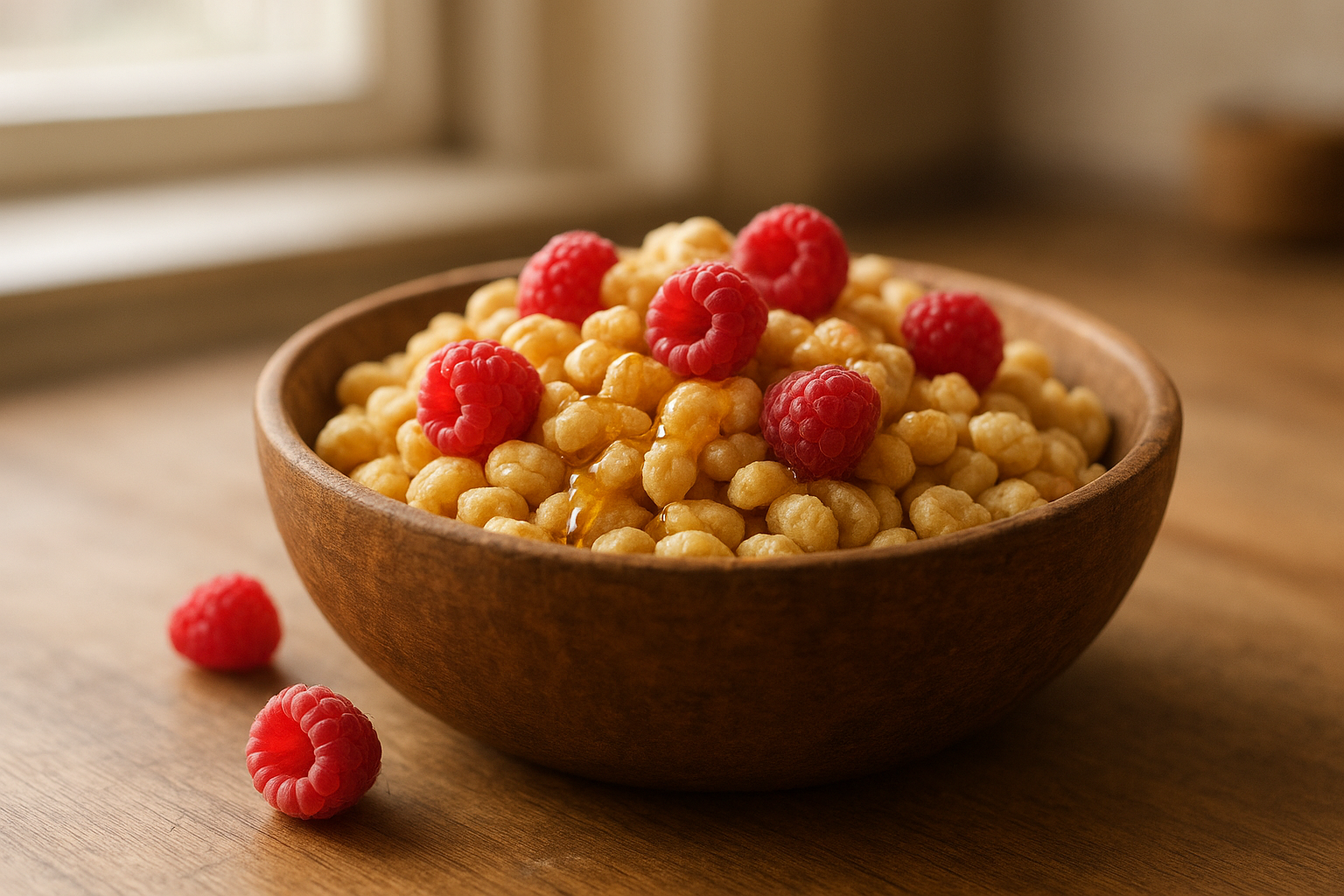
A simple bowl of natural grain puff cereal, finished with honey and fresh fruit.
What Is Natural Grain Puff Cereal, Exactly?
Natural grain puff cereal is a cereal made by exposing whole grains — such as wheat or corn — to heat and pressure until they puff up into light, airy pieces. Unlike many conventional cereals, this approach does not rely on extrusion, a mechanical process that forces grain dough through a shaping die at high temperature.
As a result, puffed cereal tends to keep more of the grain's natural structure intact. Specifically, puffing works by trapping steam inside the grain kernel until internal pressure releases suddenly, causing the kernel to expand several times its original size — a technique with roots going back over a century, as documented in historical accounts of puffed wheat production. Because the grain is puffed whole rather than reformed from dough, the finished cereal often has a lighter, crunchier bite and a shorter ingredient list.
For example, Good Grains uses this exact method to produce Organic Honey Puffs and Organic Cinnamon Puffs from ancient Khorasan wheat, along with Organic Corn Puffs made from organic corn. Furthermore, this production choice anchors the brand's positioning as a minimally processed option for families who want recognizable ingredients they can actually pronounce.
Puffed Grain Cereal vs. Extruded Cereal: The Real Difference
Many popular cereals, including most sweet cereals marketed to kids, are made through extrusion. During extrusion, manufacturers mix ground grain into a dough, then force it through a machine under intense heat and pressure to shape it into rings, flakes, or other forms. In contrast, puffing applies heat and pressure directly to the intact grain kernel, without first breaking it into dough.
This difference affects far more than texture. Because extrusion involves significant mechanical processing and often includes reformed ingredients, nutrition researchers increasingly classify many extruded cereals as ultra-processed foods, according to classification systems referenced in Wikipedia's overview of food processing. Puffed grain cereal, however, keeps the grain closer to its whole form throughout production, which is a key reason families searching for natural grain puff cereal gravitate toward it over extruded alternatives.
| Factor | Puffed Grain Cereal | Extruded Cereal |
|---|---|---|
| Starting material | Whole or lightly cracked grain kernel | Ground grain reformed into dough |
| Shaping method | Natural expansion via trapped steam | Forced through a shaping die |
| Mechanical processing | Minimal | Significant |
| Common processed-food classification | Often minimally processed | Frequently ultra-processed |
| Independent verification | Programs like WISEcode assess processing method | Rarely verified against UPF standards |
Similarly, independent verification programs like WISEcode have begun distinguishing between minimally processed and ultra-processed packaged foods. Good Grains, for instance, is verified Non-UPF through WISEcode — a distinction tied directly to its puffed, rather than extruded, production method. To see the full reasoning behind that rating, this breakdown of why Good Grains is considered an organic, non-UPF breakfast pick walks through the certification process in detail.
Nutritional Profile of Puffed Grain Cereal: Calories, Fiber, and Protein
Beyond processing method, parents naturally want to know what's actually in the bowl. Generally speaking, a typical one-cup serving of plain puffed wheat or corn cereal runs quite low in calories — often in the 50 to 80 calorie range before any milk or topping — because puffing adds air, not fat or density. For context on how whole grains compare nutritionally across categories, the Harvard T.H. Chan School of Public Health's whole grains resource is a useful independent reference.
However, exact numbers vary by grain type, brand formulation, and added ingredients, so it's worth checking the nutrition panel rather than relying on category averages. For verified figures on specific grains, shoppers can also cross-reference the USDA FoodData Central database, which publishes government-collected nutrition data for raw and puffed grain products.
In terms of macronutrients, whole-grain puffed cereal generally offers modest fiber and protein per serving, with wheat-based puffs typically contributing slightly more of both than corn-based puffs. Because puffed cereal is light by volume, many families pair it with yogurt, milk, or nut butter to round out the protein and fat content of the meal — a practical habit covered further in the serving suggestions below.
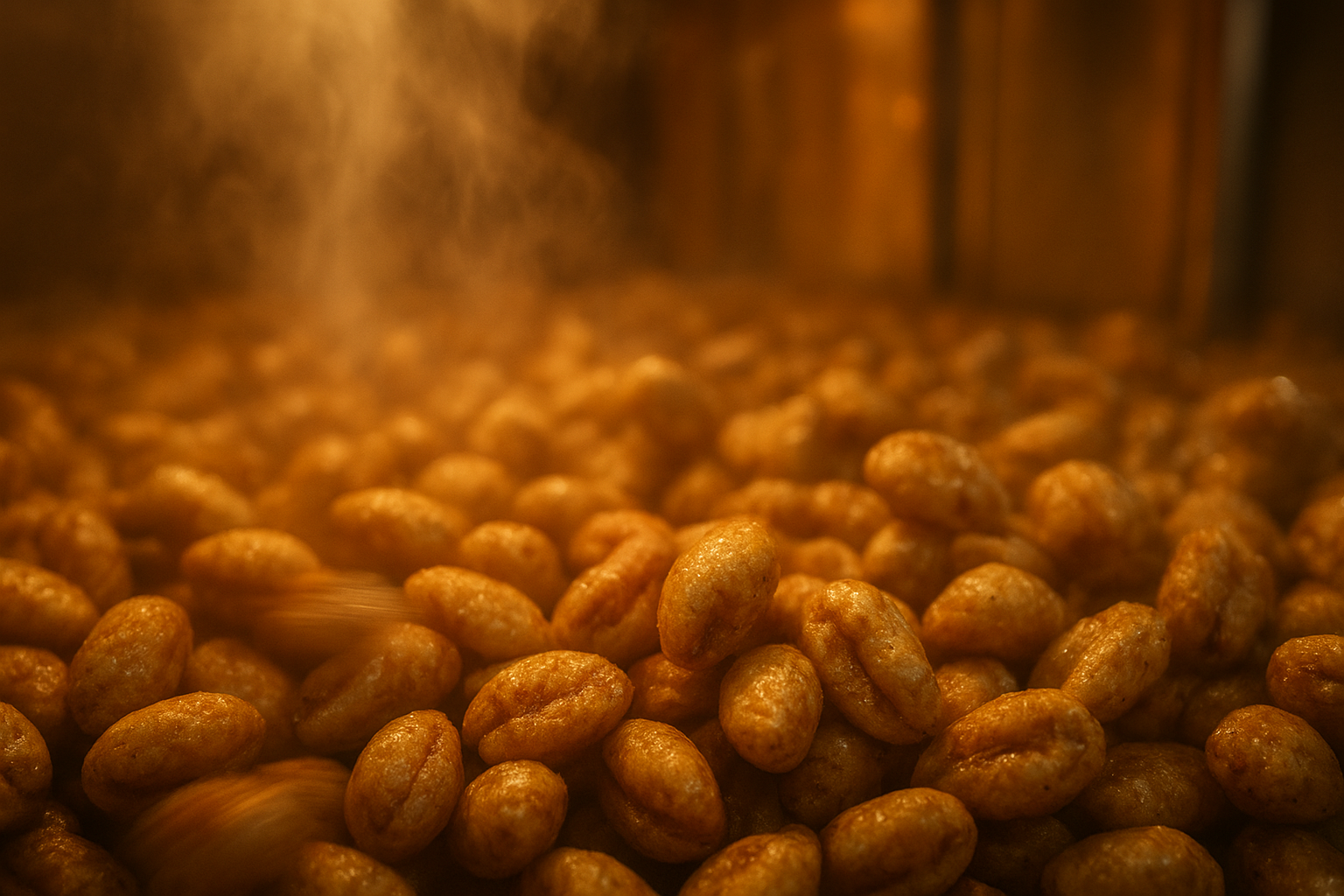
Whole grain kernels expand under heat and pressure, the core step behind natural grain puff cereal.
How Puffed Grain Cereal Is Made: A Step-by-Step Look
Although recipes vary by brand, most natural grain puff cereal follows a similar general process from farm to box. Below is a more detailed look at how puffing typically works, from grain selection through the final package.
- Source and verify the grain. Producers select whole grains, such as Khorasan wheat or corn, and confirm organic certification and glyphosate residue testing before production begins.
- Clean and condition the grain. Workers remove debris and foreign material, then adjust moisture levels carefully so the grain puffs evenly once heat is applied.
- Apply heat and pressure. The grain is heated inside a sealed chamber until internal steam builds enough pressure to cause rapid expansion once released.
- Cool and screen the puffed kernels. Freshly puffed grain is cooled quickly and passed through screens to remove any unpuffed kernels or fragments before flavoring.
- Add flavor ingredients. Manufacturers lightly coat the puffed grain with ingredients such as honey, organic monk fruit, or cinnamon while it is still warm.
- Test, verify, and package. Finished batches undergo quality checks and, for some brands, third-party verification such as WISEcode's Non-UPF assessment, before packaging for retailers.
Good Grains works with experienced manufacturing partners, including Roskam Foods and Grainwell Puffed Grains, to carry out organic puffed-grain production at scale while maintaining its verification standards throughout every batch.
Why Organic Puffed Cereal Appeals to Health-Conscious Families
Parents who stopped buying cereal altogether often cite the same concerns: artificial colors, seed oils, refined sugar, and vague ingredient lists. Organic puffed cereal addresses several of these concerns at once, starting with sourcing. USDA Organic certification, for example, requires that crops are grown without synthetic pesticides and that processors avoid most synthetic additives, according to the USDA's National Organic Program. In fact, organic food sales in the United States have surpassed $70 billion annually in recent years according to industry trade data, reflecting fast-growing demand for transparently sourced ingredients.
In addition, some brands pursue glyphosate residue testing on top of organic certification. The Detox Project, a third-party testing group, certifies products as Glyphosate Residue Free after screening for herbicide traces — an ingredient the EPA regulates and reviews periodically. Good Grains carries both USDA Organic certification and Detox Project glyphosate-free certification on its three core flavors, including the Organic Honey Puffs made from ancient Khorasan wheat.
Beyond certification, ingredient choices matter just as much. Good Grains sweetens its puffs with organic honey and monk fruit rather than refined cane sugar, and it skips seed oils entirely. However, it's worth noting that honey still adds sugar to the final product, so none of the line should be described as sugar-free.
Grain Puff Cereal Shopping Checklist: 5 Things to Check Before You Buy
With more "natural" and "clean label" cereals on shelves, it helps to know exactly what to check before buying. Use this checklist the next time you're standing in the cereal aisle comparing boxes.
- Ingredient list length. Shorter is often simpler — a long list is a quick red flag.
- Processing method disclosure. Check whether the brand states "puffed" or "extruded," since the two are not interchangeable, as covered in this breakdown of whether grain puffs are a healthier cereal option for families.
- Sweetener source. Many "healthier" cereals still rely on refined cane sugar or high-fructose syrups, so compare labels directly rather than trusting front-of-box claims.
- Certifications present. Look for USDA Organic, glyphosate-residue-free testing, or independent non-UPF verification rather than vague marketing phrases like "natural."
- Grain base. Consider whether the cereal uses wheat, corn, rice, or another grain, which matters for households managing gluten or other grain preferences.
On sweeteners specifically, Good Grains' Organic Cinnamon Puffs use honey and organic monk fruit instead of refined cane sugar, though honey does still count as added sugar on the nutrition panel. On grain base, Good Grains' Honey and Cinnamon Puffs use ancient Khorasan wheat, while its Organic Corn Puffs are made from organic corn — helpful to know for households managing specific grain preferences, as explained in this guide to organic corn puff cereal benefits.
Natural Grain Puff Cereal vs. Other Breakfast Options
It also helps to see how natural grain puff cereal stacks up against other common breakfast choices side by side, rather than evaluating it in isolation.
| Breakfast Option | Typical Processing | Common Drawback |
|---|---|---|
| Natural grain puff cereal | Puffed whole grain | Still may contain added sugar from honey |
| Sweetened extruded cereal | Dough extrusion | Often classified as ultra-processed |
| Granola | Baked with oils and syrups | Higher calorie and fat density |
| Plain oatmeal | Rolled or steel-cut, minimal processing | Requires cooking time most mornings lack |
In short, natural grain puff cereal sits in an appealing middle ground: it requires no cooking like oatmeal, yet avoids the heavy mechanical reformulation common to extruded cereals and the higher calorie density typical of granola.
Simple Ways to Serve Grain Puff Cereal at Home
Natural grain puff cereal works well far beyond the cereal bowl. Try pouring Organic Cinnamon Puffs over Greek yogurt for a quick breakfast parfait, or mix Organic Corn Puffs into a homemade snack blend with nuts and dried fruit. Additionally, puffed cereal holds up well as a smoothie-bowl topping, adding crunch without excess sugar.
For families stocking up, Good Grains' Organic Cinnamon Puffs and Organic Corn Puffs are both available through Amazon, Instacart, and participating retailers; shoppers can visit GoodGrains.com to use the Where to Buy tool and confirm local availability.
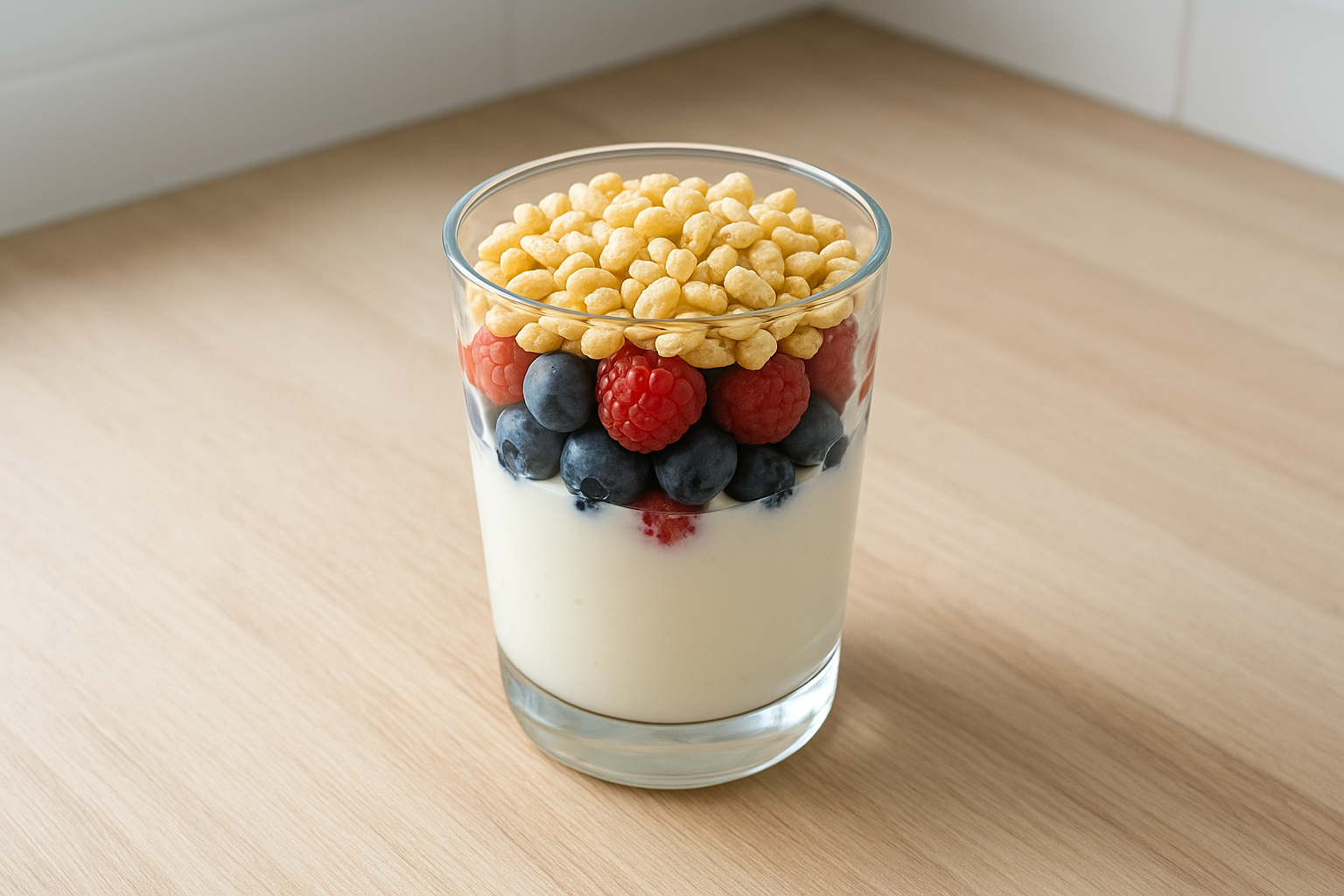
Natural grain puff cereal adds crunch to yogurt parfaits and smoothie bowls alike.
Frequently Asked Questions About Natural Grain Puff Cereal
What is natural grain puff cereal?
Natural grain puff cereal is a whole-grain cereal made by puffing grains like wheat or corn using heat and pressure, rather than extruding them into shapes. This keeps the grain closer to its original form and often results in a simpler ingredient list.
How is puffed cereal different from extruded cereal?
Puffed cereal expands whole or lightly processed grain kernels using heat and trapped steam, while extruded cereal forces ground grain dough through a shaping machine under high heat and pressure. As a result, puffed cereal generally undergoes less mechanical processing.
Is natural grain puff cereal gluten-free?
Not always. Good Grains' Honey and Cinnamon Puffs are made from Khorasan wheat and contain gluten, while its Corn Puffs are made from corn but are not labeled as certified gluten-free, so always check the current package label.
Why do some puffed cereals still count as ultra-processed?
A cereal can be puffed and still include refined sugars, seed oils, or artificial additives that push it toward ultra-processed classification. That's why independent verification, such as WISEcode's Non-UPF assessment, looks at the full ingredient and processing profile, not just the puffing step.
What makes a grain puff cereal certified organic?
USDA Organic certification requires grains to be grown without most synthetic pesticides and processed without most synthetic additives, verified through annual inspections under the USDA's National Organic Program. Good Grains' three core flavors all carry this certification.
Does natural grain puff cereal contain added sugar?
It depends on the sweetener used. Good Grains uses organic honey and monk fruit instead of refined cane sugar, but honey still contributes added sugar, so the brand does not market its sweetened flavors as sugar-free.
How long does grain puff cereal stay fresh after opening?
Most puffed cereals stay fresh for several weeks when stored in a sealed container in a cool, dry pantry, though timing varies by product. Always check the best-by date and storage guidance printed on the package.
Is natural grain puff cereal good for kids?
Many parents choose puffed cereal for kids because it offers a familiar, lightly sweet taste without artificial colors or excessive refined sugar. Good Grains was developed specifically for this audience, aiming for a cereal kids want to eat and parents feel good serving.
How much does natural grain puff cereal typically cost?
Pricing varies by retailer, package size, and region, so there is no single national price for organic puffed cereal. Shoppers can compare current pricing through Amazon, Instacart, or local participating retailers.
What's a common mistake people make when choosing puffed cereal?
One common mistake is assuming all "puffed" cereals are minimally processed simply because of the label. Shoppers should still check for added seed oils, refined sugar, and artificial ingredients, since puffing describes a cooking method, not an automatic health guarantee.
Can grain puff cereal be eaten without milk?
Yes. Many families eat natural grain puff cereal dry as a snack, sprinkle it over yogurt, or use it as a smoothie-bowl topping, in addition to serving it the traditional way with milk.
Is natural grain puff cereal keto-friendly or low-carb?
Generally, no. Because it's made from grain, natural grain puff cereal contains carbohydrates and is not considered a low-carb or keto-friendly food. Families following those eating patterns typically look for other breakfast options instead.
What's the difference between puffed rice, puffed wheat, and puffed corn cereal?
The puffing process is similar across grains, but the base grain changes the texture, gluten content, and flavor. Puffed wheat tends to taste nuttier and contains gluten, puffed corn is naturally sweeter and gluten-free in its raw form, and puffed rice is the lightest and most neutral in flavor.
Does natural grain puff cereal provide fiber and protein?
Yes, modestly. Whole-grain puffed cereal retains more fiber and protein than refined, extruded alternatives, though exact amounts vary by grain and brand. Pairing it with milk, yogurt, or nut butter boosts the overall protein content of the meal.
Where can I buy natural grain puff cereal like Good Grains?
Good Grains' Organic Honey Puffs, Organic Cinnamon Puffs, and Organic Corn Puffs are available through Amazon, Instacart, and participating retailers, with current availability listed on GoodGrains.com's Where to Buy page.
The Takeaway on Natural Grain Puff Cereal
Natural grain puff cereal brings together old-school comfort and modern ingredient standards, offering families a breakfast option that doesn't require choosing between taste and transparency. Ultimately, the right choice comes down to checking the processing method, sweetener, certifications, and nutrition panel behind the box rather than trusting marketing claims alone. Good Grains built its Organic Honey Puffs, Organic Cinnamon Puffs, and Organic Corn Puffs around exactly these standards, pairing organic, puffed grains with independent verification so parents can serve breakfast with more confidence. For anyone ready to compare options, visiting Good Grains' website is a practical next step toward finding a natural grain puff cereal that fits their family's table.

0 comments