


Puffed vs extruded cereal is the real fork in the road that decides whether your morning bowl still resembles a whole grain or began life as flour, water, and a machine called an extruder. Both methods turn a hard kernel into something light and crunchy, but the path each one takes changes the fiber left behind, the number of additives required, and how "clean" the final ingredient list really is. Therefore, understanding this one processing distinction tells you more about a cereal's quality than almost any marketing claim on the box.
You may have also seen warnings online claiming that boxed cereal is loaded with hidden toxins. Some of that concern is fair, but it is rarely explained accurately. In this guide, we break down exactly how puffed and extruded cereals are made, where legitimate additive and processing concerns actually come from, and how to read a label with confidence. By the end, you will know precisely what to look for at the grocery store, not just what to fear.
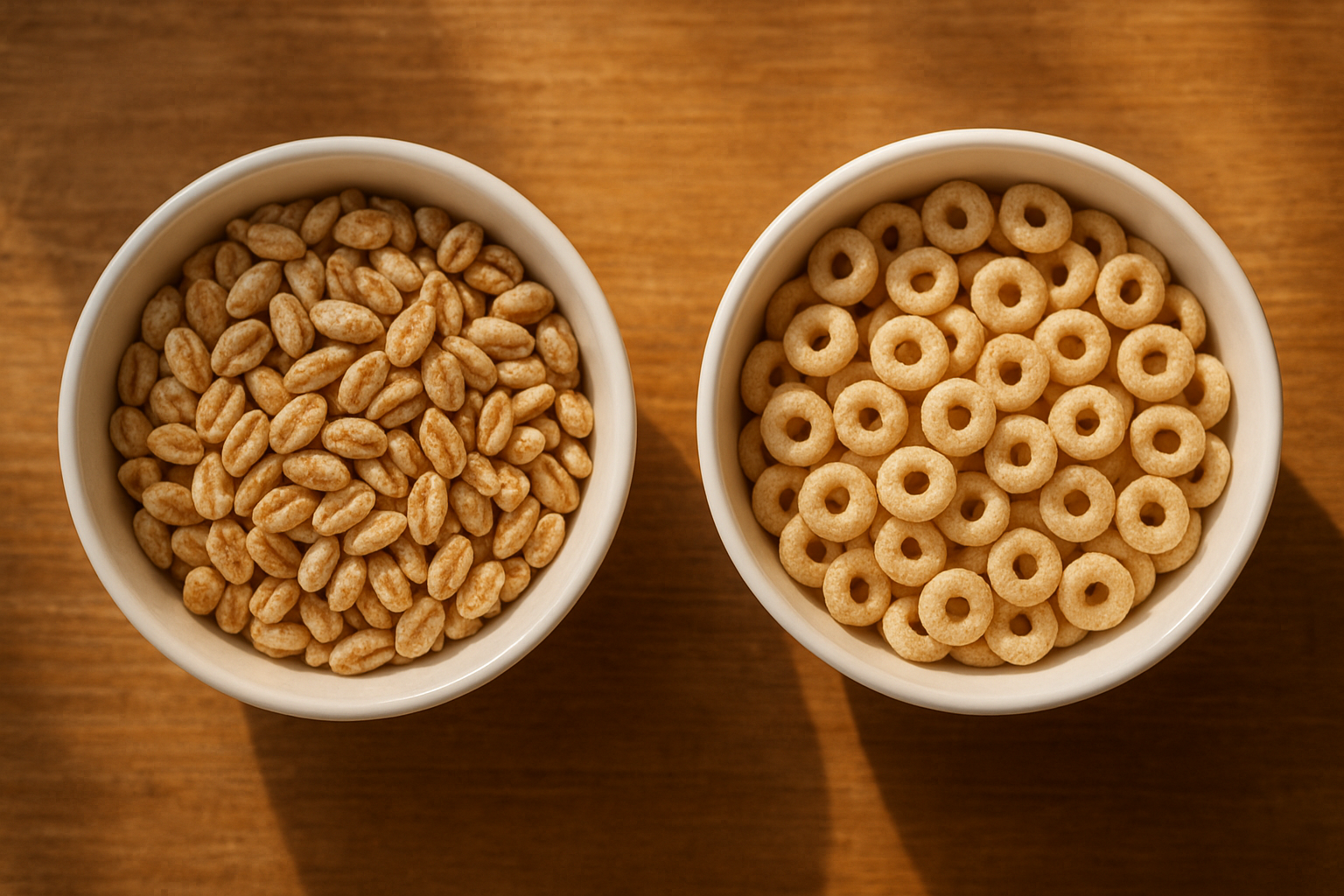
Puffed vs extruded cereal, side by side: whole grain kernels compared to uniformly shaped extruded pieces.
Puffed vs Extruded Cereal: The Core Manufacturing Difference
Puffed cereal is made by heating a whole grain kernel under pressure until it rapidly expands, similar to popcorn, while extruded cereal is made by grinding grain into dough and forcing it through a machine called an extruder to form uniform shapes. As a result, puffed cereal retains more of the grain's original structure, while extruded cereal is more heavily engineered.
Because puffing works directly on the intact kernel, manufacturers generally need fewer added ingredients to hold the piece together. Extrusion, on the other hand, breaks the grain down completely before reshaping it. Consequently, extruded cereal often relies on refined starches, added sugars, emulsifiers, and preservatives just to keep the dough stable and the finished shape intact on store shelves.
In short, puffed vs extruded cereal is really a question of intervention. One method coaxes a grain into a lighter version of itself. The other dismantles it and rebuilds it into something new.
How Puffed Cereal Is Made: From Whole Kernel to Light, Airy Bite
Puffed cereal starts with a whole grain, such as Khorasan wheat or corn, that still has its bran, germ, and endosperm intact. Specifically, the grain is heated inside a sealed chamber until the moisture trapped within the kernel turns to steam. When the pressure is released, that steam expands rapidly and pops the kernel open from the inside, much like a kernel of popcorn bursting in a hot pan.
This method, sometimes called gun puffing, is a physical transformation rather than a chemical one. Therefore, the grain does not need to be ground into flour first, and no extruder reshapes it into an artificial form. The finished product looks and behaves like a lighter, airier version of the original grain rather than a new engineered shape. For a deeper look at this method, this breakdown of puffed cereal production without extrusion walks through each production stage in more detail.
Notably, because puffing relies on heat and pressure alone rather than mechanical reshaping, the process requires far less equipment intervention. That matters because every added step in food manufacturing is also an opportunity for additional ingredients, stabilizers, or coatings to enter the formula.
How Extruded Cereal Is Made: Flour, Dough, and the Extruder Die
Extruded cereal follows a very different path. First, grains are milled into flour and combined with water, sweeteners, and other ingredients to form a wet dough. That dough is then fed into an extruder, a machine that cooks it under high heat and pressure before forcing it through a shaped die.
As the dough exits the die, it puffs up and is cut into the familiar flakes, loops, or shapes seen on many grocery shelves. In contrast to gentle puffing, this process breaks down the grain's natural structure almost completely. According to food science references on the history of breakfast cereal production, extrusion became popular in the mid-20th century largely because it allowed manufacturers to mass-produce novelty shapes cheaply and consistently.
Above all, extrusion was designed for scale and shape consistency, not for grain preservation. That tradeoff is exactly why extruded cereals so often need additional ingredients to replace the structure, flavor, and texture that extrusion strips away.
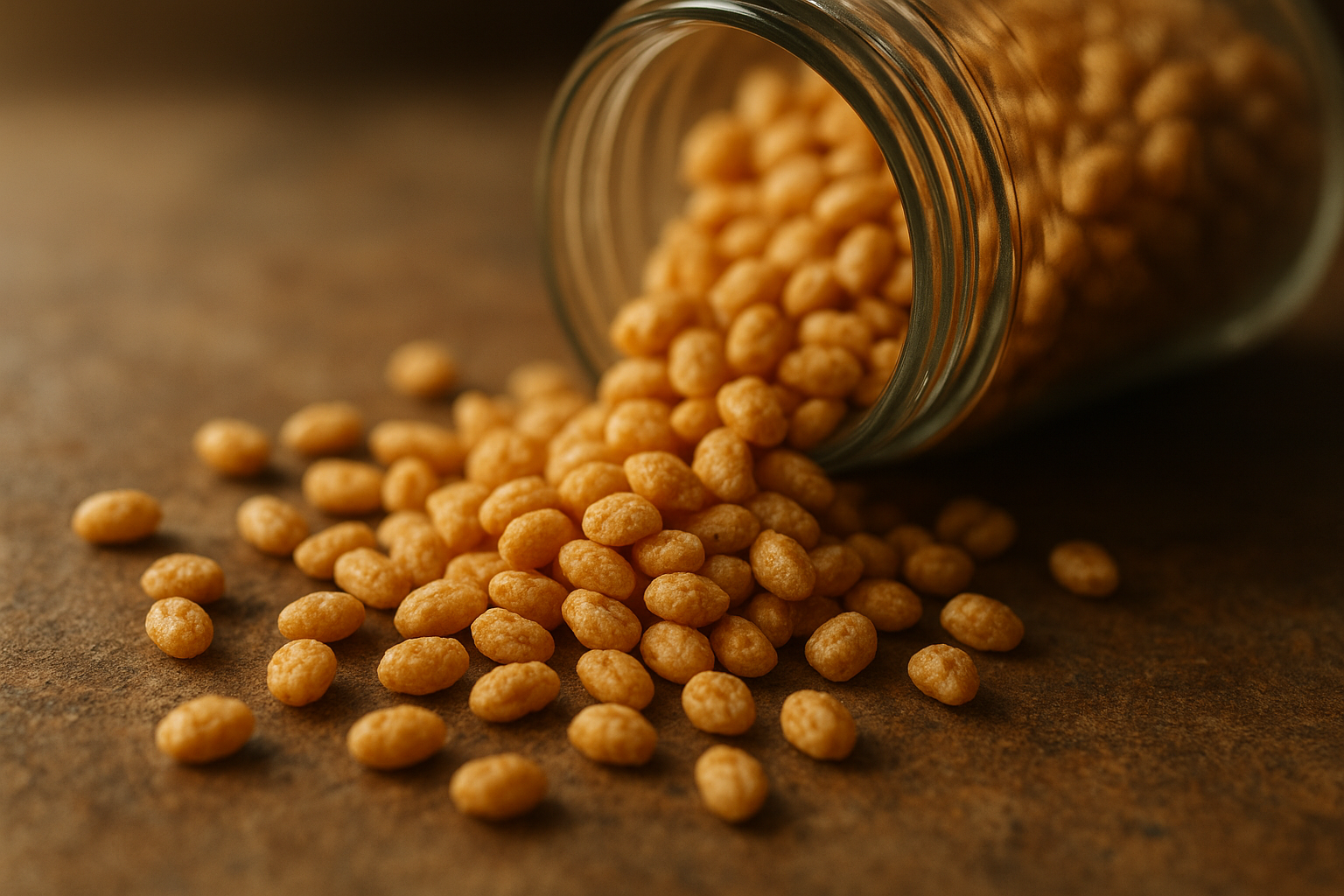
Gently puffed whole grains retain visible texture that extruded pellets typically lose.
Hidden Additives and Processing Byproducts: Where Real Toxin Concerns Come From
A lot of alarming headlines lump all boxed cereal into one toxic category, but that framing skips over the actual mechanism. In reality, the additive load of a cereal almost always traces back to its processing method, which brings us right back to puffed vs extruded cereal.
Because extrusion grinds grain into dough and cooks it at high heat and pressure, manufacturers frequently add preservatives such as BHT or TBHQ to extend shelf life, emulsifiers to keep the dough workable, and synthetic dyes or flavorings to replace what the process strips out. In addition, very high-heat, starch-based processing has been studied for its role in forming acrylamide, a compound that the FDA's guidance on acrylamide in food explains forms naturally when starchy foods are cooked at high temperatures.
Puffed cereal is not automatically free of every concern either. However, because the kernel stays largely intact and the process is physical rather than chemical, there is simply less need for stabilizing additives in the first place. Pesticide residue is a separate issue from processing method, which is why independent certifications matter so much, a point we return to below.
Consequently, the smartest response to "toxin" headlines is not to panic about all cereal equally. Instead, it is to understand which processing choices increase additive load and which certifications actually verify a cleaner product.
Puffed vs Extruded Cereal: Nutrition, Fiber, and Sugar Compared
When it comes to nutrition, puffed vs extruded cereal often comes down to how much of the grain, and how much fiber, survives processing. Because puffed cereal keeps the kernel largely whole, it tends to retain more of the bran layer where much of the natural fiber lives. Extrusion, however, grinds and cooks the grain so thoroughly that some of that structural fiber and nutrient density can be diminished.
Sugar content is another meaningful difference. Extruded dough makes it simple to blend in refined sweeteners evenly throughout the mixture, which is one reason many traditional children's cereals contain 9 to 12 grams of sugar per serving. Puffed cereals sweetened lightly with organic honey and monk fruit can land considerably lower, without losing the sweet, nostalgic flavor families expect.
Glycemic Response and Blood Sugar
In particular, cereals built mostly from refined starches tend to digest quickly, which can spike blood sugar faster than a cereal that still contains intact bran and fiber. Similarly, research on food processing classifications suggests that heavily reformulated products, often extruded and loaded with additives, are more likely to fall into ultra-processed categories. In fact, some public health researchers estimate that ultra-processed foods account for well over half of daily caloric intake in the average American diet, a trend that has drawn increasing scrutiny from nutrition scientists. To learn how one puffed cereal brand stacks up directly against conventional options, see this side-by-side comparison of Good Grains and regular cereal.
Why Minimally Processed, Non-Extruded Cereal Matters for Your Family
For parents comparing cereal boxes, the puffed versus extruded distinction is really a proxy for a bigger question: how much has this grain been altered before it reaches the bowl? Minimally processed cereal generally keeps the ingredient list short and the grain recognizable, which aligns with what many nutrition experts recommend when evaluating packaged foods.
Good Grains, for example, uses a gentle puffing process for its organic Khorasan wheat and corn cereals rather than extrusion, and it became the first cereal to receive Non-UPF Verified certification through WISEcode. It is also certified Glyphosate Residue Free, according to standards referenced by the EPA's glyphosate ingredient overview. Similarly, the USDA's guidance on whole grains within a healthy diet emphasizes choosing grains that remain close to their natural form. For a fuller explanation of how puffing benefits kids' cereal choices, this guide to grain puffs for kids covers the topic in depth.
Meanwhile, certifications only matter if shoppers know how to spot them, which brings us to the practical part of this guide.
How to Choose Between Puffed and Extruded Cereal at the Store
Because most packaging does not explicitly say "puffed" or "extruded," a quick label check is the most reliable way to tell the two apart. The following steps make that process straightforward at the grocery store.
- Read the ingredient list first. Puffed cereals often need only one or two whole grain ingredients, while extruded cereals list flours, starches, and multiple additives.
- Look for processing language on the package, such as "whole grain kernel," "gently puffed," or "non-extruded."
- Compare sugar per serving on the nutrition label, since extruded dough makes it easy to blend in refined sweeteners.
- Check fiber content per serving, because intact puffed grains generally retain more natural fiber than heavily processed alternatives.
- Verify third-party certifications like Non-UPF Verified, USDA Organic, or Glyphosate Residue Free rather than relying on marketing language alone.
Once you have compared a few boxes this way, spotting a genuinely minimally processed cereal becomes much faster. For a broader walkthrough of benefits and product picks, this puffed cereal explainer is a useful next step, and shoppers focused specifically on seed-oil-free options may also want this comparison of the healthiest puffed wheat cereals without seed oils.
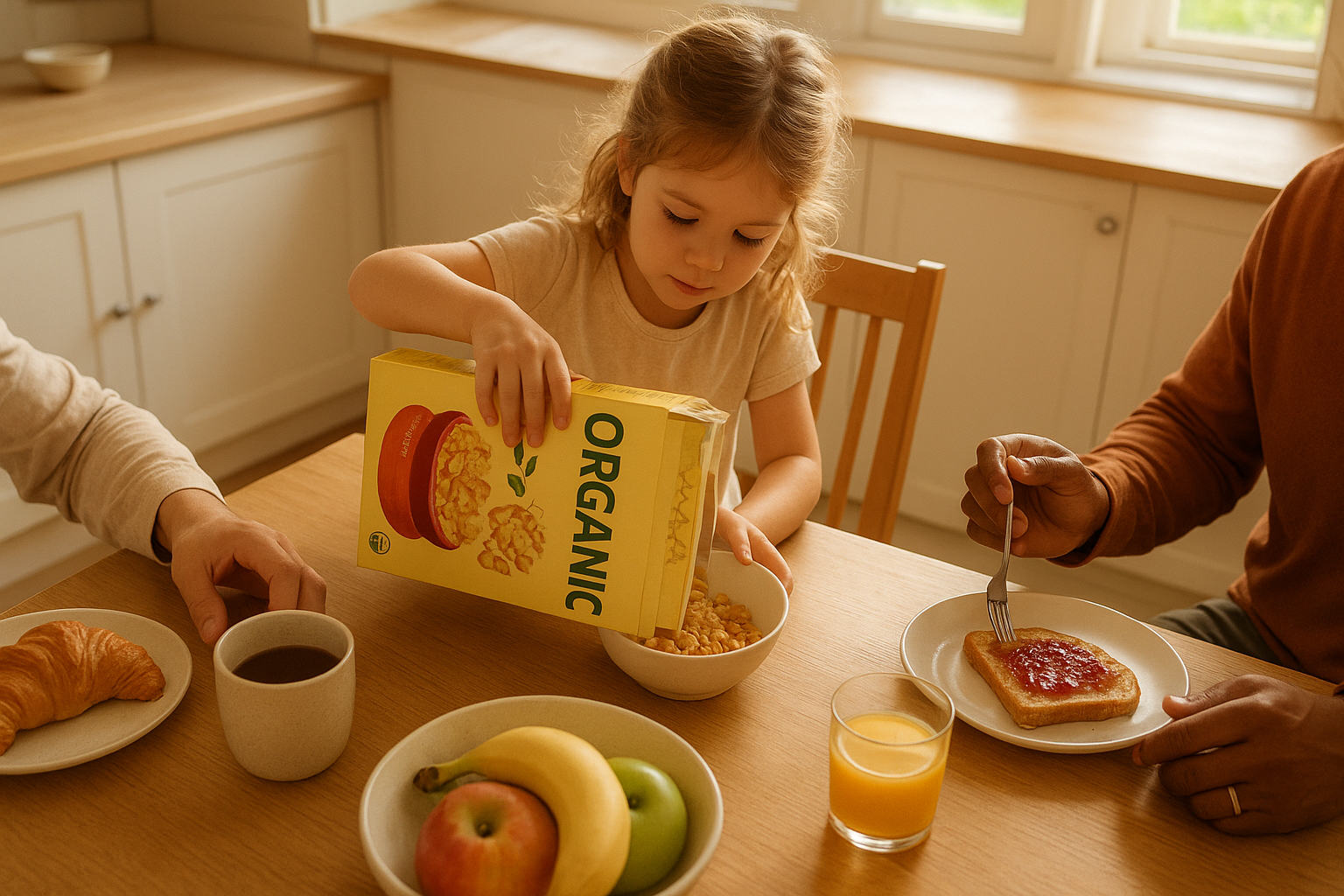
Choosing between puffed vs extruded cereal often starts at the breakfast table.
Quick Comparison: Puffed vs Extruded Cereal at a Glance
| Factor | Puffed Cereal | Extruded Cereal |
|---|---|---|
| Grain form | Whole kernel expanded | Ground into flour, reshaped |
| Typical ingredients | 1 to 2 whole grains | Multiple flours, starches, additives |
| Fiber retention | Higher | Lower on average |
| Common sugar range | Lower, especially with honey/monk fruit | Often 9 to 12g per serving |
| Common additives needed | Minimal to none | Preservatives, emulsifiers, dyes |
| Processing intensity | Low (heat + pressure only) | High (milling, cooking, forced shaping) |
Puffed vs Extruded Cereal for Kids: Taste, Nostalgia, and Cleaner Ingredients
Parents often assume that choosing a less processed cereal means sacrificing the taste kids actually want. That is not necessarily true. Specifically, gentle puffing can preserve the naturally sweet, nutty flavor of ancient grains like Khorasan wheat, which means families do not have to trade nostalgia for ingredient quality. For a closer look at how a cleaner cereal can still taste like the childhood favorite families remember, this comparison of classic cereal taste with cleaner ingredients is worth reading before your next grocery trip.
In contrast, extruded children's cereals often lean on bright colors, novelty shapes, and higher sugar to drive appeal, since the dough-based process makes those additions easy to blend in uniformly. Therefore, parents who want the fun, crunchy breakfast experience without the added sugar and additive load may find that puffed, non-extruded cereals deliver both goals at once.
Frequently Asked Questions About Puffed vs Extruded Cereal
What is the difference between puffed and extruded cereal?
Puffed vs extruded cereal comes down to processing intensity. Puffed cereal expands a whole grain kernel with heat and pressure, while extruded cereal grinds grain into dough and reshapes it through a machine into engineered pieces.
How is puffed cereal made?
Puffed cereal is made by heating whole grain kernels under pressure until trapped moisture turns to steam and rapidly expands the grain. This causes the kernel to pop open, similar to popcorn.
How is extruded cereal made?
Extruded cereal starts as milled flour mixed into a dough, which is cooked and forced through a shaping die under high heat and pressure. As it exits, it puffs up into flakes, loops, or other shapes.
Is puffed cereal healthier than extruded cereal?
Puffed cereal is generally less processed because the grain structure stays more intact and fewer additives are needed. However, overall healthfulness still depends on sugar content, ingredient quality, and whether the grain is organic and whole.
Why do some cereals use extrusion instead of puffing?
Extrusion lets manufacturers mass-produce uniform, novelty shapes at low cost, which is why it dominates conventional cereal aisles. It also makes blending in refined starches and sugars during the dough stage much easier.
Does puffing destroy nutrients in whole grains?
Gentle puffing preserves more of a grain's fiber and structure than high-heat extrusion because the kernel is not ground down first. Some nutrient loss happens with any heat process, but puffing is comparatively milder.
What is Khorasan wheat and how is it used in puffed cereal?
Khorasan wheat is an ancient wheat variety known for a naturally sweet, nutty flavor and dense nutrition profile. In puffed cereal, the whole kernel is gently expanded rather than ground and reshaped through extrusion.
Is puffed cereal considered ultra-processed?
Not automatically. A puffed cereal made from one whole grain with minimal additives typically falls outside ultra-processed classifications, while many extruded cereals with refined starches and additives often qualify.
How much sugar is typically in puffed vs extruded cereal?
Extruded children's cereals often contain 9 to 12 grams of sugar per serving since sweeteners blend easily into dough. Puffed cereals sweetened with small amounts of honey or monk fruit can come in significantly lower.
What are examples of puffed cereals?
Classic examples include puffed wheat, puffed rice, and puffed corn, along with organic ancient grain versions made from Khorasan wheat. These rely on steam and pressure rather than extrusion.
What are examples of extruded cereals?
Most flaked, looped, and character-shaped cereals on conventional grocery shelves are extruded. Extrusion is what allows those uniform, engineered shapes to be produced at scale.
How can I tell if a cereal is puffed or extruded from the label?
Check the ingredient list first, since puffed cereals often list just one or two whole grains while extruded cereals list flours and additives. Third-party non-UPF verification on the package is another strong signal.
Does extrusion create acrylamide or other processing byproducts in cereal?
High-heat, starch-based cooking methods like extrusion can promote the formation of acrylamide, a compound that forms when starchy foods are cooked at high temperatures. Puffed cereal, which relies on lower-intervention steam expansion, generally involves less of this type of high-heat starch cooking.
Are extruded cereals actually toxic, or is that an exaggeration?
"Toxic" is usually an overstatement, but it is not entirely baseless. Extruded cereals are more likely to contain preservatives, synthetic dyes, and refined additives than puffed cereals, simply because the extrusion process strips out structure that those ingredients are added back in to replace.
What additives commonly appear in extruded cereal but rarely in puffed cereal?
Extruded cereals more frequently include preservatives such as BHT or TBHQ, emulsifiers to stabilize the dough, and artificial colors or flavors. Puffed cereals made from a single whole grain typically need few, if any, of these additions.
Final Thoughts on Puffed vs Extruded Cereal
Ultimately, the puffed vs extruded cereal question is less about nostalgia and more about how much of the original grain actually makes it into the bowl. Puffed cereal keeps the kernel largely intact, needs fewer added ingredients, and tends to retain more fiber, while extruded cereal relies on grinding, reshaping, and often extra additives to achieve familiar shapes and textures.
For families who want the same nostalgic taste without the heavier processing, checking ingredient lists, sugar content, and third-party certifications makes the choice much clearer at the shelf. Brands built specifically around gentle puffing, organic whole grains, and independent verification, such as Good Grains, offer one way to get that classic cereal experience without compromising on ingredient quality. In the end, understanding puffed vs extruded cereal gives shoppers a practical, label-based tool for choosing a breakfast that fits both taste and health goals.
0 comments