


Ancient grain cereal is becoming one of the most searched breakfast terms among parents who want nostalgic taste without the long ingredient lists found in many children's cereals. Unlike cereal built from refined, modern wheat flour, ancient grain cereal uses grains that have stayed largely unchanged for centuries, including Khorasan wheat and corn. This guide explains what ancient grain cereal actually is, how it differs from conventional and extruded cereal, and what to look for on the label before it lands in your cart.
What Is Ancient Grain Cereal?
Quick answer: Ancient grain cereal is breakfast cereal made from grains that have remained largely unchanged for thousands of years, such as Khorasan wheat, spelt, and corn, rather than modern hybridized wheat. It typically appeals to families seeking a less processed, higher-fiber alternative to conventional sugary cereal.
In practice, the term covers a broad family of grains. Ancient grains, as defined by food historians and nutrition researchers, include wheat varieties like Khorasan and spelt, along with millet, farro, and quinoa. Because these grains have not been bred as intensively as commodity wheat, they tend to retain more of their natural fiber, protein, and mineral content.
However, not every box labeled "ancient grain" on a grocery shelf meets a consistent standard. As a result, it helps to understand the difference between a cereal that simply contains a small amount of an ancient grain and one built primarily around it, like the options detailed in this breakdown of the best ancient grain cereals and what to look for.
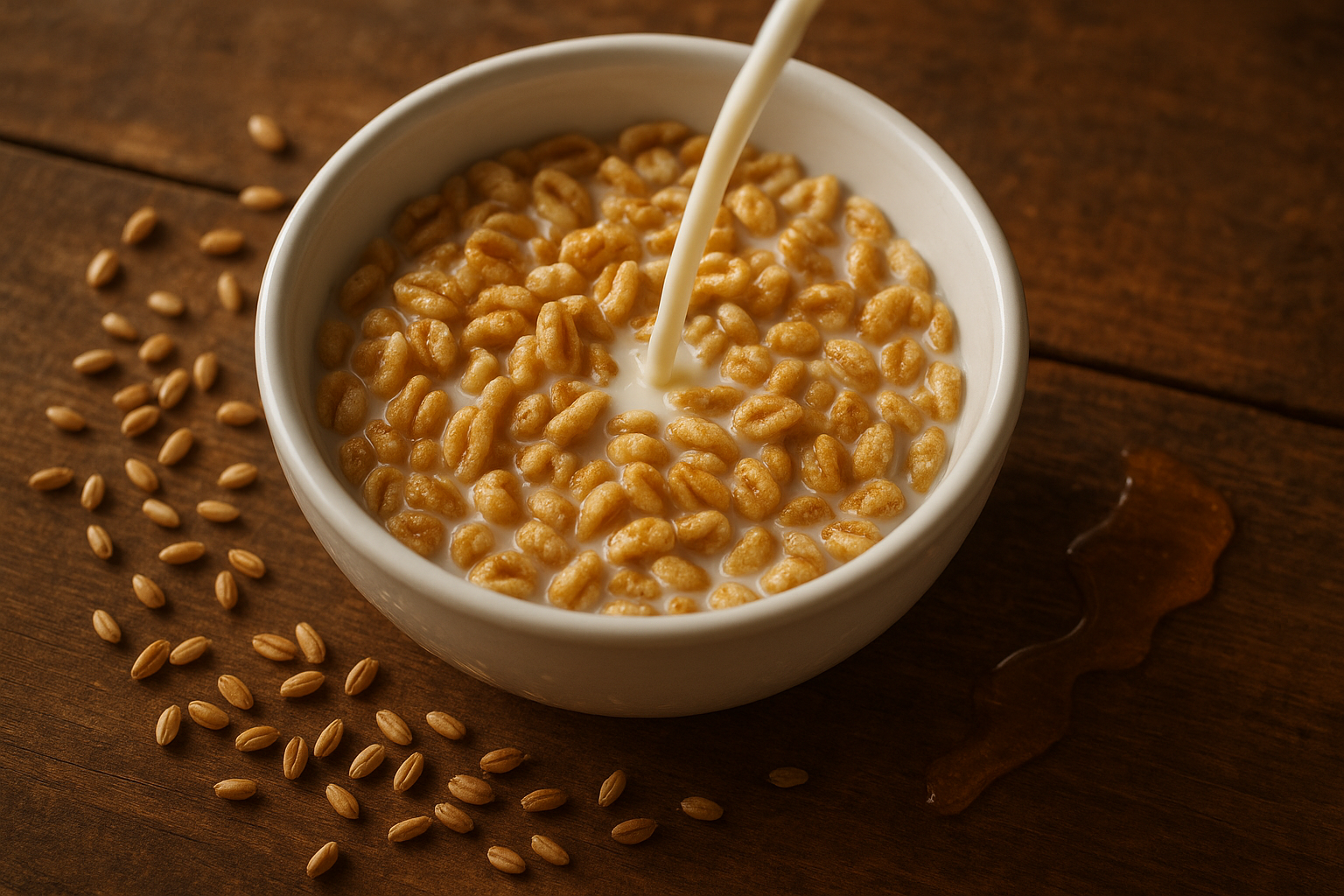
Ancient grain cereal often retains more of the grain's natural texture than heavily engineered alternatives.
Ancient Grains vs. Modern Wheat: Key Differences
Modern wheat has been bred over decades to increase yield and improve processing efficiency for industrial baking. In contrast, Khorasan wheat, one of the primary grains in Good Grains' lineup, has largely avoided that level of hybridization. Consequently, it keeps a firmer bite, a slightly sweet and nutty flavor, and a denser nutritional profile.
Specifically, ancient grains like Khorasan wheat are often naturally higher in fiber and protein per serving than refined modern wheat flour. For families curious about the agronomy behind this grain, Good Grains outlines the history and growing practices on its dedicated organic Khorasan wheat page, including why it was chosen over more common commodity wheat varieties.
In addition, because many ancient grain crops are grown with fewer synthetic inputs, some ancient grain cereals pursue independent testing for pesticide residue. Good Grains, for example, is certified Glyphosate Residue Free, which means the finished cereal is tested rather than simply assumed to be clean based on the organic label alone.
How Ancient Grain Cereal Is Made: Puffing vs. Extrusion
Most conventional cereal is made through extrusion, a process where ground grain is mixed into a slurry, cooked under high heat and pressure, then forced through a machine die to create uniform shapes like loops or stars. While efficient, this method breaks down much of the grain's original structure.
Ancient grain cereal, by contrast, is frequently made through a gentler puffing process. Whole or lightly processed kernels are heated until internal moisture turns to steam, causing the grain to expand from the inside out. Therefore, the cereal keeps more of the grain's natural shape and character instead of being engineered into a completely new form. Good Grains explains this distinction in more depth in its piece on what it means for a grain to be "good" for healthier cereal.
This matters because heavy extrusion is one of several markers researchers associate with ultra-processed food classification. Puffing, in comparison, is considered a far less invasive transformation, which is part of why Good Grains became the first cereal to receive Non-UPF Verified certification through WISEcode.
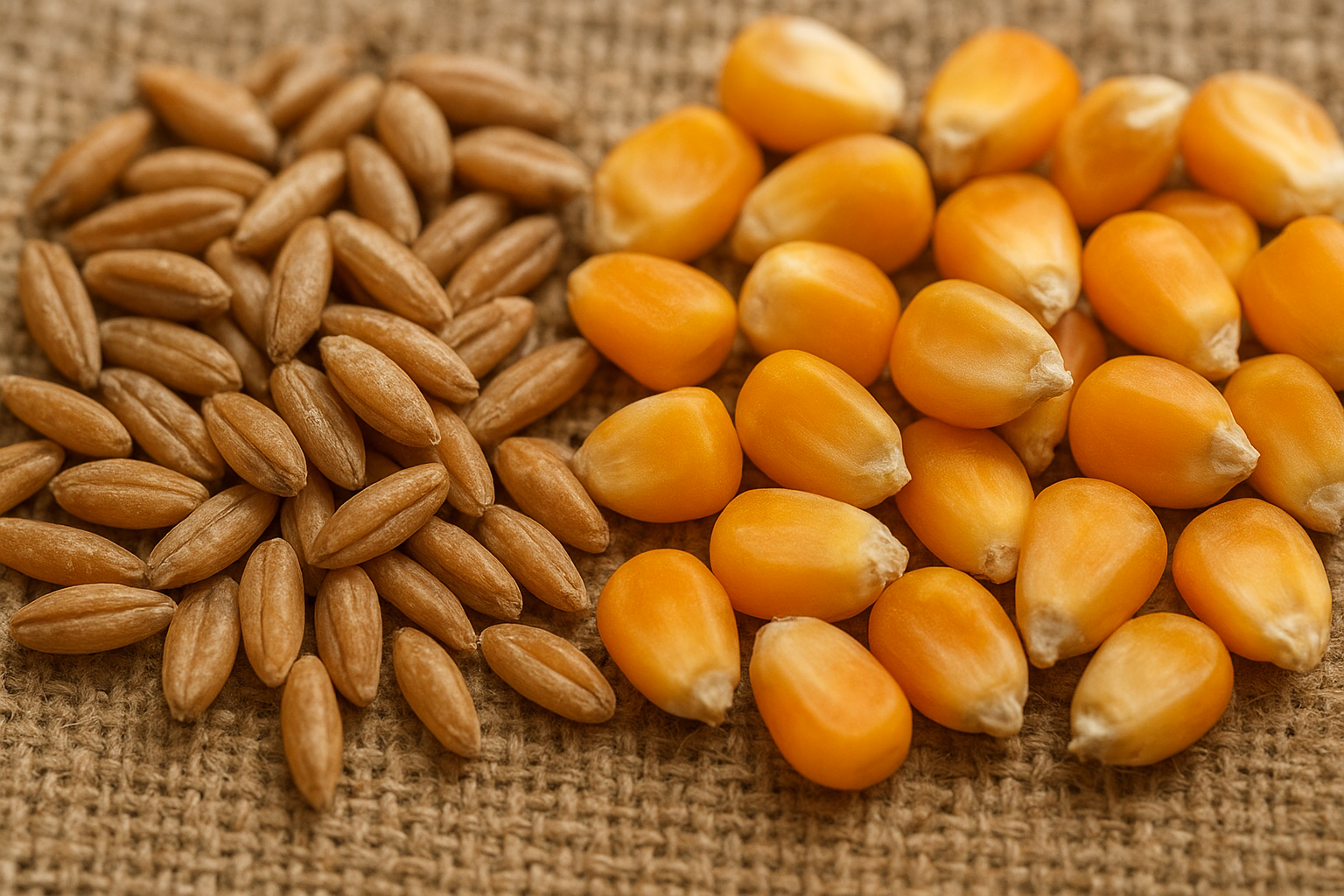
Whole Khorasan wheat and corn kernels before they are gently puffed into cereal.
Nutritional Benefits of Whole and Ancient Grains
Fiber is one of the clearest nutritional advantages of whole and ancient grains. According to the Centers for Disease Control and Prevention, most American children and adults fall short of recommended daily fiber intake, which supports digestion and helps maintain steady energy levels through the morning.
Because ancient grains retain more of their natural bran and germ layers compared to heavily refined flour, cereals built around them can deliver meaningfully more fiber per serving. For a closer look at how fiber content varies across popular cereal brands, see this comparison of high-fiber cereal options on the market today.
Sugar content is another important factor. Many ancient grain cereals, including Good Grains' sweetened varieties, rely on real organic honey and organic monk fruit instead of refined cane sugar. As a result, total sugar per serving can be significantly lower than many traditional children's cereals, while still delivering a familiar, kid-approved taste.
Choosing the Best Ancient Grain Breakfast Cereal for Your Family
With so many "healthy" cereal claims competing for attention, it helps to have a simple framework. First, check whether the ancient grain is the primary ingredient rather than a minor addition used mostly for marketing. Second, look at how the cereal is processed, since puffed grains generally retain more structure than extruded ones.
Third, confirm organic certification and, where available, independent verification such as USDA Organic status, which is overseen by the U.S. Department of Agriculture. Good Grains walks through this exact decision process in more detail in its guide on how to pick the best cereal for your family, which covers label-reading beyond just the ancient grain claim.
Finally, taste still matters. A cereal that checks every nutritional box but gets left in the pantry does not help anyone. Brands that combine organic, minimally processed grains with recognizable, nostalgic flavor profiles tend to see the best long-term adoption among kids and parents alike. You can browse examples of this approach directly at Good Grains.

A good breakfast cereal should fit naturally into a family's morning routine.
How to Read a Cereal Label Like a Pro
Before buying any box, it helps to work through the label systematically rather than relying on front-of-package claims. The following steps make the process quick and repeatable.
- Check the first ingredient. Look for "organic whole grain" or a named ancient grain like Khorasan wheat listed first, since ingredients are listed by weight and the first items make up most of the product.
- Scan the sugar line. Compare grams of sugar per serving and look for recognizable sweeteners such as honey or monk fruit instead of refined cane sugar or corn syrup.
- Look for third-party verification. Search for seals such as Non-UPF Verified, USDA Organic, or Glyphosate Residue Free, which confirm independent testing rather than relying on marketing claims alone.
- Review the fiber content. Choose cereals that provide at least three grams of fiber per serving from whole and ancient grains, since fiber supports digestion and helps keep kids fuller longer.
Frequently Asked Questions About Ancient Grain Cereal
What is ancient grain cereal?
Ancient grain cereal is cereal made from grains that have changed very little over thousands of years, such as Khorasan wheat, spelt, and corn, instead of modern hybridized wheat. It is usually less processed and higher in fiber than conventional children's cereal.
How is ancient grain cereal different from regular cereal?
Regular cereal is often made from refined, heavily engineered grain flours and extruded into shapes under high heat and pressure. Ancient grain cereal typically uses gentler puffing methods that keep more of the grain's original structure intact.
What are ancient grains, exactly?
Ancient grains are grains and pseudo-grains that have remained largely unchanged genetically for centuries, including Khorasan wheat, spelt, farro, millet, and quinoa. They are generally less hybridized than modern commodity wheat and corn.
Why is Khorasan wheat considered an ancient grain?
Khorasan wheat is an ancient wheat variety that has not been crossbred as extensively as modern wheat strains. It retains a distinct texture, nutty flavor, and natural fiber content prized in traditional grain cultivation.
Is ancient grain cereal healthier than traditional cereal?
Ancient grain cereal is often formulated with less added sugar, fewer artificial ingredients, and more fiber than traditional children's cereal. However, shoppers should still check labels, since not every product marketed as "ancient grain" meets the same standard.
How much sugar does ancient grain cereal typically contain?
Many ancient grain cereals use honey or monk fruit instead of refined cane sugar, which can lower total sugar per serving significantly compared to conventional kids' cereals. Exact amounts vary by brand, so checking the Nutrition Facts panel is important.
Does ancient grain cereal contain gluten?
Most ancient grain cereals made with Khorasan wheat, spelt, or farro do contain gluten, since these are wheat-family grains. Corn-based ancient grain cereals are naturally gluten-free, so checking the ingredient list is necessary for sensitive eaters.
How long does ancient grain cereal stay fresh after opening?
Minimally processed, preservative-free cereal typically stays fresh for two to four weeks after opening when sealed tightly in a cool, dry pantry. Because there are no artificial preservatives, texture is best within the first few weeks.
What mistakes do people make when choosing a healthy cereal?
A common mistake is trusting front-of-box claims like "natural" or "whole grain" without checking the ingredient list or sugar content. Another is assuming high-protein or keto cereals are automatically healthier, when they can still be heavily engineered products.
How much does ancient grain cereal cost compared to conventional cereal?
Ancient grain cereal usually costs more per box than mass-market cereal because of organic sourcing, lower-yield heritage grains, and gentler processing methods. Many families find the trade-off worthwhile for fewer additives and better ingredient transparency.
Can kids eat ancient grain cereal every day?
Ancient grain cereal with low sugar and real fiber can fit into a daily breakfast rotation alongside fruit, dairy, or a protein source. As with any packaged food, variety across the week is still recommended for balanced nutrition.
What should I look for on an ancient grain cereal label?
Check that the ancient grain, such as organic Khorasan wheat or organic corn, is listed as the first ingredient, and look for third-party seals like USDA Organic or Non-UPF Verified. Also compare grams of sugar and fiber per serving.
Is puffed cereal the same as extruded cereal?
No, puffing and extrusion are different processes. Puffing uses heat and pressure to expand a grain while keeping more of its natural form, while extrusion forces a dough-like slurry through a machine to create engineered shapes.
Final Thoughts
Ultimately, ancient grain cereal occupies a useful middle ground between nostalgic, kid-friendly breakfast cereal and the overly engineered "health food" options that have crowded grocery shelves in recent years. By focusing on grains like Khorasan wheat and corn, gentle puffing instead of heavy extrusion, and transparent certifications, families can find a cereal that satisfies both taste and ingredient standards without chasing short-lived diet trends.
In short, the best ancient grain cereal checks several boxes at once: a real ancient grain as the first ingredient, minimal processing, lower sugar from natural sweeteners, and independent verification rather than marketing alone. Reading the label with these criteria in mind makes it far easier to separate genuinely better cereal from products simply borrowing the "ancient grain" name.
0 comments