


Healthy cereal for families means something specific: real whole or ancient grains, minimal processing, low added sugar, and no artificial shortcuts, all wrapped in a taste kids still want to eat. For years, parents have faced a frustrating choice in the cereal aisle — nostalgic boxes packed with refined sugar and artificial ingredients, or trendy "health" cereals that taste more like cardboard than breakfast. This guide breaks down what actually makes a cereal healthy, why processing method matters as much as sugar content, and how to evaluate any box with confidence.
Quick Answer: Healthy cereal for families is minimally processed, made from organic whole or ancient grains, low in added sugar, and free of seed oils, artificial colors, and preservatives — while still tasting like the cereal everyone remembers.
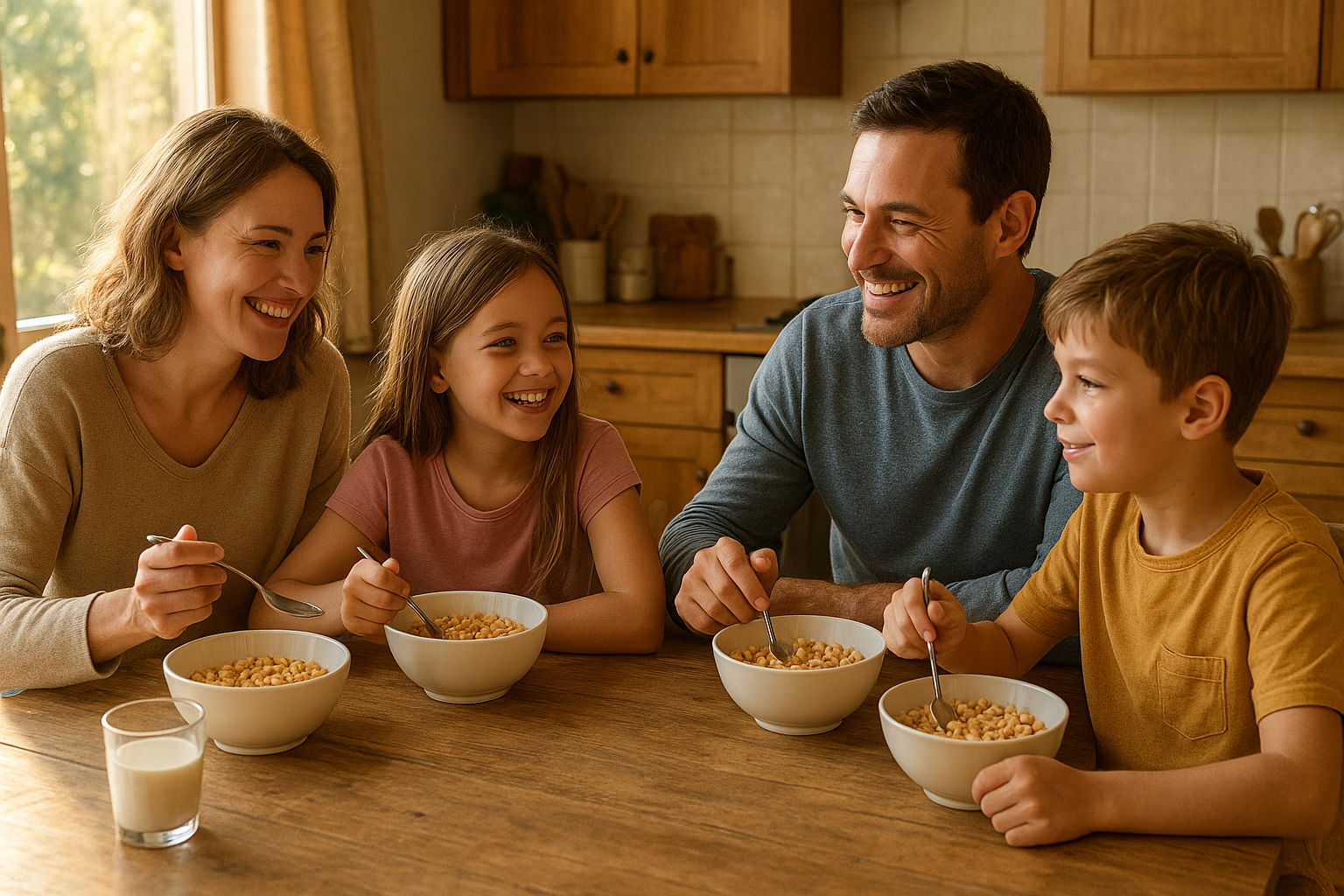
Choosing healthy cereal for families starts with what's inside the box, not just what's on the front.
What Is Healthy Cereal for Families?
Healthy cereal for families is cereal built around whole or ancient grains rather than refined flour, processed through a gentle method that preserves more of the grain's natural structure. In addition, it keeps added sugar meaningfully lower than the 10 to 12 grams per serving found in many traditional children's cereals. Specifically, it avoids seed oils, artificial flavors, artificial colors, and preservatives, relying instead on ingredients a parent can recognize.
This definition matters because "healthy" is an unregulated word on most cereal packaging. Therefore, families benefit from looking past front-of-box claims and toward ingredient sourcing, processing method, and independent certification instead.
Why Traditional Cereal Aisles Fall Short for Health-Conscious Families
Traditional cereal aisles were built around convenience and nostalgia, not nutrition. Consequently, many classic boxes lean on refined cane sugar, engineered shapes, and artificial colors to stay shelf-stable and visually appealing to kids. However, the same qualities that made these cereals popular decades ago are now driving families to search for a healthier family cereal alternative.
Meanwhile, a newer wave of "health" cereals swung too far in the opposite direction. Many are built around keto formulations, extreme protein counts, or grain-free bases that strip out the familiar cereal experience altogether. As a result, parents are often left choosing between taste and nutrition, when neither should have to be sacrificed. For a deeper breakdown of this gap, this healthy family cereal guide outlines what to prioritize when comparing boxes.
The Problem With Ultra-Processed Cereal
Ultra-processed foods (UPF) are industrially formulated products that combine refined ingredients, additives, and engineered textures rather than relying on minimally altered whole foods, according to the Wikipedia entry on ultra-processed food. Many boxed cereals fall squarely into this category, even ones marketed as "natural" or "whole grain."
In contrast, minimally processed cereal for families keeps closer to the original grain, using fewer additives and gentler manufacturing steps. Notably, Good Grains became the first cereal to receive Non-UPF Verified certification through WISEcode, giving families an independent signal rather than relying on marketing language alone.
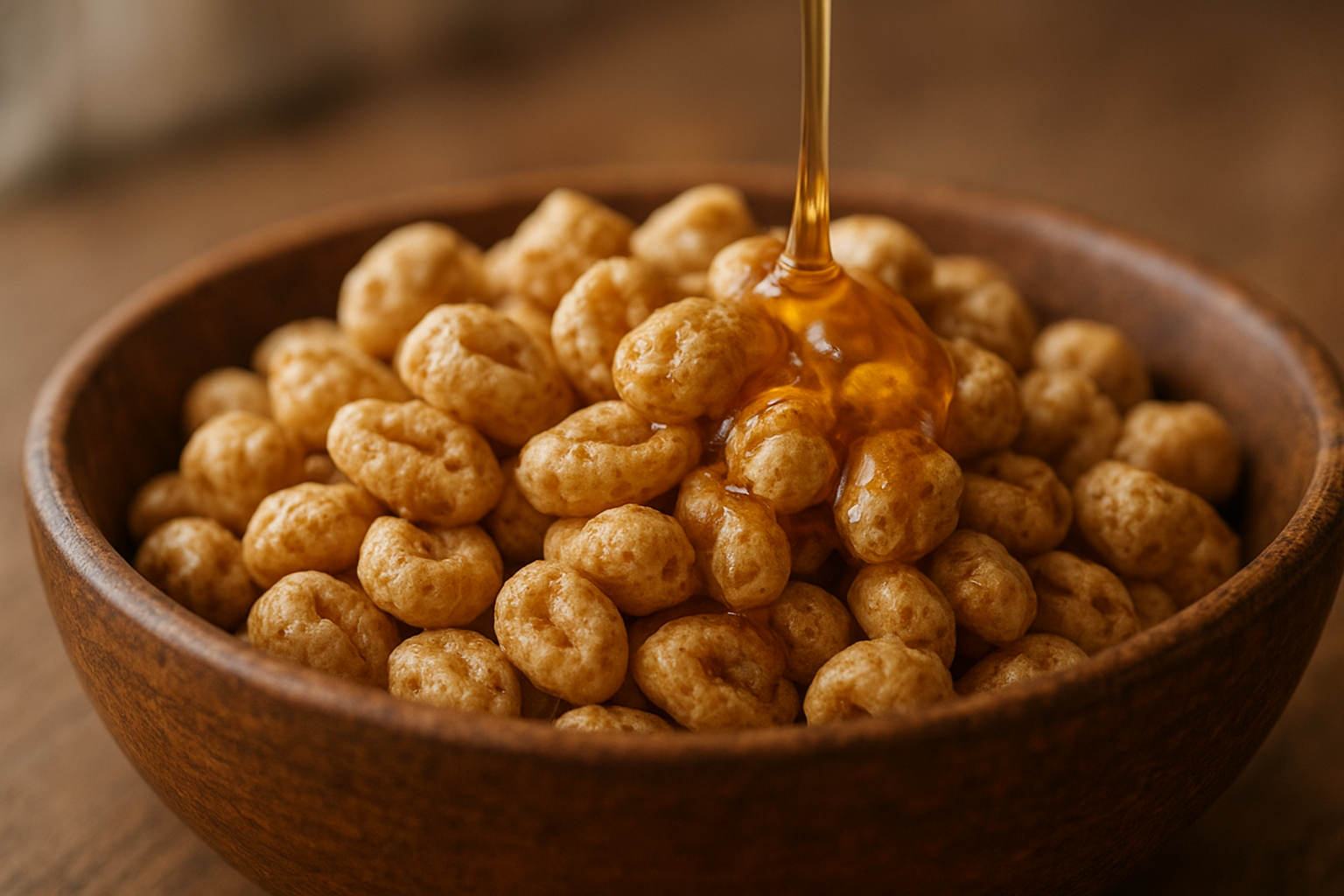
Puffed whole grains retain more natural texture than heavily extruded cereal shapes.
How to Choose a Healthy Cereal: A Step-by-Step Process
Above all, evaluating a cereal box does not require a nutrition degree. Instead, the following six-step process helps families quickly separate genuinely better cereal from clever marketing.
- Read the ingredient list first. Skip the front-of-box marketing and go straight to the ingredient list to see what the cereal is actually made from.
- Confirm a whole or ancient grain leads the list. Organic whole grains or ancient grains, such as Khorasan wheat or corn, should appear before any refined flour.
- Check total and added sugar per serving. Prioritize options sweetened with small amounts of honey or monk fruit rather than refined cane sugar.
- Look for independent certifications. USDA Organic, Non-UPF Verified, and Glyphosate Residue Free labels confirm claims beyond marketing language.
- Evaluate fiber content per serving. Whole and ancient grains typically deliver more fiber than heavily refined grains do.
- Run a family taste test. Even the healthiest cereal only helps if kids will actually eat it consistently.
Fewer than 10% of American children meet daily fiber recommendations, according to federal dietary data referenced by the Dietary Guidelines for Americans. Therefore, checking fiber content in step five is one of the highest-impact choices a family can make at breakfast. For a closer look at fiber specifically, this high-fiber breakfast cereal guide goes deeper into age-based targets.
Puffed vs. Extruded: Why Processing Method Matters
Puffing uses heat and pressure to expand a whole grain kernel while preserving more of its natural shape and structure. Extrusion, by comparison, forces dough through machinery under high heat to create engineered shapes like rings or stars, which typically requires more processing steps.
Consequently, puffed grains tend to retain more of their original character, which supports both texture and nutrient retention. Similarly, families researching organic sourcing standards may find it useful to review USDA's organic certification standards to understand what "organic" legally requires on a cereal label. This organic whole grain cereal guide covers the certification distinctions in more detail.
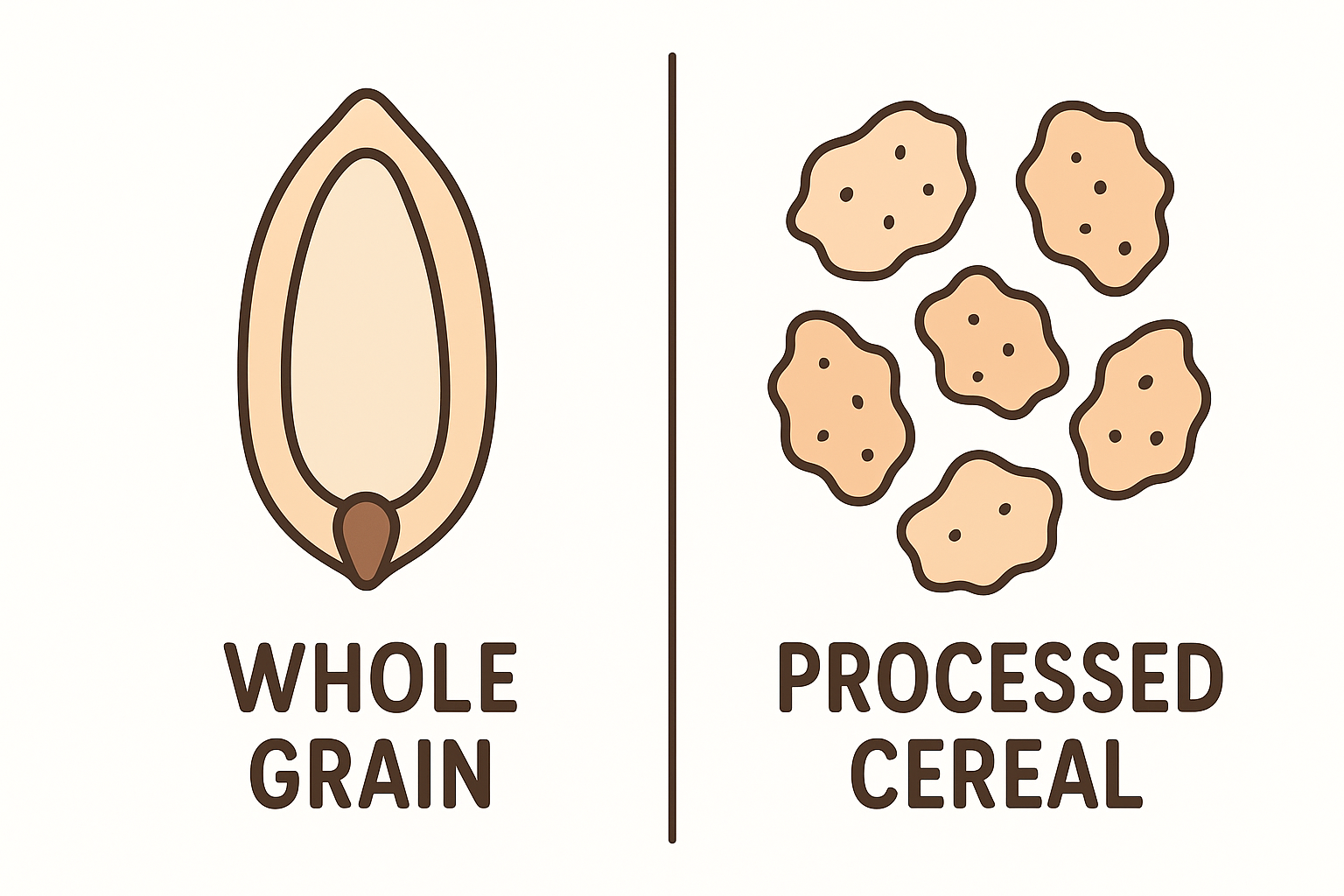
Comparing grain structure helps illustrate why processing method affects nutrition, not just sugar content.
How Good Grains Fits Into a Healthy Family Breakfast
Good Grains produces organic, minimally processed puffed cereals made from thoughtfully sourced whole and ancient grains, including organic Khorasan wheat and organic corn. Rather than extruding grains into engineered shapes, the brand uses a gentle puffing process designed to retain more of the grain's natural structure and familiar cereal experience.
Sweetened varieties, such as Organic Honey Puffs and Organic Cinnamon cereal, use real organic honey alongside organic monk fruit to keep sugar significantly lower than many traditional children's cereals. In addition, the lineup includes Organic Chocolate cereal and Organic Corn Puffs, offering nostalgic flavors without refined cane sugar, seed oils, or artificial additives. You can review the full lineup directly at goodgrains.com. For a practical comparison against lower-sugar competitors, this low-sugar cereal guide walks through side-by-side sugar counts.
Common Mistakes Families Make When Switching Cereals
One frequent mistake is trusting front-of-box claims like "natural" or "made with whole grain" without confirming the actual ingredient order. Another is assuming that any cereal marketed toward adults, such as high-protein or keto cereal, will automatically suit kids nutritionally or taste-wise.
Furthermore, some parents switch cereals abruptly and give up too quickly when kids resist an unfamiliar flavor. Instead, choosing options that preserve nostalgic flavors — like honey or cinnamon — tends to smooth the transition considerably. This guide to picking the right cereal brand outlines additional pitfalls to avoid during a pantry switch.
Frequently Asked Questions
What is healthy cereal for families?
Healthy cereal for families is cereal made from whole or ancient grains, minimally processed, and low in added sugar, without artificial flavors, colors, or seed oils. It should nourish kids and adults alike while still tasting like the cereal families remember.
How do you know if a cereal is minimally processed?
Check whether the grain is puffed rather than extruded, and look for short ingredient lists with recognizable items. Third-party certifications, such as Non-UPF Verified, also help confirm minimal processing.
Why do many health-focused cereals fail to deliver on taste?
Many health cereals over-engineer texture and flavor to hit protein or carb targets, sacrificing the familiar crunch and sweetness families expect. As a result, kids often reject them after the first try.
What is the difference between puffed and extruded cereal?
Puffed cereal uses heat and pressure to expand a whole grain kernel while keeping more of its natural structure. Extruded cereal forces dough through machinery to form engineered shapes, which typically requires more processing.
How much sugar should be in a healthy family cereal?
Look for cereals with significantly less sugar than the 10 to 12 grams per serving common in traditional children's cereals. Ideally, sugar should come from real sources like honey rather than refined cane sugar.
Is organic cereal worth the extra cost?
Organic cereal often costs more because it avoids synthetic pesticides and requires stricter farming standards. For families prioritizing ingredient quality and lower glyphosate exposure, many consider the cost justified.
How long does it take for kids to adjust to a healthier cereal?
Most kids adjust within one to two weeks when the new cereal still tastes familiar. Cereals that keep classic flavors like honey or cinnamon tend to see faster acceptance than heavily reformulated options.
What common mistakes do parents make when choosing cereal?
A common mistake is trusting front-of-box claims like "natural" or "whole grain" without checking the ingredient list. Another is assuming any cereal marketed for adults, such as keto cereal, is automatically better for kids.
What ingredients should families avoid in cereal?
Families should watch for refined cane sugar, seed oils, artificial flavors, artificial colors, and preservatives. These additives are common markers of ultra-processed formulations rather than whole-grain nutrition.
Are ancient grains like Khorasan wheat healthier than regular wheat?
Ancient grains such as Khorasan wheat are typically less hybridized and often retain more of their original fiber and nutrient structure. However, benefits depend heavily on how minimally the grain is processed after harvest.
What does Non-UPF Verified mean?
Non-UPF Verified is a third-party certification confirming a product does not meet the criteria for an ultra-processed food. It gives families an independent signal beyond marketing claims on the box.
Can healthy cereal for families still taste like classic cereal?
Yes, healthy cereal for families can retain nostalgic flavors like honey, cinnamon, and chocolate while using organic, minimally processed grains. The goal is better ingredients without sacrificing the taste kids already love.
How much fiber should kids get from breakfast cereal?
Breakfast cereal should ideally contribute several grams of fiber toward a child's daily needs, which range from roughly 19 to 25 grams depending on age. Whole and ancient grain cereals generally offer more fiber than refined alternatives.
What is glyphosate residue free certification?
Glyphosate Residue Free certification confirms independent lab testing found no detectable glyphosate herbicide residue in the final product. This offers additional assurance beyond standard organic certification alone.
What are best practices for reading a cereal ingredient label?
Start by checking whether the first ingredient is a whole or ancient grain rather than a refined flour. Then scan for added sugars, oils, and preservatives, and favor lists with fewer, more recognizable ingredients.
Bringing It All Together
Ultimately, healthy cereal for families does not require choosing between nostalgia and nutrition. Instead, it means looking past marketing claims and checking grain source, processing method, sugar content, and independent certification before anything lands in the cart. In particular, minimally processed, organic whole and ancient grain cereals — sweetened simply with honey or monk fruit — give families a way to keep breakfast familiar without the trade-offs common in both traditional and trend-driven cereal aisles. As families continue searching for options that satisfy both kids and parents, that gap between nostalgic taste and genuine nutrition is exactly where healthy cereal for families belongs.
0 comments