


Organic whole grain cereal has become one of the most searched breakfast terms among parents who want a genuinely better morning bowl without giving up the flavors their kids already love. In fact, walk down any cereal aisle and you will find dozens of boxes that sound wholesome yet still lean on refined sugar, seed oils, or heavily engineered grains. As a result, more shoppers are asking a simple question: what actually separates real organic whole grain cereal from clever packaging? This guide answers that question in full — covering how organic whole grain cereal is made, what belongs on the label, how it compares to other "healthy" cereal trends, and exactly how to pick the best box for your family.
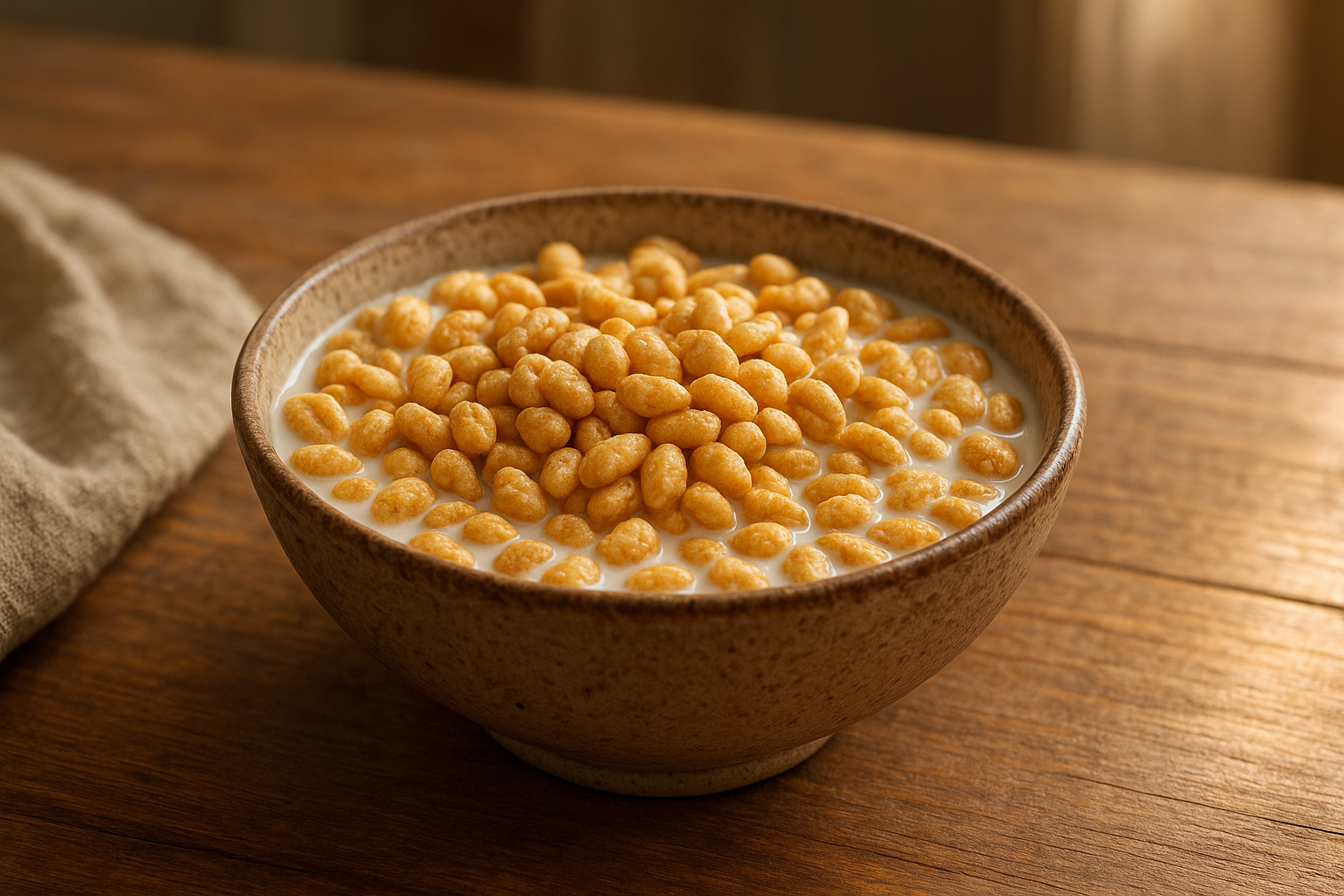
A simple bowl of organic whole grain cereal, made from gently puffed grains rather than heavily engineered shapes.
What Is Organic Whole Grain Cereal?
Organic whole grain cereal is a breakfast cereal made from grains that keep their bran (the fiber-rich outer layer), germ (the nutrient-dense core), and endosperm (the starchy center) intact, grown and processed under USDA Organic standards that prohibit synthetic pesticides and most artificial additives. Unlike refined cereals, it retains more of the grain's natural fiber, nutrients, and texture. Practically speaking, a cereal made from puffed Khorasan wheat or corn keeps its whole-grain structure rather than being stripped down and reshaped into engineered flakes or loops.
According to the Whole Grains Council, a food qualifies as whole grain when it contains the entire grain kernel — bran, germ, and endosperm together. This distinction matters because much of the fiber and micronutrients in grains like wheat and corn live in the bran and germ, layers that are frequently removed during conventional milling. Therefore, when a cereal is labeled "whole grain," it should still contain those layers rather than a small percentage blended into a mostly refined base. For a deeper look at what separates a genuinely good grain from a marketing claim, this breakdown of what a good grain actually means for healthier cereal is a useful next read.
Why Organic Whole Grain Cereal Matters for Your Family
The Problem With Many Traditional Cereals
Many traditional children's cereals rely on refined cane sugar, corn syrup, and artificial colors to create bright, sweet products that are easy to love but harder to feel good about. Consequently, the U.S. Dietary Guidelines recommend limiting added sugars to less than 10 percent of daily calories, a threshold that a single serving of some cereals can approach on its own, according to the Dietary Guidelines for Americans. In contrast, organic whole grain cereal sweetened primarily with small amounts of honey or organic monk fruit can deliver familiar flavor while using significantly less added sugar per bowl.
Ultra-Processing and Why It Matters More Than Sugar Alone
In addition, research referenced by the National Institutes of Health has linked diets high in ultra-processed foods to increased risk of weight gain and chronic disease over time. Specifically, cereals built through heavy extrusion, artificial flavoring, and preservative systems often fall into that ultra-processed category — a classification system known as the NOVA food classification — even when marketed as nutritious. For this reason, minimally processed, organic whole grain cereal has become an appealing middle ground for families who are paying closer attention to ingredient quality rather than just the sugar line on a nutrition panel.
Organic Whole Grain Cereal Nutrition Facts: What Every Label Should Show
Before comparing brands, it helps to know what a genuinely solid nutrition panel looks like. Most quality organic whole grain cereals fall into a similar range per serving, and checking these numbers side by side takes the guesswork out of shopping.
- Calories: Typically 100–140 per serving, since whole grains are naturally calorie-dense but not calorie-excessive.
- Fiber: Look for 3 grams or more per serving, ideally closer to 5 grams from intact bran layers.
- Added sugar: The best organic whole grain cereals stay under 6 grams per serving, often sourced from honey or monk fruit rather than refined cane sugar.
- Sodium: Generally low, since whole grain cereal does not need heavy salt to mask a bland base.
- Protein: Usually 2–4 grams naturally from the grain itself, without relying on isolated protein additives.
Above all, remember that serving sizes vary between brands. Consequently, always compare the "per 100 grams" figure rather than trusting the printed serving size alone, since a smaller listed serving can make sugar or sodium look artificially low.
How Organic Whole Grain Cereal Is Made
Puffed vs. Extruded Cereal
Most cereal shapes on store shelves are created through an industrial process called extrusion — grinding grain into flour, cooking it under high heat and pressure, then forcing it through a machine die to form loops, flakes, or characters. While efficient, this method breaks down much of the grain's original structure and often requires added starches, sugars, or flavors to make the result taste like cereal again. Puffing, on the other hand, uses heat and pressure to expand a whole grain kernel from the inside, similar to how popcorn pops, so more of the grain's natural shape, fiber, and character survive the process.
For example, Good Grains uses this gentler puffing approach on organic Khorasan wheat and organic corn, rather than extruding grains into heavily engineered shapes. The brand's approach is also why it became the first cereal to earn Non-UPF Verified certification through independent testing. Shoppers curious about the grains themselves can also learn more about Khorasan wheat, an ancient grain related to durum wheat that has been cultivated for thousands of years.
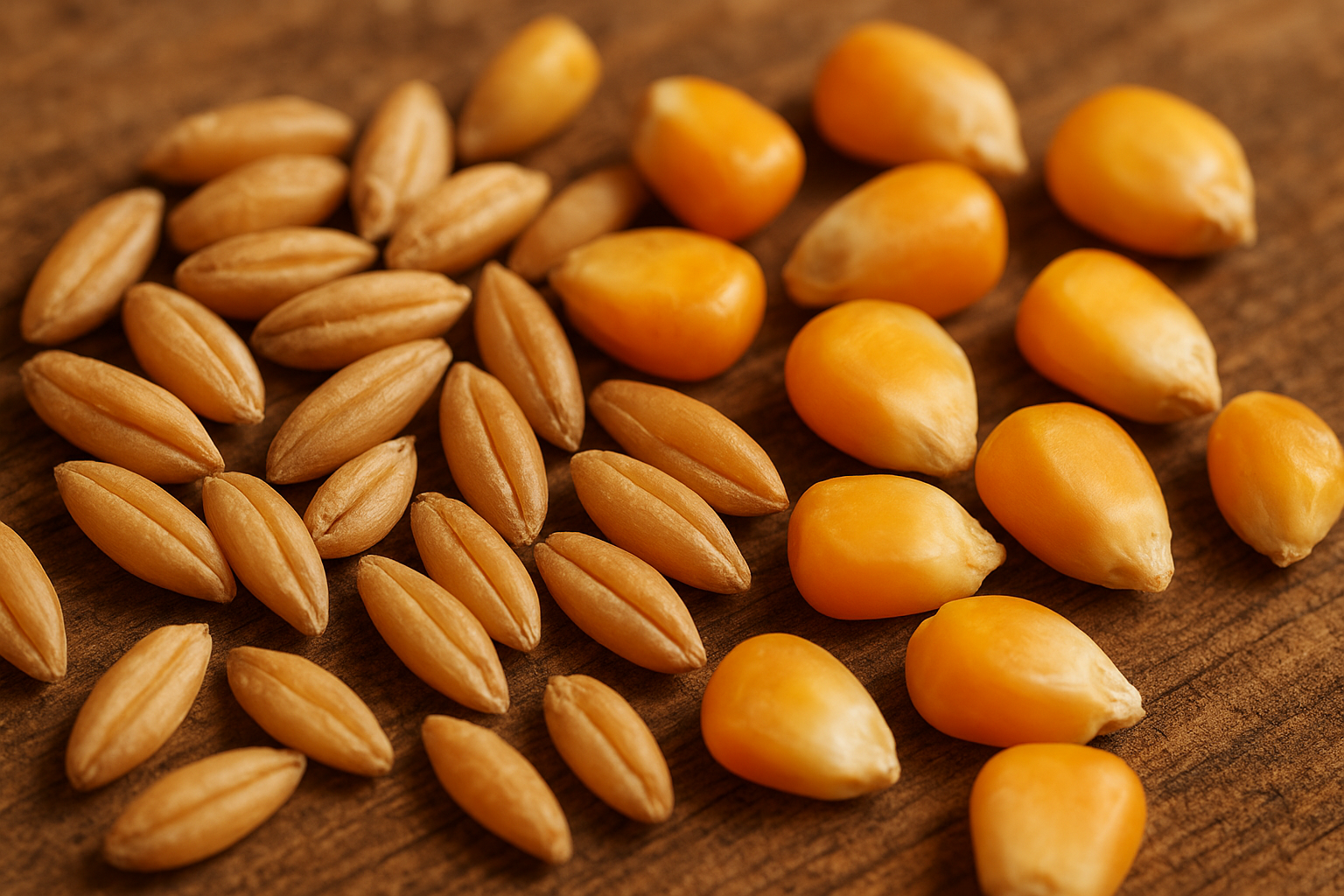
Whole Khorasan wheat and corn kernels, the ancient and whole grains used to make organic whole grain cereal. For a deeper walkthrough, see our Organic Cinnamon Puffs.
What Makes a Whole Grain Breakfast Cereal Truly Clean Label?
A clean-label whole grain breakfast cereal generally avoids seed oils, refined cane sugar, preservatives, and artificial flavors or colors, while still meeting recognized certification standards. Above all, independent verification matters more than a brand's own claims, since terms like "natural" or "wholesome" are not strictly regulated on packaging. Look instead for concrete standards, each of which involves third-party testing rather than self-reported marketing language. For a closer look at how one brand approaches this, this organic, non-UPF breakfast pick breakdown walks through the label side by side.
Understanding Organic Cereal Certifications: USDA Organic, Non-GMO, and Beyond
Certifications are the fastest way to cut through marketing noise, but not all of them measure the same thing. Understanding what each one actually verifies helps you shop with more confidence.
- USDA Organic: Restricts synthetic pesticides, fertilizers, and GMOs during farming and processing.
- Non-GMO Project Verified: An added, independent check confirming genetically modified ingredients were not used, layered on top of organic status for extra transparency.
- Non-UPF Verified: Confirms a product does not meet the criteria commonly used to classify ultra-processed foods.
- Glyphosate Residue Free: Tests the finished product itself for pesticide residue, which is different from organic farming rules that govern inputs used during growing (see the glyphosate herbicide overview for background).
Consequently, a cereal that stacks multiple certifications together, rather than relying on just one, generally offers more verified transparency than a box carrying a single organic logo. For a full walkthrough of how these standards compare, this guide to picking the best cereal for your pantry is worth bookmarking.
How to Choose the Best Organic Whole Grain Cereal for Your Family
Choosing well does not require a nutrition degree. Instead, following a short checklist at the store makes the process manageable, even for busy parents scanning shelves quickly.
- Check the ingredient list first. Look for whole grains listed first, and confirm there are no seed oils, artificial colors, or preservatives hiding further down the list.
- Compare sugar per serving. Choose options sweetened with small amounts of honey or monk fruit rather than refined cane sugar or corn syrup, and check that serving sizes are comparable.
- Look for verified certifications. Prioritize USDA Organic, Non-UPF Verified, and Glyphosate Residue Free labels, since these involve outside testing rather than brand self-reporting.
- Check the fiber content. Pick cereals that provide a good source of fiber per serving, since fiber from whole and ancient grains supports digestion and lasting fullness.
- Taste test with the whole family. Buy a small box first, because nostalgia and genuine flavor matter for a cereal that kids will actually keep eating every morning.
If you want a more detailed walkthrough of this exact process, this guide on how to pick the right cereal for your family expands on each of these five steps with real label examples.
Organic Whole Grain Cereal vs. Other Health Trends
Not every "healthy" cereal on the shelf takes the same approach, and understanding the difference helps families avoid short-lived diet fads. Keto-style cereals typically remove grains almost entirely, relying instead on nuts, seeds, and isolated fibers to mimic a crunchy texture. Similarly, many high-protein cereals add isolated protein powders that boost a nutrition label number without necessarily improving overall food quality.
Grain-free cereals, meanwhile, sidestep whole grains altogether, which also means giving up the natural fiber and familiar taste that many families grew up enjoying. In contrast, organic whole grain cereal keeps the grain itself front and center, simply grown organically and processed more gently. Therefore, it tends to appeal to families who want a real improvement over conventional cereal without adopting an entirely new eating pattern. For more on separating genuine nutrition from marketing trends, see what actually makes cereal truly healthy.
Cereal Shapes Explained: Rings, Puffs, and Flakes in Organic Whole Grain Cereal
Shape alone does not tell you whether a box qualifies as real organic whole grain cereal. Ring-shaped "O" cereals, puffed kernels, and flakes can each be made from whole grains — or from refined, reshaped flour, depending entirely on how the manufacturer processes the grain.
- Rings ("O" shapes): Almost always extruded, since forming a ring requires forcing dough through a die. This is not automatically bad, but it does mean the grain has been ground down and reformed.
- Puffs: Made by expanding an intact kernel, preserving more of the grain's natural structure and requiring fewer added binders to hold shape.
- Flakes: Typically rolled or pressed from cooked grain, sitting somewhere between puffing and full extrusion in terms of processing intensity.
Ultimately, the shape is a texture choice, not a nutrition guarantee. Instead of judging by shape, flip the box over and check the ingredient list and processing method, since that is where the real difference between organic whole grain cereal options actually lives.
Serving Suggestions and Recipe Ideas for Organic Whole Grain Cereal
Organic whole grain cereal does not have to stay confined to a milk bowl. Because it holds its shape and crunch well, it works nicely in several everyday recipes:
- Yogurt parfaits: Layer with organic yogurt and fresh fruit for a fiber-rich snack.
- No-bake cereal bars: Bind puffed cereal with honey and nut butter for a lunchbox-friendly treat. For a deeper walkthrough, see our Honey Sweetened Cereal: A Healthier Breakfast Guide.
- Trail mix: Combine with nuts and dried fruit for a portable, whole-grain snack.
- Cereal-topped muffins: Sprinkle over batter before baking for added crunch and texture.
Where to Buy Organic Whole Grain Cereal
As demand for organic whole grain cereal grows, retail availability keeps expanding. For example, Good Grains recently completed a retail launch with Sprouts Farmers Market, putting its organic whole and ancient grain cereals directly on more store shelves. For shoppers who prefer browsing online first, visiting goodgrains.com offers a straightforward way to compare the full lineup, ingredient panels, and certifications before heading to the store.
A Different Approach: Good Grains and Organic Whole Grain Cereal
Good Grains sits in the space between old-fashioned nostalgic cereal and newer, heavily engineered "health" cereals. Its lineup, including Organic Honey Puffs, Organic Cinnamon cereal, and Organic Corn Puffs, is built from organic whole and ancient grains with no seed oils, refined cane sugar, or artificial ingredients. Sweetened varieties rely on real organic honey alongside organic monk fruit, which keeps sugar meaningfully lower than many traditional children's cereals while still tasting familiar.

Organic whole grain cereal is designed to feel like an easy, everyday breakfast the whole family can share.
Sustainability and Sourcing Behind Organic Whole Grain Cereal
Beyond the nutrition panel, organic farming practices also carry environmental benefits worth knowing. Because organic standards restrict synthetic pesticides and fertilizers, organic whole grain cereal production tends to support healthier soil and reduced chemical runoff compared with conventional grain farming, a principle central to sustainable agriculture practices more broadly. In addition, gentler processing methods like puffing generally use less energy-intensive machinery than full extrusion lines, which is a smaller but meaningful part of a cereal's overall footprint.
Frequently Asked Questions About Organic Whole Grain Cereal
Is organic whole grain cereal the same as "healthy" cereal?
Not automatically. A cereal can be labeled "healthy" while still containing refined grains, added sugar, or seed oils, so the term alone is not a reliable standard. Organic whole grain cereal, however, specifically means the grain is intact and grown without synthetic pesticides.
How is organic whole grain cereal different from regular cereal?
Organic whole grain cereal keeps the bran, germ, and endosperm of the grain and is grown without synthetic chemicals, while many regular cereals use refined grain flour, added sugars, and artificial ingredients. As a result, organic whole grain options typically offer more fiber and fewer processed additives per serving.
What grains are used in organic whole grain cereal?
Common choices include organic corn, oats, and ancient grains such as Khorasan wheat, an heirloom relative of durum wheat. These grains are selected for their fiber content, texture, and their ability to hold shape when gently puffed rather than extruded.
Why is puffed cereal considered less processed than extruded cereal?
Puffing expands a whole grain kernel using heat and pressure, much like popcorn, so most of the grain's natural structure survives. Extrusion, by contrast, grinds grain into flour and forces it through a machine die, often requiring added starches or flavors to compensate for lost texture.
Does organic whole grain cereal contain less sugar?
Many organic whole grain cereals use small amounts of honey or monk fruit instead of refined cane sugar, resulting in noticeably lower sugar per serving. Even so, shoppers should still check the nutrition label, since sugar content varies by brand and flavor.
How much fiber should a healthy breakfast cereal provide?
Nutrition guidance generally considers 3 grams of fiber per serving a good source, while 5 grams or more is considered excellent. Whole and ancient grains naturally contain more fiber than refined grain cereals because the bran layer stays intact.
What does Non-UPF Verified mean on a cereal label?
Non-UPF Verified is a third-party certification confirming a product does not meet the criteria commonly used to classify ultra-processed foods. In particular, it gives shoppers an independent signal that goes beyond a brand's own marketing claims.
Is glyphosate residue free the same thing as organic?
No, they are related but separate standards. USDA Organic certification restricts which inputs can be used during farming, while Glyphosate Residue Free testing verifies the finished product directly for pesticide residue.
How much does organic whole grain cereal typically cost?
Organic whole grain cereal generally costs more per box than conventional cereal, reflecting organic farming practices and third-party certification testing. Prices commonly sit in a premium range similar to other organic pantry staples.
Can kids taste the difference between organic whole grain cereal and traditional cereal?
Many families report that kids notice a heartier texture but still enjoy familiar flavors like honey, cinnamon, or chocolate. Brands that focus on nostalgic taste, rather than purely nutritional positioning, tend to see better acceptance from younger eaters.
What is a common mistake people make when choosing a healthier cereal?
A common mistake is assuming high-protein or keto claims automatically mean a cereal is better for a family. Specifically, some heavily engineered "health" cereals rely on isolated proteins or sugar substitutes that trade one processing concern for another.
How long does organic whole grain cereal stay fresh?
Unopened organic whole grain cereal typically stays fresh for several months in a cool, dry pantry, since it contains no artificial preservatives that extend shelf life indefinitely. Once opened, it is best sealed tightly and used within a few weeks.
Is Khorasan wheat safe for people with wheat sensitivities?
Khorasan wheat is a true wheat relative and contains gluten, so it is not suitable for anyone with celiac disease or a wheat allergy. Anyone with a diagnosed sensitivity should consult a healthcare provider before adding any wheat-based cereal to their diet.
Is organic whole grain cereal Non-GMO?
Yes, in most cases. USDA Organic standards already prohibit genetically modified ingredients, so certified organic whole grain cereal is inherently non-GMO. Some brands still add a separate Non-GMO Project Verified seal, since it involves its own independent testing and adds an extra layer of transparency for shoppers.
What shapes does organic whole grain cereal come in?
Organic whole grain cereal comes in several shapes, including rings, puffs, flakes, and clusters. However, shape does not determine healthfulness on its own; the ingredient list and processing method used to create that shape matter far more than the shape itself.
Final Thoughts on Choosing Organic Whole Grain Cereal
Ultimately, organic whole grain cereal offers a practical middle ground between old-fashioned sugary boxes and trendy, overly engineered health foods. By checking for intact grains, lower sugar, verified certifications, and a good source of fiber, families can make faster, more confident choices in the cereal aisle. In the end, the goal is simple: a bowl of organic whole grain cereal that tastes like cereal, uses real organic whole grains, and fits into an everyday breakfast routine without compromise.
0 comments