


Honey sweetened cereal has moved from a nostalgic breakfast memory to one of the fastest-growing categories on grocery shelves, and it's easy to see why. Instead of relying on refined cane sugar or corn syrup, honey sweetened cereal uses real honey as its primary source of sweetness, which means families get a familiar crunchy bowl without the sugar overload found in many traditional boxed cereals. In addition, brands like Good Grains are proving that a lower-sugar, honey based cereal can still deliver the same satisfying crunch kids and parents remember from childhood. Below, we break down exactly what honey sweetened cereal is, how it's made, why "all-natural" honey marketing only tells half the story, and how to choose the best box for your family.
Quick Answer
Honey sweetened cereal replaces refined sugar and corn syrup with real honey — and often organic monk fruit — as its main sweetener. It's typically built on whole or ancient grains, which means more fiber and fewer processed ingredients than mainstream sugary cereal. However, not every "honey" cereal is automatically low in sugar, so the label still matters more than the marketing.
What Is Honey Sweetened Cereal?
In short, honey sweetened cereal replaces refined sugar with real honey, and sometimes organic monk fruit, as its primary sweetening ingredient. Honey itself, as described in this overview of honey production, is made by bees from flower nectar and has been used as a natural sweetener for thousands of years. As a result, cereal built around honey tends to taste familiar and comforting while relying on a less processed ingredient than syrup blends.
Specifically, this style of cereal usually starts with whole or ancient grains rather than refined flour. For example, corn and Khorasan wheat, an heirloom relative of modern wheat, are common bases because they puff well and hold onto more fiber. Consequently, the finished cereal tends to be more filling and nutrient-dense than cereals built around bleached grain and syrup.
Furthermore, honey brings more than sweetness to the bowl. It carries a distinct flavor and slight viscosity that helps sweetener cling evenly to puffed grain, so manufacturers often need less of it compared to granulated sugar. Above all, this means the cereal can taste sweet enough for kids while staying well below the sugar levels of many nostalgic cereal brands.
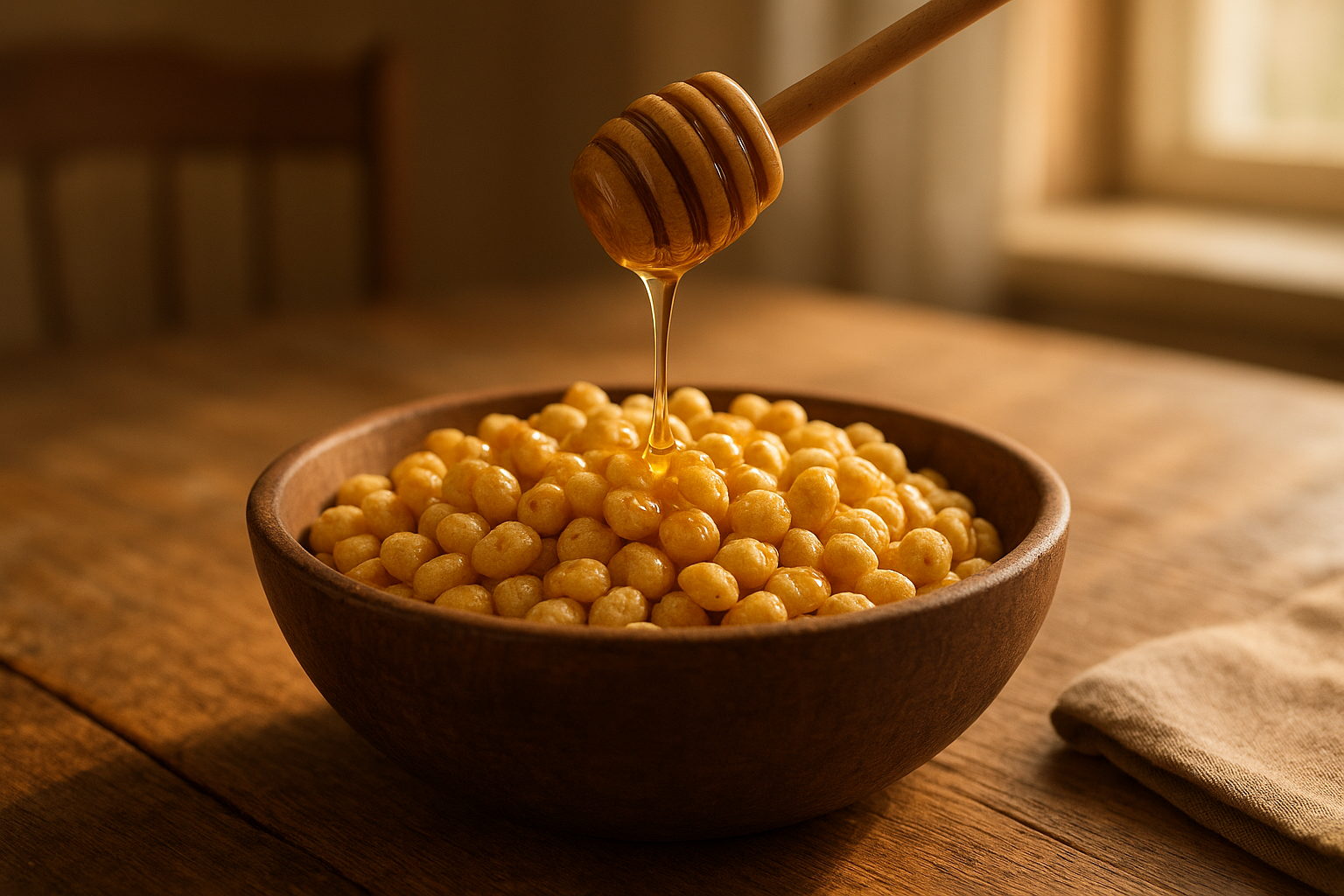
A simple bowl of honey sweetened cereal made from puffed whole grains and real honey.
Why "All-Natural" Honey Claims Only Tell Half the Story
Plenty of cereal marketing leans heavily on honey's reputation as a pure, all-natural ingredient. However, "natural" is not a regulated nutrition claim in the same way "organic" or "verified" certifications are. Therefore, a box can highlight honey's natural image on the front while still packing a meaningful amount of added sugar, artificial color, or preservatives elsewhere in the ingredient list.
What "Natural" Actually Means on a Cereal Box
In the United States, the FDA's guidance on the term "natural" confirms there is no formal definition requiring a product to skip synthetic ingredients entirely. Consequently, shoppers cannot rely on front-of-box language alone. Instead, it helps to check the actual grams of added sugar, since the Dietary Guidelines for Americans recommend keeping added sugars under 10 percent of daily calories, yet a single serving of some traditional children's cereals can approach that limit on its own.
In addition to sugar concerns, there is growing awareness around ultra-processed food, a category defined by heavy industrial formulation, engineered textures, and long ingredient lists. As a result, shoppers increasingly look for cereals verified as non-ultra-processed, made from recognizable ingredients like organic grains, honey, and fruit rather than syrups, gums, and artificial colorants. Good Grains addresses this directly as the first cereal to earn Non-UPF Verified certification through WISEcode, which shows that a honey sweetened cereal can be both minimally processed and independently confirmed as such. You can read more about what that certification means in this breakdown of the Non-UPF Verified standard.
How Honey Sweetened Cereal Is Made: A Step-by-Step Look
Understanding the production process helps explain why some honey sweetened cereal tastes and feels different from mass-market alternatives. Rather than extruding engineered dough into shapes, many better-for-you brands gently puff whole grain kernels instead. Below is a general outline of that process.
- Source organic whole grains: Producers begin with organic whole or ancient grains, such as corn or Khorasan wheat, selected for purity and grown without synthetic pesticide residue.
- Clean and prepare the grain: Kernels are cleaned and prepared for puffing, which preserves more natural grain structure than grinding into flour for extrusion.
- Gently puff the grain: Heat and pressure expand each kernel into a light, crunchy piece of cereal without heavily re-engineering its original form.
- Add honey and natural sweetness: Real organic honey, sometimes paired with organic monk fruit, is applied to create sweetness while keeping added sugar low.
- Bake, cool, and package: The cereal is baked to lock in crunch, cooled fully, and packaged quickly to protect freshness without artificial preservatives.
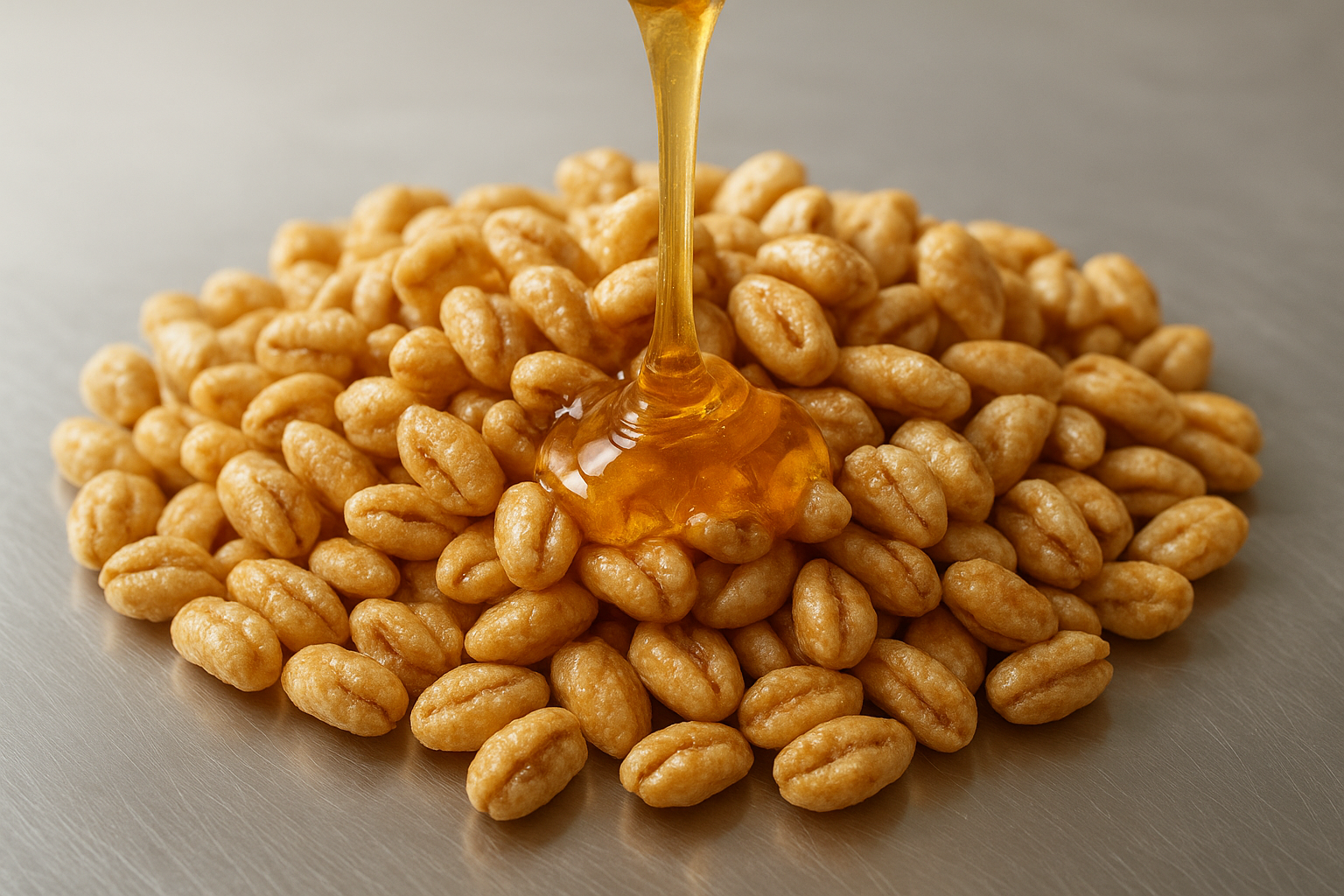
Real honey is added directly to gently puffed grains rather than mixed into engineered dough.
Honey Sweetened Cereal vs. Traditional Sugary Cereal
Side by side, the differences become clear. Traditional sugary cereals often list refined sugar, corn syrup, or multiple added sweeteners near the top of the ingredient panel. Similarly, they frequently include artificial colors and flavors to create bright, uniform shapes that appeal to kids visually.
Honey sweetened cereal, by comparison, typically leads with a single grain and a single natural sweetener. For instance, Organic Khorasan Honey Puffs pair ancient wheat with real honey instead of syrup blends. Meanwhile, options like Organic Corn Puffs show that even unsweetened, grain-forward cereal can satisfy that classic crunchy cereal craving.
Therefore, when comparing nutrition labels, it helps to look past marketing claims and check three things: the type of sweetener used, the grams of added sugar per serving, and whether the grain is whole or refined. This small habit reveals more about cereal quality than package graphics ever will.
Honey Sweetened Cereal Brands Compared: What the Label Really Shows
Because so many cereal brands now spotlight honey on the front of the box, it helps to compare what the nutrition panel actually says. Specifically, the table below shows how several well-known honey-flavored cereals typically stack up against a honey sweetened cereal built around ancient grains.
| Cereal Brand | Primary Grain | Sweetener Order on Label | Approx. Added Sugar* | Whole/Ancient Grain? |
|---|---|---|---|---|
| Honey Nut Cheerios | Oats | Sugar listed before honey | ~9g per serving | Partially |
| Honey Bunches of Oats | Oats & Corn | Sugar listed before honey | ~6g per serving | Partially |
| Honey Smacks | Corn | Sugar listed before honey | ~14g per serving | No |
| Good Grains Organic Khorasan Honey Puffs | Khorasan wheat | Honey only, no added sugar | Low — honey is the only sweetener | Yes, ancient grain |
*Approximate figures based on typically published nutrition labels. Formulations change, so always check current packaging.
As the table shows, listing honey on the front of a box does not guarantee a low-sugar result. In contrast, a cereal that uses honey as its only sweetener — with no added refined sugar behind it — tends to land meaningfully lower on the nutrition panel. For a deeper dive into this exact question, see our guide on finding a genuinely low-sugar cereal with honey.
The Role of Ancient Grains in Honey-Sweetened Breakfasts
Ancient grains play a bigger role in honey sweetened cereal than most shoppers realize. Khorasan wheat, for example, is an heirloom grain variety that has changed relatively little over centuries of cultivation. Consequently, it tends to retain more of its original fiber and mineral content compared to heavily bred modern wheat varieties.
In particular, fiber matters here because many refined cereals strip it away during processing, leaving mostly starch and added sugar behind. In contrast, whole ancient grains keep the bran and germ intact, which supports digestion and helps cereal feel more satisfying at breakfast. Some honey sweetened varieties, including Organic Khorasan Cinnamon cereal, combine that fiber advantage with warm spice flavor for a familiar taste families already love.
Additionally, sourcing practices matter. Cereals verified as Glyphosate Residue Free give parents extra reassurance about pesticide exposure, an issue tracked by agencies such as the U.S. Environmental Protection Agency. Pairing ancient grains with this kind of transparency gives honey sweetened cereal a stronger nutritional and safety profile overall.
Is Honey Based Cereal Better for Blood Sugar and Energy?
Fiber content, more than sweetener choice alone, tends to drive how a cereal affects blood sugar and morning energy. Specifically, foods higher on the glycemic index tend to spike blood sugar faster, while fiber-rich whole grains slow that absorption down. Therefore, a honey based cereal built on ancient wheat or whole corn, with honey as the only added sweetener, generally supports steadier energy than a refined-grain cereal loaded with multiple sugars.
That said, portion size still counts. Even a well-formulated honey sweetened cereal can raise blood sugar quickly if eaten in oversized servings without protein or fat alongside it. As a result, pairing a bowl with milk, yogurt, or nuts is a simple way to slow digestion further and keep energy steadier through the morning.
Choosing the Best Honey Sweetened Cereal for Your Family
With so many "healthy" cereal claims on shelves, it helps to have a simple checklist. First, look for organic certification, which limits synthetic pesticide use during growing. Second, confirm the cereal skips seed oils, refined cane sugar, preservatives, and artificial colors or flavors. Third, check for independent verification, such as Non-UPF Verified status, rather than relying on marketing language alone. For a broader breakdown of what to look for across an entire pantry, see our 2025 healthy family cereal guide.
Above all, taste still matters. A honey sweetened cereal that nobody in the family finishes eating is not a practical long-term choice, regardless of its nutrition panel. That is why brands built around nostalgic flavor profiles, rather than short-lived diet trends, tend to fit better into everyday routines. If sugar reduction is the main goal, our complete guide to the best low-sugar cereal for families walks through additional label-reading tips. You can browse the full lineup, including honey and cinnamon varieties, at goodgrains.com.

A shared breakfast featuring honey sweetened cereal made from real, whole grain ingredients.
Frequently Asked Questions About Honey Sweetened Cereal
What is honey sweetened cereal?
Honey sweetened cereal is breakfast cereal that uses real honey, instead of refined sugar or corn syrup, as its primary source of sweetness. It often relies on whole or ancient grains, which gives it more fiber and a less processed profile than conventional cereal.
Is honey sweetened cereal healthier than regular cereal?
In many cases, yes, because honey based cereals typically contain less added sugar and fewer artificial additives than mainstream sugary cereals. However, it still matters to check the full ingredient list, since some products add extra sugars on top of honey.
How much sugar is in honey sweetened cereal?
Sugar content varies by brand, but well-formulated honey sweetened cereals often contain significantly less sugar per serving than traditional children's cereals, which can carry 10 to 12 grams or more. Some brands blend honey with monk fruit to keep sugar even lower while preserving sweetness.
Can kids with sensitive stomachs eat honey sweetened cereal?
Most children tolerate honey sweetened cereal well, especially versions made without seed oils, preservatives, or artificial additives. That said, parents introducing honey to children under one year old should always follow standard pediatric guidance first.
What ingredients are used to make honey sweetened cereal?
Typical ingredients include whole or ancient grains such as corn or Khorasan wheat, organic honey, and sometimes monk fruit for added sweetness without extra sugar. Clean-label versions skip preservatives, artificial flavors, and artificial colors entirely.
Is honey sweetened cereal the same as low-sugar cereal?
Not always. A cereal can be honey sweetened yet still contain a moderate amount of sugar, so the two terms are related but not interchangeable. The best low-sugar options use honey sparingly and pair it with fiber-rich grains.
Why do some brands use monk fruit alongside honey?
Monk fruit is a natural, zero-calorie sweetener that allows brands to reduce overall sugar while keeping the cereal tasting sweet enough for kids. Combining it with honey lets manufacturers cut sugar significantly without relying on artificial sweeteners.
What's the difference between puffed and extruded honey sweetened cereal?
Puffed cereal uses heat and pressure to expand whole grain kernels gently, keeping more of the grain's natural structure intact. Extruded cereal, in contrast, forces engineered dough through machinery to create uniform shapes, which usually means more processing.
Is honey sweetened cereal safe for toddlers?
Honey sweetened cereal is generally appropriate for toddlers over 12 months old, since infant botulism risk from honey applies mainly to babies under one year. Always check the specific product label and consult a pediatrician if unsure.
How long does honey sweetened cereal stay fresh?
Most honey sweetened cereals stay fresh for several months when sealed properly, since honey has natural preservative qualities that support shelf stability. Once opened, storing the cereal in an airtight container helps maintain crunch and flavor longer.
What common mistakes do people make when choosing honey sweetened cereal?
A common mistake is assuming any product labeled with honey is automatically low in sugar without checking the nutrition panel. Another mistake is overlooking whether the cereal is minimally processed or still heavily extruded despite the honey marketing.
Is honey sweetened cereal considered a processed food?
Technically, most cereal undergoes some processing, but honey sweetened cereals made through gentle puffing and simple ingredients are far less processed than heavily engineered, ultra-processed options. Independent verifications, such as Non-UPF certification, can help confirm this distinction.
Does honey sweetened cereal cost more than regular cereal?
Honey sweetened cereal made with organic, ancient grains often costs slightly more than conventional supermarket cereal because of ingredient sourcing and lower-volume production methods. Many families consider the trade-off worthwhile given the reduced sugar and cleaner ingredient list.
Is honey sweetened cereal vegan?
Honey sweetened cereal is not considered vegan by strict definitions, since honey is an animal-derived product made by bees rather than a plant-based ingredient. Families following a vegan diet often look for cereals sweetened with monk fruit, dates, or maple syrup instead.
What's the difference between honey sweetened cereal and honey nut cereal?
Honey nut cereal usually combines honey with added nuts or nut flavoring, and it often lists refined sugar higher on the label than honey itself. Honey sweetened cereal, by contrast, generally uses honey as the primary or only sweetener without depending on nut flavoring to carry the taste.
Final Thoughts on Honey Sweetened Cereal
Ultimately, honey sweetened cereal offers a practical middle ground between nostalgic taste and better ingredients. Rather than choosing between a cereal kids love and one parents feel good about, this category proves both goals can coexist. By focusing on real honey, whole or ancient grains, and minimal processing, brands are showing that healthier cereal does not need to feel like a diet product.
As you evaluate options, remember to check sugar content, ingredient sourcing, and independent verification rather than relying on front-of-box claims alone. Whether it is a honey and Khorasan wheat blend or a simple corn puff, the goal remains the same: familiar breakfast comfort built on cleaner ingredients. For families searching for that balance, honey sweetened cereal remains one of the most straightforward upgrades available in the cereal aisle today.
0 comments