


Organic puffed cereal is reshaping what a "clean" breakfast looks like for families who refuse to trade nostalgia for ingredient quality. Unlike most mainstream boxed cereals, organic puffed cereal starts with whole grains that are puffed, not extruded, under heat and pressure, which helps preserve more of the grain's natural texture. As a result, shoppers who read labels carefully can finally tell the difference between a genuinely clean box and one that simply uses the word "organic" as a marketing hook. In the sections below, we'll walk through exactly how organic puffed cereal is made, what certifications actually matter, how it compares nutritionally to other whole-grain cereals, and how to pick the best one for your family's breakfast table.
Quick answer: Organic puffed cereal is a breakfast cereal made from organically grown whole grains that are puffed, not extruded, and typically free of seed oils, refined cane sugar, and artificial additives. The strongest options are also independently verified for purity, minimal processing, and pesticide-residue testing — not just labeled "organic" on the front of the box.
What Is Organic Puffed Cereal?
Organic puffed cereal is exactly what it sounds like: whole grains, grown without synthetic pesticides or fertilizers, that are expanded into light, crunchy puffs using heat and pressure rather than being ground, cooked, and reshaped. Because of this gentler method, the grain keeps more of its original kernel structure instead of becoming a dense, extruded shape.
In practice, this means a box labeled organic puffed cereal should list recognizable grains, such as corn or ancient wheat varieties, near the top of its ingredient panel. According to the USDA National Organic Program, the organic label specifically certifies that crops were grown without most synthetic pesticides, synthetic fertilizers, or genetic engineering. Therefore, the term gives shoppers a verified baseline for ingredient sourcing, not just a vague wellness buzzword.
If you'd like a broader overview of how this fits into everyday family meal planning, this natural grain puff cereal family breakfast guide walks through practical serving tips for picky eaters and busy mornings alike.
How Puffed Grain Cereal Is Made
Puffing is one of the oldest grain-processing methods still used in breakfast food today. Specifically, whole grain kernels are sealed in a chamber and heated until internal moisture turns to steam. When the pressure is suddenly released, that trapped steam causes the kernel to expand rapidly into a crisp, airy puff — similar in principle to how popcorn kernels pop, just with a different grain and a controlled pressure chamber instead of direct dry heat.
Because the grain itself does the expanding, rather than being mechanically forced through a shaping die, puffed grain cereal tends to retain more of its original bran (the fiber-rich outer layer) and germ (the nutrient-dense core of the kernel). For example, Good Grains' Organic Honey Puffs and Organic Cinnamon Puffs use ancient Khorasan wheat, while its Organic Corn Puffs rely on organic corn, so the base grain differs by flavor even though the puffing method stays the same.
Puffing vs. Extrusion: Why the Difference Matters
Extrusion, by contrast, usually involves grinding grain into a slurry, cooking it under very high heat and pressure, then forcing it through a die to create uniform shapes like loops or flakes. This process is efficient at scale, but it can break down more of the grain's natural fiber structure along the way.
In fact, the history of breakfast cereal shows that puffing predates modern extrusion by decades, originally gaining popularity as a simpler way to make whole grains light and ready to eat. Today, brands that choose puffing over extrusion are often signaling a preference for less mechanical processing overall — a meaningful distinction that most generic "puffed cereal" product listings never explain.
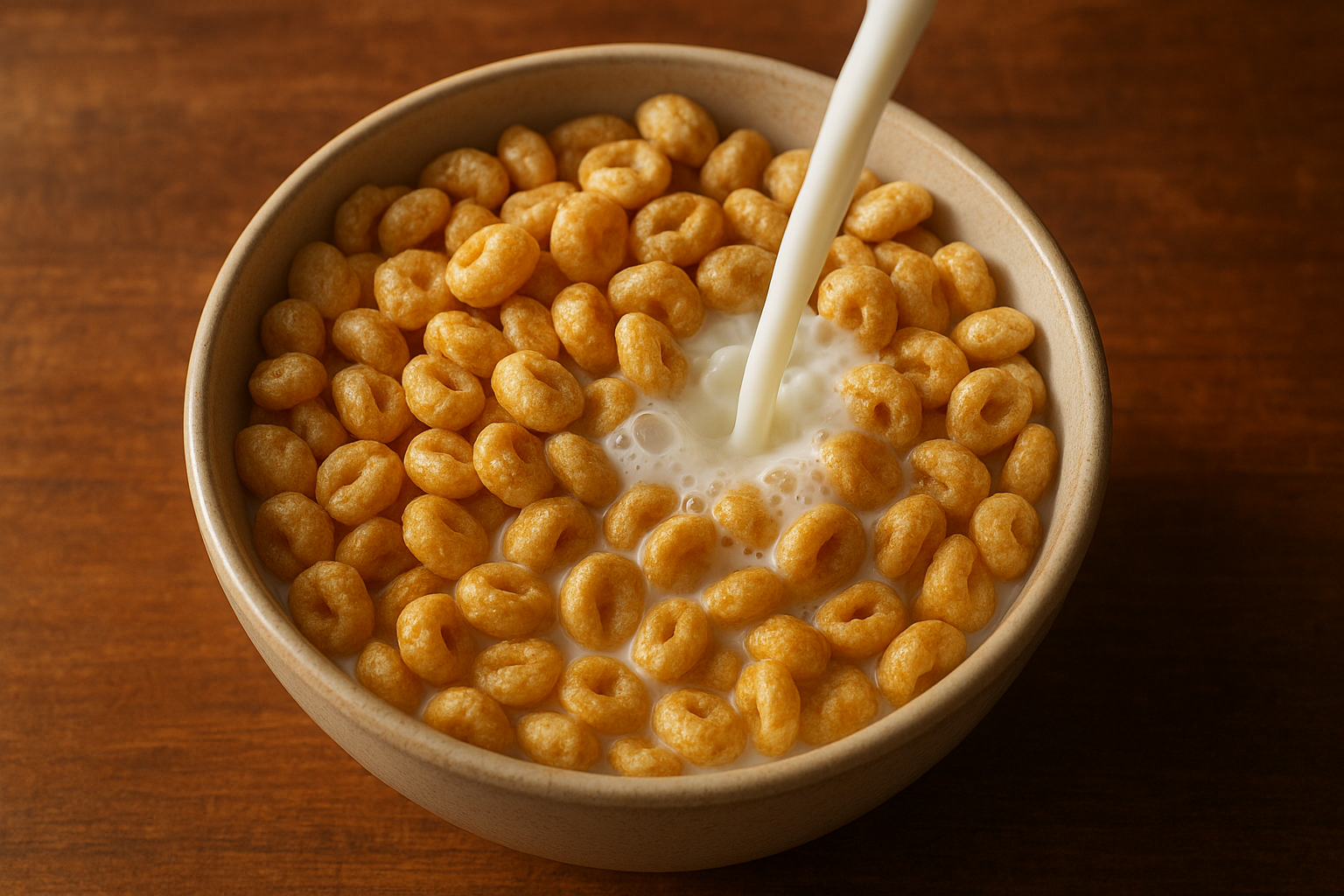
A simple bowl of organic puffed cereal with milk shows the light, airy texture that puffing creates.
USDA Organic Certification: What It Actually Covers
Many shoppers assume "organic" and "healthy" are interchangeable, but the certification only speaks to how the crop was grown — not how heavily the finished product was processed afterward. Specifically, USDA Organic certification requires that at least 95% of ingredients be organically produced, free of most synthetic pesticides, synthetic fertilizers, sewage sludge, irradiation, and genetic engineering.
However, a cereal can technically be USDA Organic and still be heavily extruded, loaded with refined sugar, or made with seed oils. Consequently, the organic seal is a necessary starting point, not the full picture, for anyone trying to find a genuinely clean organic puffed cereal.
Is Organic Puffed Cereal Healthy? Nutrition Facts Compared
Nutrition varies by grain and brand, but puffed cereals share one structural advantage: they're mostly air, which naturally keeps calories per cup lower than denser granolas or flake cereals. In addition, whole-grain puffed cereals retain more bran and germ than extruded alternatives, which generally means more fiber and micronutrients per serving.
The table below shows typical nutrition ranges across common puffed cereal grain bases. Because formulations differ by brand, always confirm exact values on the current nutrition panel before comparing boxes side by side.
| Grain Base | Calories (per cup) | Fiber | Protein | Gluten |
|---|---|---|---|---|
| Khorasan wheat puffs | ~50–60 kcal | Moderate | Higher than corn or rice | Contains gluten |
| Corn puffs | ~45–55 kcal | Lower | Lower | Gluten-free grain |
| Puffed rice | ~50 kcal | Lowest | Lowest | Gluten-free grain |
Beyond grain choice, the Harvard T.H. Chan School of Public Health notes that whole grains are associated with better long-term heart and digestive health compared to refined grains, largely because the bran and germ are left intact. This is precisely why the puffing method, which preserves more of the kernel, matters just as much as the organic label itself.
Organic Puffed Cereal vs. Other Whole-Grain Cereals
Shoppers browsing a general whole-grain puffed cereal selection often see puffed wheat, puffed rice, puffed millet, and puffed corn listed side by side with little explanation of how they actually differ beyond shape. In contrast, understanding the grain itself helps you shop by nutrition and taste, not just packaging.
- Khorasan wheat (ancient grain): A naturally golden, higher-protein wheat variety; delivers a slightly nutty flavor and contains gluten.
- Corn: Naturally gluten-free, lighter and crisper in texture, with a milder sweetness.
- Rice: The lightest texture of the common puffed grains, but typically the lowest in fiber and protein.
- Millet or sorghum: Less common, gluten-free options with a denser bite and earthier flavor.
For a deeper dive into the Khorasan wheat variety specifically, including how it differs from modern common wheat, the Wikipedia entry on Khorasan wheat is a useful reference point.
What Makes a Truly Organic Puffed Cereal
Not every cereal labeled "organic" meets the same bar. A truly organic puffed cereal should combine certified organic grain sourcing with transparency about how far the ingredients have been processed. Therefore, looking beyond the front of the box matters more than it might seem.
Specifically, a few markers set the strongest options apart:
- USDA Organic certification on the ingredients themselves, not just a general "natural" claim on the box.
- Independent verification of minimal processing, such as Non-UPF (ultra-processed food) verification through WISEcode.
- Third-party testing for pesticide residue, such as certification through The Detox Project.
- No seed oils, no refined cane sugar, and no artificial colors or flavors anywhere in the ingredient list.
Good Grains, for instance, positions itself as the first cereal brand in America verified Non-UPF through WISEcode, in addition to being USDA Organic and certified Glyphosate Residue Free through The Detox Project. That combination gives ingredient-conscious parents more than a marketing claim to rely on — for a closer look at how that positioning plays out on-shelf, see why Good Grains cereal is an organic, non-UPF breakfast pick.
Health Benefits of Choosing a Whole-Grain Puffed Cereal
Because puffed grains retain more of their original kernel structure, many families choose this style of cereal as a way to keep breakfast closer to whole-food territory. In addition, skipping seed oils and refined cane sugar can matter to parents trying to simplify their child's daily ingredient exposure.
Consequently, sweetness in cleaner puffed cereals often comes from honey or monk fruit instead of refined sugar. It's worth noting, however, that honey still contributes added sugar to the nutrition label — "organic" and "no added sugar" are not the same claim. Checking the current nutrition panel remains the most reliable way to understand sugar content for any specific box.
Meanwhile, residue testing adds another layer of reassurance. Glyphosate is one of the most widely used herbicides in American agriculture, and the U.S. Environmental Protection Agency maintains ongoing safety reviews of its use on food crops. Choosing a cereal certified Glyphosate Residue Free, such as through The Detox Project, gives families an independently verified data point rather than a self-reported claim.
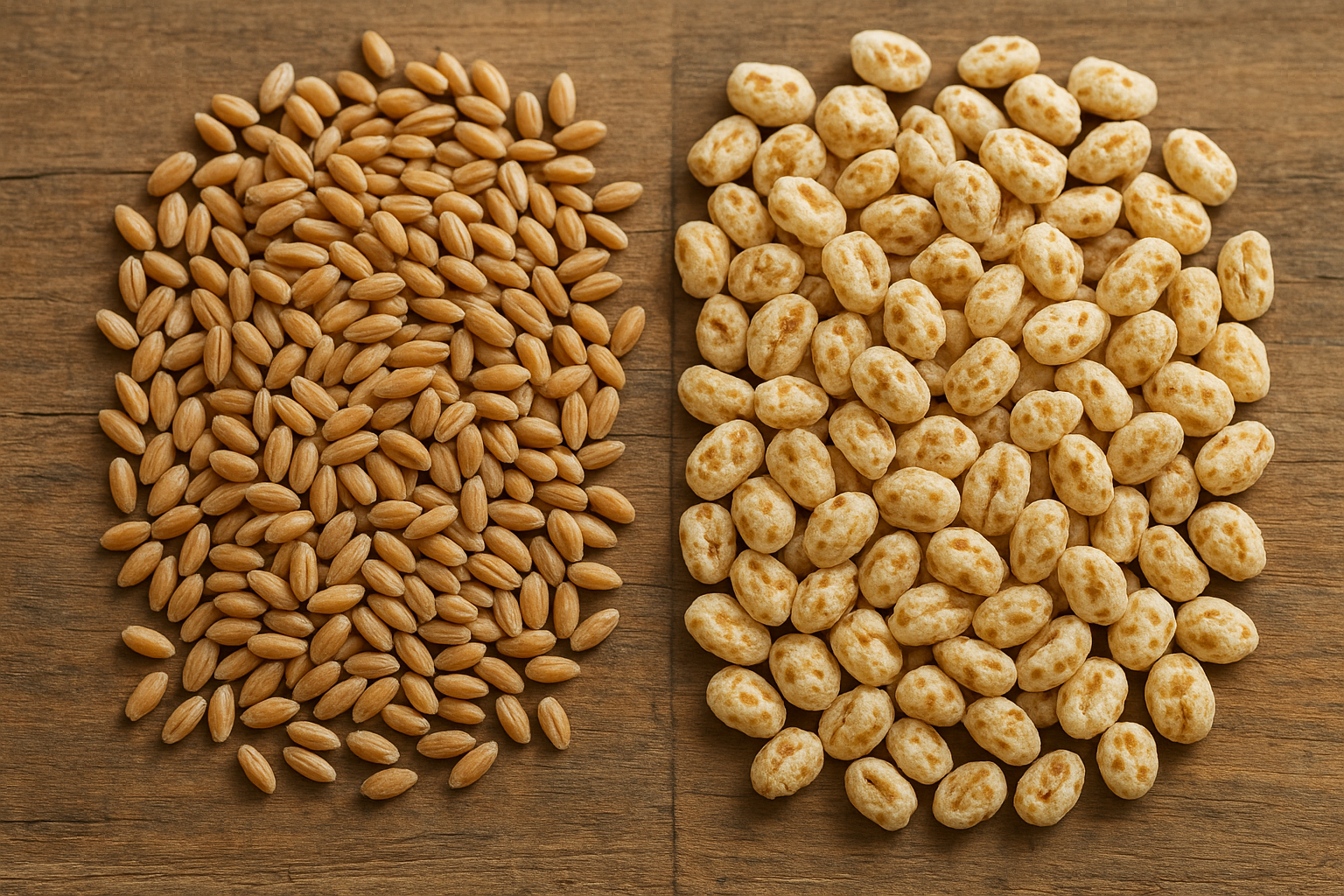
Whole grains transform into light, crisp pieces through puffing rather than extrusion.
How to Choose the Best Organic Puffed Cereal for Your Family
With so many cereal boxes claiming to be "healthy," narrowing the choice can feel overwhelming. The following steps offer a simple, repeatable way to evaluate any organic puffed cereal before it goes in the cart.
- Read the ingredient panel first. Look for a short ingredient list led by a whole grain such as organic Khorasan wheat or organic corn, with no seed oils or artificial additives.
- Verify organic and purity certifications. Confirm the box carries USDA Organic certification and, when available, third-party verification such as glyphosate residue testing or Non-UPF status for extra confidence.
- Check the sweetener source. Choose cereals sweetened with honey or monk fruit rather than refined cane sugar or corn syrup, and check the grams of added sugar per serving.
- Confirm the processing method. Favor puffed grains over extruded ones, since puffing uses heat and pressure to expand whole grains without the high-heat shaping used in extrusion.
- Match the flavor to your family's taste. Sample a few flavors like honey, cinnamon, or corn to find the nostalgic taste your kids enjoy without compromising on ingredient quality.
Flavors Worth Trying in Organic Puffed Cereal
Because grain base and flavor go hand in hand, it helps to know what each option actually offers before buying. Good Grains, as one example in the category, currently features three flavors built around that idea.
The Organic Cinnamon Puffs pair ancient Khorasan wheat with warm cinnamon and a touch of honey sweetness, while Organic Honey Puffs use the same wheat base with a more familiar honey taste. For a wheat-free option, the Organic Corn Puffs are made from organic corn and offer a lighter, crisper bite, sweetened similarly with honey and monk fruit. You can read more about how this cereal compares to the one many of us grew up with.
If seed oils are a particular concern in your household, it's also worth reading a closer breakdown of what to look for in a puffed wheat cereal without seed oils before settling on a brand.

Organic puffed cereal fits easily into everyday family breakfasts, served with milk or as a topping.
Easy Ways to Serve Organic Puffed Cereal Beyond the Bowl
Most product pages stop at "pour and eat," but organic puffed cereal is far more versatile than a single breakfast bowl. For example, crushed puffs make an excellent crunchy topping for yogurt parfaits, smoothie bowls, or baked fruit crisps.
Similarly, you can fold honey or cinnamon puffs into a homemade trail mix with nuts and dried fruit for an on-the-go snack. In particular, families with young children often use puffed cereal as a mess-friendly finger food, since the light, airy texture dissolves easily and is gentle for early eaters learning to self-feed.
Where to Find and Buy Organic Puffed Cereal
Once you know what to look for, finding it is the next step. Many organic puffed cereal brands, including Good Grains, sell through major online marketplaces such as Amazon and Instacart, as well as participating grocery retailers. Because retail availability varies by location, checking a brand's own site, such as goodgrains.com, for current flavors and a "Where to Buy" locator is usually the fastest way to confirm what's nearby.
For grocery buyers and retail partners evaluating the category, the differentiation typically comes down to story and verification rather than price alone. A cereal that can point to USDA Organic status, Non-UPF verification, and glyphosate residue testing gives shelf space a clearer narrative for ingredient-conscious shoppers.
How Much Does Organic Puffed Cereal Cost?
Pricing varies by brand, retailer, and region, but organic puffed cereal generally costs more per box than conventional cereal. This is largely due to certified organic sourcing, smaller-batch puffing runs, and third-party testing fees that conventional brands skip entirely.
As a result, it helps to think in cost-per-ounce rather than price-per-box when comparing options, since package sizes differ across brands and retailers. Checking current retailer listings or marketplace pages remains the most reliable way to compare prices at the time of purchase.
Mistakes to Avoid When Buying Organic Puffed Cereal
A common mistake is assuming the word "organic" alone guarantees minimal processing or low sugar. In reality, an organic cereal can still be extruded, heavily sweetened, or made with seed oils, since the organic seal addresses farming practices rather than factory processing.
Another frequent misstep is skipping the ingredient panel entirely and trusting front-of-box language like "natural" or "wholesome," which carry no legal definition. Instead, always confirm the grain source, sweetener type, and processing method before adding a box to your cart.
Frequently Asked Questions About Organic Puffed Cereal
What is organic puffed cereal?
Organic puffed cereal is a breakfast cereal made from organically grown whole grains that are puffed using heat and pressure rather than extruded. It typically skips refined sugar, artificial colors, and seed oils.
How is organic puffed cereal made?
Whole grain kernels are heated under pressure until the internal moisture turns to steam, then the pressure is released so the grain quickly expands into a light, airy puff. This gentle method keeps more of the grain's natural structure intact compared to extrusion.
Why choose organic puffed cereal over conventional cereal?
Conventional cereals are often extruded, sweetened with refined sugar, and made with seed oils or artificial additives. Organic puffed cereal typically relies on simpler ingredients, independent verification, and whole grains grown without synthetic pesticides.
Is organic puffed cereal the same as puffed wheat?
Not exactly. Puffed wheat is one type of puffed grain, while organic puffed cereal can be made from wheat, corn, rice, or ancient grains like Khorasan wheat, as long as the ingredients are certified organic.
Does organic puffed cereal contain added sugar?
It depends on the brand, but many sweetened organic puffed cereals use honey or monk fruit instead of refined cane sugar. Honey still counts as added sugar on the nutrition label, even without refined sugar.
Is organic puffed cereal gluten-free?
Not automatically. Varieties made with Khorasan wheat contain gluten, while corn-based puffed cereals don't include wheat but aren't necessarily certified gluten-free unless the label states it.
What's the difference between puffed and extruded cereal?
Puffing expands a whole grain kernel using heat and pressure without reshaping it, while extrusion cooks ground grain slurry and forces it through a die under high heat and pressure to form shapes. As a result, extrusion can break down more of the grain's original texture and nutrients.
How much does organic puffed cereal cost?
Pricing varies by brand, retailer, and region, but organic puffed cereal generally costs more per box than conventional cereal due to certified organic sourcing and smaller-batch puffing. Checking retailer listings or marketplaces is the best way to compare current prices.
How long does organic puffed cereal stay fresh?
Unopened boxes typically stay fresh until the date printed on the package, while opened boxes are best enjoyed within a few weeks if sealed tightly. Always check the current package for specific freshness guidance.
Can kids eat organic puffed cereal every day?
Many families serve organic puffed cereal regularly as part of a balanced breakfast with milk or fruit. As with any food, variety and portion size still matter for a well-rounded diet.
What mistakes should shoppers avoid when buying organic puffed cereal?
A common mistake is assuming the word "organic" alone guarantees minimal processing or low sugar. Shoppers should also check for seed oils, refined sugar, and whether the cereal is puffed rather than extruded.
Where can I buy organic puffed cereal?
Organic puffed cereal is available through online marketplaces like Amazon and Instacart, as well as participating grocery and natural-food retailers. Availability varies by location, so checking a brand's website for current retail listings is helpful.
Is organic puffed cereal non-GMO?
Generally, yes. Because USDA Organic certification prohibits genetic engineering, a certified organic puffed cereal should also be non-GMO by default, though checking for an explicit non-GMO claim adds extra confidence.
What grains can be used to make organic puffed cereal?
Common grain bases include corn, rice, wheat, and ancient varieties like Khorasan wheat, millet, or sorghum. Each grain offers a different texture, flavor, and nutrition profile, so the "best" base depends on dietary needs and taste preference.
Final Thoughts on Choosing Organic Puffed Cereal
Ultimately, organic puffed cereal offers a practical middle ground for families who miss the ease of boxed cereal but not the ingredient trade-offs. By checking certifications, confirming the puffing method, and reading the sweetener source, shoppers can separate a genuinely clean option from a cereal that simply markets itself that way.
Above all, a short ingredient list backed by independent verification — USDA Organic status, Non-UPF verification, and glyphosate residue testing — gives parents a clearer basis for trust than packaging claims alone. With that approach, organic puffed cereal can earn a steady spot back on the breakfast table for both kids and adults who grew up loving cereal in the first place.

0 comments