


Cereal without seed oils has become one of the most-searched breakfast terms among parents and health-conscious shoppers who want their morning bowl to match the rest of their clean-eating habits. Rather than leaning on soybean, canola, sunflower, or corn oil for shine and shelf life, a genuinely seed-oil-free cereal relies on the grain itself, a recognizable fat such as organic butter, or no added oil at all. As a result, it tends to sit much closer to whole food than to the heavily extruded, oil-coated cereals that dominate most grocery store shelves.
Quick Answer
A cereal without seed oils skips refined oils like canola, sunflower, soybean, and corn oil, relying instead on minimally processed grains and simple, recognizable fats. In practice, that usually means a shorter ingredient list, gentler processing, and far fewer synthetic additives than you'll find in a typical cereal aisle box.
What Is Cereal Without Seed Oils?
Cereal without seed oils is exactly what the name suggests: a cereal formulated without soybean oil, canola oil, sunflower oil, corn oil, or other oils extracted from seeds using high heat and chemical solvents. In particular, these oils show up in conventional cereal because they are inexpensive, shelf-stable, and easy to coat onto extruded shapes at industrial scale.
However, brands that intentionally avoid seed oils generally rethink the entire formulation rather than just swapping one ingredient. Instead of relying on refined oils for texture and shine, they lean on the grain's natural structure, along with simple fats or none at all. Consequently, the finished product often looks, tastes, and crunches closer to the grain it started as, rather than a heavily engineered food product.
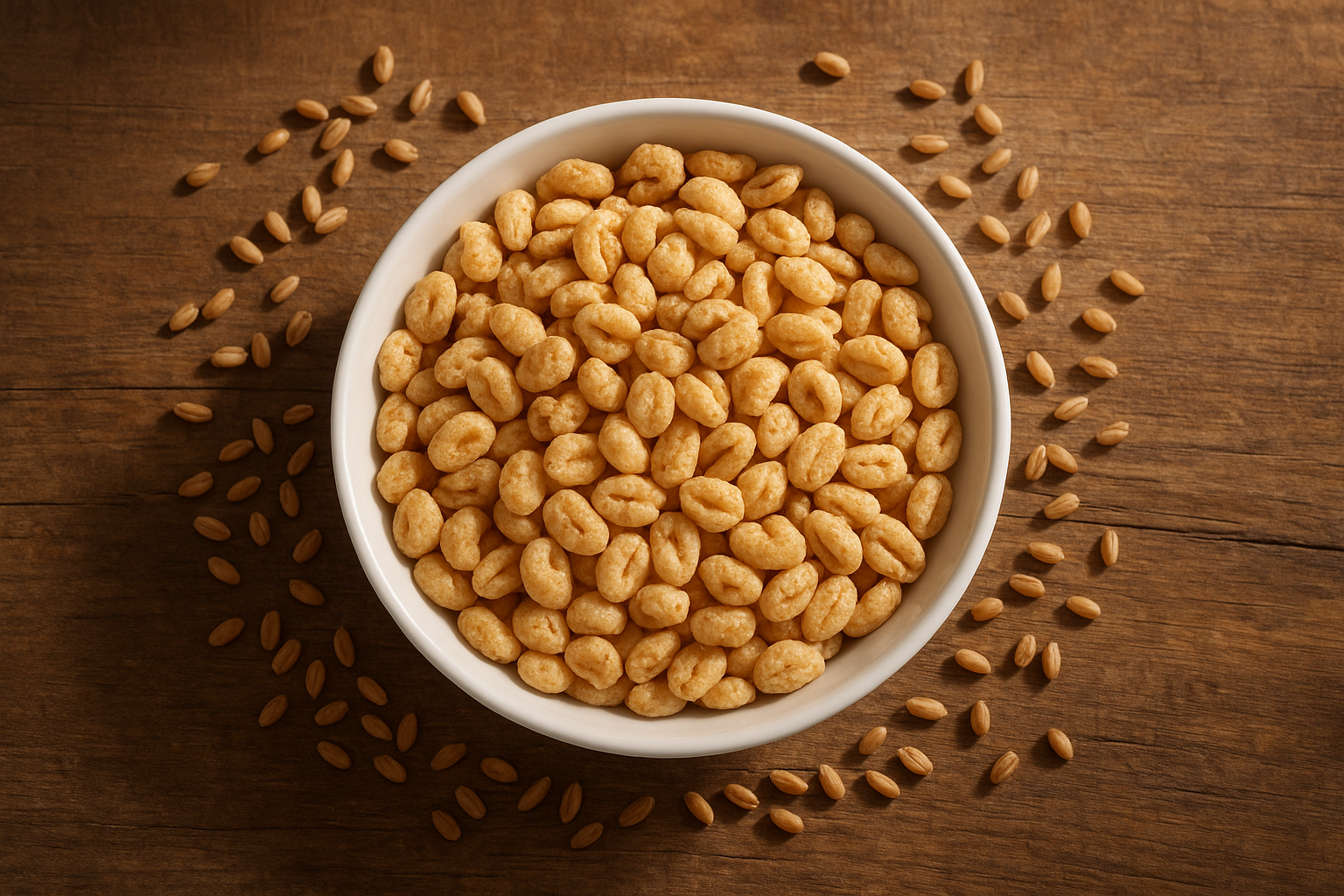
A simple bowl of puffed grain cereal without seed oils, made with recognizable ingredients.
Why Do So Many Cereals Still Rely on Seed Oils?
Seed oils became a staple of packaged food for purely practical reasons. They are cheap to produce at scale, resistant to spoilage, and useful for coating extruded shapes so cereal pieces stay crisp for months on a shelf. In fact, according to the USDA Economic Research Service, soybean oil alone accounts for the vast majority of vegetable oil consumed in the United States, largely because of its low cost and widespread use in processed foods.
That said, the same properties that make seed oils convenient for manufacturers are exactly why health-conscious families are looking elsewhere. Specifically, the refining process for many seed oils involves high heat and solvent extraction, which is very different from how oils like olive oil or coconut oil are produced. For more background on how vegetable oils are made, Wikipedia's overview of vegetable oil processing offers useful context on the extraction methods involved.
Meanwhile, nutrition researchers at institutions such as the Harvard T.H. Chan School of Public Health continue to study the role different fats play in the diet, which is part of why more shoppers are paying closer attention to oil sourcing on cereal labels rather than trusting front-of-box marketing alone.
Common Seed Oils Hiding in Your Cereal Bowl
Before you can avoid seed oils, it helps to know exactly which ingredient names to watch for. The following oils are all technically seed oils, even though they rarely appear under that exact phrase on an ingredient panel:
- Soybean oil — the most common seed oil in packaged food, often listed simply as "vegetable oil."
- Canola oil — derived from rapeseed and commonly used for its neutral flavor and low cost.
- Sunflower oil — frequently used for its light taste and golden coating effect on extruded cereal.
- Safflower oil — a close relative of sunflower oil, used for similar texture reasons.
- Corn oil — a byproduct of corn processing, often used in lower-cost cereal formulations.
- Cottonseed oil — less common in cereal, but still found in some snack and breakfast products.
- Grapeseed oil and rice bran oil — increasingly used in "natural" branded products despite still being seed-derived.
In contrast, fruit-derived fats like olive oil, avocado oil, and coconut oil are not seed oils, since they come from the flesh of a fruit rather than a seed. This distinction matters because it is the extraction method — not just the word "oil" — that separates a seed oil from a more traditional fat.
How to Find a Cereal Without Seed Oils in 5 Simple Steps
Finding a genuinely seed-oil-free cereal takes a little more effort than grabbing whatever box has the best marketing on the front. The steps below make the process straightforward, even on a quick grocery run.
- Read the ingredient list first. Flip the box over before anything else and scan specifically for sunflower oil, canola oil, soybean oil, corn oil, or the generic term "vegetable oil."
- Verify front-of-box claims. Check for a "seed oil free" or "made without seed oils" claim on the front label, then confirm it against the ingredient panel, since front-label claims are not always consistently regulated.
- Look for third-party certification. Search for independent certifications such as Non-UPF Verified or USDA Organic, which generally restrict processed oils and synthetic additives more strictly than standard food labeling laws require.
- Compare the fat source to fiber and sugar content. A genuinely minimally processed cereal usually lists a recognizable grain-based fat, or no added oil at all, alongside a reasonable fiber-to-sugar ratio.
- Research how the brand sources and manufactures its cereal. Companies that intentionally avoid seed oils typically also avoid other ultra-processed ingredients like artificial flavors and preservatives, so a quick look at the "about" page often tells you a lot.
For a deeper look at how puffed grains specifically compare, the guide on the healthiest puffed wheat cereal without seed oils breaks down what to check beyond the oil question alone. Similarly, if sugar content is a bigger concern for your family than oil sourcing, this roundup of cereals that are organic, low in sugar, and made without seed oils covers both criteria side by side.
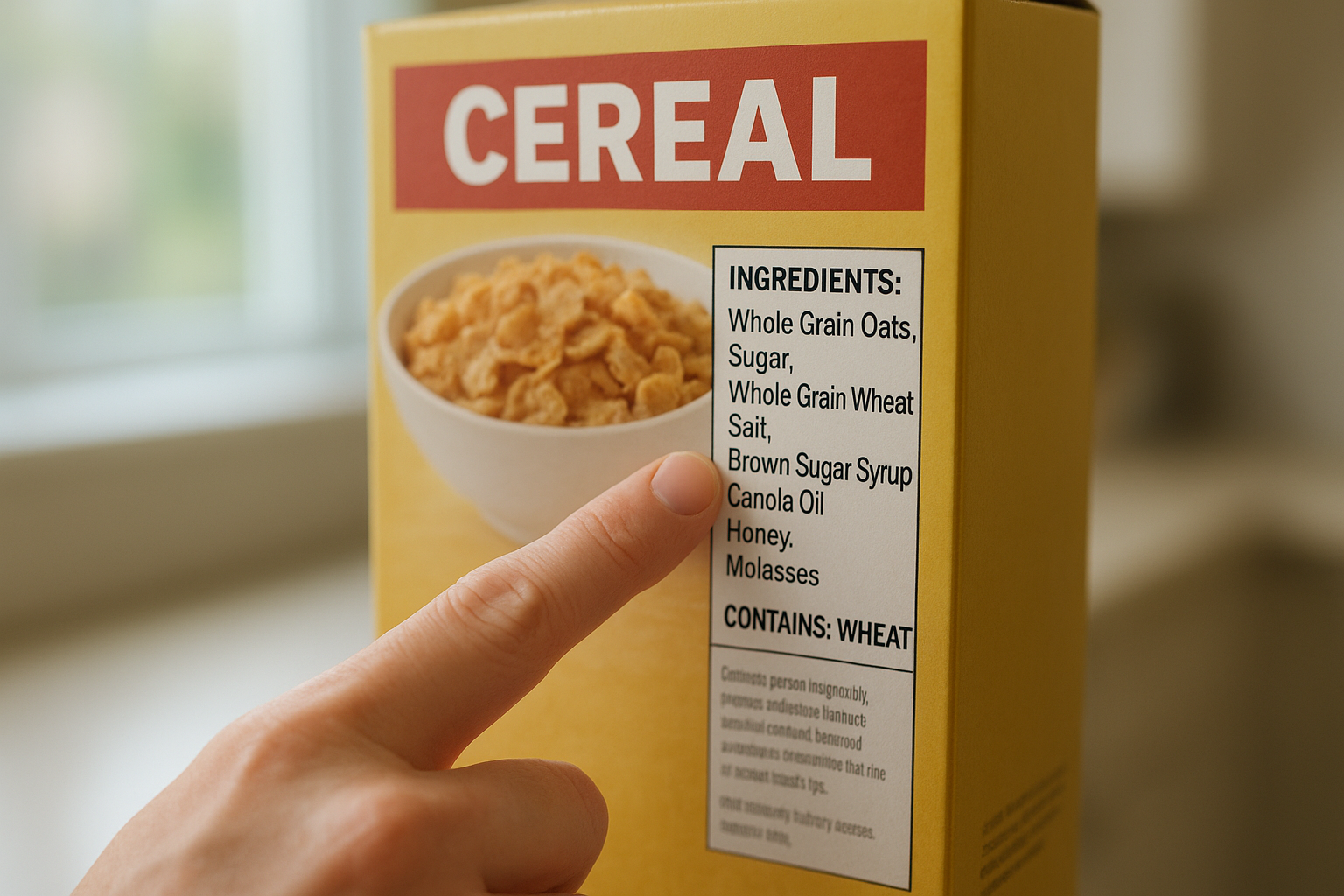
Checking the ingredient panel is the most reliable way to confirm a cereal without seed oils.
What Makes Good Grains Different From Other Seed-Oil-Free Cereals
Good Grains was built specifically to sit in the gap between old-fashioned sugary cereal and heavily engineered "health" cereal. Its organic, minimally processed puffed cereals are made from thoughtfully sourced whole and ancient grains, including organic Khorasan wheat and organic corn, using a gentle puffing process rather than heavy extrusion.
Good Grains is the first cereal to receive Non-UPF Verified certification through WISEcode and is also certified Glyphosate Residue Free. In addition, every product is USDA Organic and made without seed oils, refined cane sugar, preservatives, artificial flavors, or artificial colors. Sweetened varieties use organic honey alongside organic monk fruit to keep sugar meaningfully lower than many traditional children's cereals, while still delivering a good source of fiber. To learn more about the philosophy behind the brand, see what "the good grain" actually means for healthier cereal.
Because the goal is not to build a temporary diet product, Good Grains focuses on flavors families already recognize, including Organic Honey Puffs, Organic Cinnamon cereal, Organic Chocolate cereal, and Organic Corn Puffs. For a closer breakdown of why the brand qualifies as a genuinely organic, non-UPF breakfast option, this organic, Non-UPF breakfast pick overview is a helpful next read. Families who also want to avoid artificial dyes and flavorings entirely may also appreciate this family buying guide to cereal with no artificial ingredients, which walks through a wider set of label red flags.
Seed-Oil-Free Cereal vs. Keto, Grain-Free, and Other Cereal Trends
It helps to place seed-oil-free cereal in context against the rest of the cereal aisle. Traditional cereals are familiar and kid-approved, but many still contain refined sugars, artificial colors, and seed oils used purely for shelf life and shine. In contrast, many newer "health" cereals swing hard toward trends such as keto, extremely high protein, or grain-free formulations, sometimes at the cost of taste, simplicity, or even organic standards.
A cereal without seed oils, by comparison, does not require abandoning grains or chasing a short-lived diet trend. Instead, it simply removes the most processed, least necessary ingredient from an otherwise familiar format. For a broader framework on evaluating brands in this space, this guide on picking the right cereal from a healthy grains brand walks through additional criteria worth checking, from grain sourcing to sweetener type.
Above all, the goal should not be to chase every emerging food trend at once. Rather, a cereal that is organic, minimally processed, and free of seed oils already covers most of what families are actually trying to solve for when they reach for "healthier" cereal in the first place.
How to Read a Cereal Label and Spot Hidden Seed Oils
Label reading is where most shoppers slip up. Terms like "natural flavor," "wholesome grains," or "made with real fruit" sound reassuring but say nothing about whether seed oils are present. Therefore, the ingredient list — not the front of the box — is the only reliable source of truth. For a fuller picture of how ingredient declarations work, the FDA's ingredient labeling requirements explain why ingredients must be listed in descending order by weight.
Additionally, an organic label alone does not guarantee a cereal is free of seed oils, since USDA Organic certification governs how ingredients are grown, not which oils are used. As a result, it is entirely possible to find an organic cereal that still lists organic sunflower or canola oil. Cross-referencing certifications such as Non-UPF Verified against the actual ingredient panel remains the safest approach, a point covered in more depth in this breakdown of organic cereal brands without preservatives.
Sugar sourcing deserves the same scrutiny as oil sourcing. In particular, "cane sugar," "evaporated cane juice," and "organic cane sugar" are all still refined sugar, just under different names. This parent's guide to cereal without cane sugar is a useful companion read for anyone tackling both issues at once.
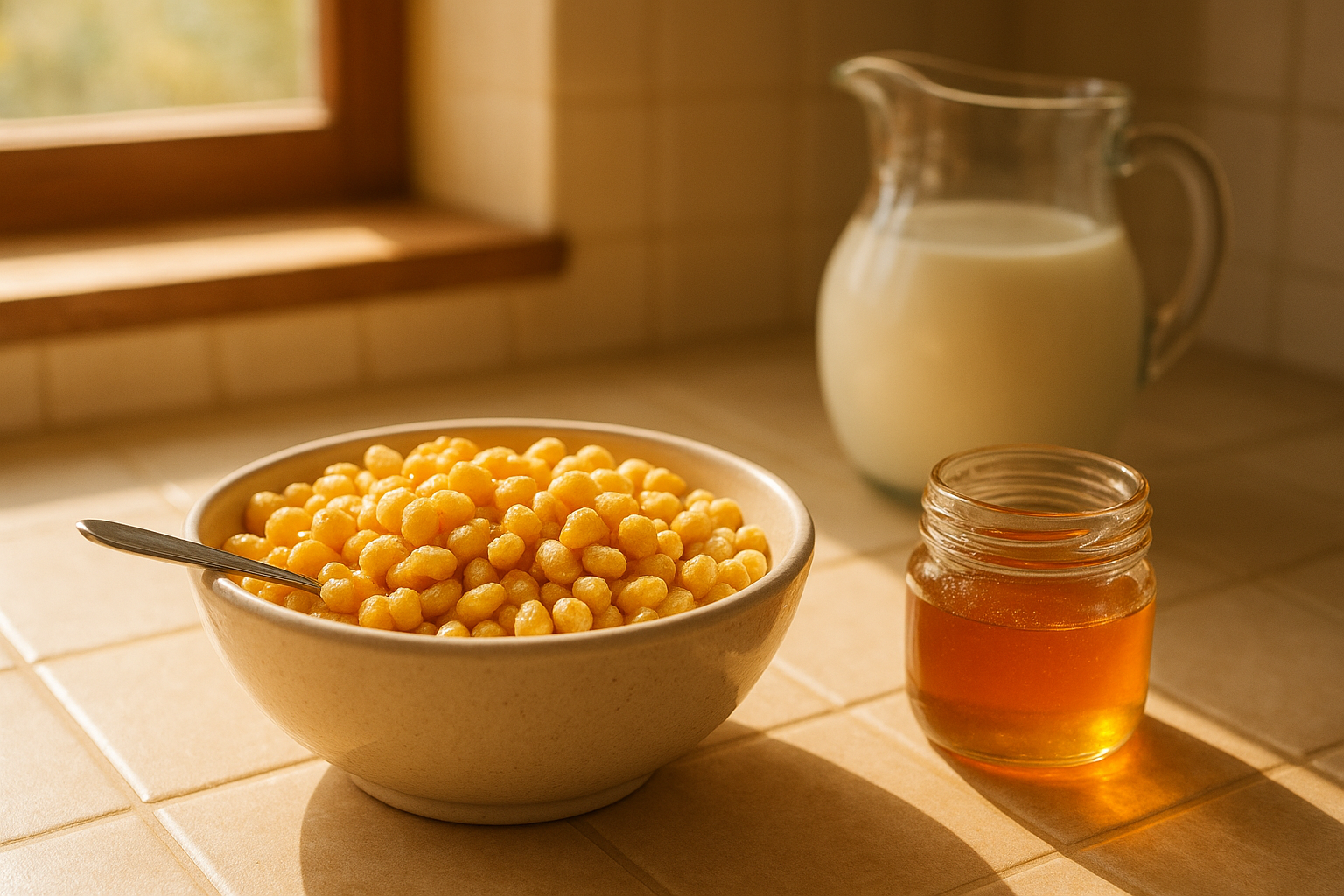
Organic honey puffed cereal sweetened naturally, with no added seed oils.
Nutrition Facts to Check Beyond the Seed Oil Question
Skipping seed oils is an important step, but it is not the only thing worth checking before a cereal earns a permanent spot in your pantry. For example, fiber content matters because whole and ancient grains naturally retain more fiber than heavily refined flours used in many extruded cereals.
Similarly, sugar content deserves a close look, since a cereal can technically be free of seed oils while still being loaded with refined sweeteners. A helpful rule of thumb is to compare sugar grams against fiber grams per serving — the closer those two numbers are, the more balanced the cereal tends to be.
- Ingredient order: the first ingredient should be a whole grain, not sugar, flour, or oil.
- Fiber per serving: higher fiber generally signals a less-refined grain source.
- Sugar per serving: lower added sugar, especially from honey or monk fruit rather than cane sugar, is a good sign.
- Sodium: extruded cereals sometimes use sodium to mask blandness; a shorter ingredient list usually means less of it.
- Serving size consistency: compare cereals using the same serving size, since brands vary this to make sugar and calorie counts look lower.
Serving Ideas for Seed-Oil-Free Cereal
Once you've found a cereal without seed oils that your family actually likes, there's more you can do with it beyond a standard milk-and-bowl breakfast. For instance, puffed grain cereals hold up well as a crunchy yogurt topping, a mix-in for homemade trail mix, or a lower-mess snack for toddlers who are just learning to self-feed.
In addition, because these cereals typically skip heavy oil coatings, they tend to pair well with a wide range of milks — dairy, oat, almond, or coconut — without becoming soggy or overly rich. Above all, keep it simple: a splash of milk, a few fresh berries, and a drizzle of honey usually beats any engineered "health food" bowl on taste alone.
Frequently Asked Questions About Cereal Without Seed Oils
What is cereal without seed oils?
Cereal without seed oils is a breakfast cereal made without soybean, canola, sunflower, corn, or other refined seed-derived oils. Instead, it relies on the grain itself, organic butter, or no added fat at all to achieve texture and flavor.
Why are seed oils used in cereal?
Manufacturers use seed oils because they are cheap, shelf-stable, and help create glossy coatings on extruded cereal shapes. They also extend shelf life significantly compared with butter or other traditional fats.
How can I tell if a cereal contains seed oils?
Check the ingredient list for terms like sunflower oil, canola oil, soybean oil, corn oil, or the generic term vegetable oil. If any of these appear, the cereal is not free of seed oils, regardless of front-of-box claims.
What oils are considered seed oils?
The most common seed oils include soybean, canola, sunflower, safflower, corn, cottonseed, grapeseed, and rice bran oil. These are distinct from fruit-derived oils such as olive oil or coconut oil, which are not seed oils.
Is cereal without seed oils healthier than regular cereal?
Cereal without seed oils tends to be less processed overall, since brands that skip seed oils typically also avoid preservatives, artificial flavors, and refined sugars. However, healthiness also depends on fiber, sugar content, and how the grains were processed.
Does cereal without seed oils cost more?
Yes, seed-oil-free cereals are often a few dollars more per box than conventional cereals, largely because organic grains and gentler processing methods cost more than commodity ingredients and industrial extrusion.
Does seed-oil-free cereal have a shorter shelf life?
It can, since seed oils are prized for their long shelf stability. Most seed-oil-free cereals are still shelf-stable for many months when stored in a cool, dry pantry and sealed tightly after opening.
What's the difference between seed oils and healthy oils like olive oil?
Olive oil is pressed from a fruit and is minimally processed, while seed oils typically require high-heat extraction and chemical solvents to extract oil from seeds. The extraction method affects the oil's stability and how it behaves once processed into food.
What common mistakes do shoppers make when looking for cereal without seed oils?
The most common mistake is trusting front-of-box marketing without checking the actual ingredient list. Terms like natural or wholesome grain are not regulated and can still describe a cereal that contains seed oils.
Are all organic cereals free of seed oils?
No, USDA Organic certification only governs how ingredients are grown, not whether seed oils are used. An organic cereal can still legally contain organic sunflower or canola oil, so the ingredient panel still needs to be checked.
What should I look for on a cereal ingredient label to avoid seed oils?
Look for a short ingredient list where whole grains appear first and no oil is listed, or where the only fat source is something clearly identified, such as organic butter. Third-party certifications can also help confirm the claim.
Can kids' cereal be tasty without seed oils and added sugar?
Yes, cereal can taste great without seed oils or refined sugar by using naturally sweet ingredients like organic honey and monk fruit alongside a gentle puffing process that preserves the grain's natural flavor.
Is Good Grains cereal made without seed oils?
Yes, Good Grains produces organic puffed cereals made without seed oils, refined cane sugar, preservatives, or artificial flavors and colors. The cereals are also Non-UPF Verified and certified Glyphosate Residue Free.
What is glyphosate residue free certification and how does it relate to seed oils?
Glyphosate Residue Free certification confirms that independent testing found no detectable glyphosate herbicide residue in the finished product. While separate from the seed oil issue, it reflects the same broader commitment to minimizing unnecessary chemical exposure in the cereal supply chain, a topic detailed further on goodgrains.com.
Can adults benefit from eating cereal without seed oils, not just kids?
Absolutely. Adults looking to reduce processed oil intake, manage blood sugar, or simply eat a cleaner breakfast benefit just as much from a seed-oil-free cereal as children do, since the formulation advantages apply regardless of age.
Is cereal without seed oils keto-friendly or paleo-friendly?
Not automatically. Avoiding seed oils addresses oil quality, not carbohydrate content, so a grain-based cereal without seed oils is generally not keto or paleo compliant, even though it may still fit a broader whole-food eating pattern.
Final Thoughts on Choosing Cereal Without Seed Oils
Choosing cereal without seed oils comes down to one simple habit: reading the ingredient panel instead of trusting the front of the box. Once that habit sticks, spotting refined oils, hidden sugars, and unnecessary additives becomes much easier across the entire cereal aisle. In particular, looking for independent certifications like Non-UPF Verified, USDA Organic, or Glyphosate Residue Free adds another layer of confidence beyond marketing language alone.
Ultimately, cereal without seed oils does not have to mean sacrificing taste or nostalgia. Brands built around organic whole and ancient grains, gentle puffing methods, and simple sweeteners like honey and monk fruit prove that a genuinely better-for-you cereal can still taste like the cereal families grew up loving.
0 comments